Vietnam emerges as top choice for Australian travellers

Following the COVID-19 pandemic, Vietnam has emerged as one of the fastest-recovering tourism markets in Southeast Asia, with international arrivals rebounding to around 98% of pre-pandemic levels.

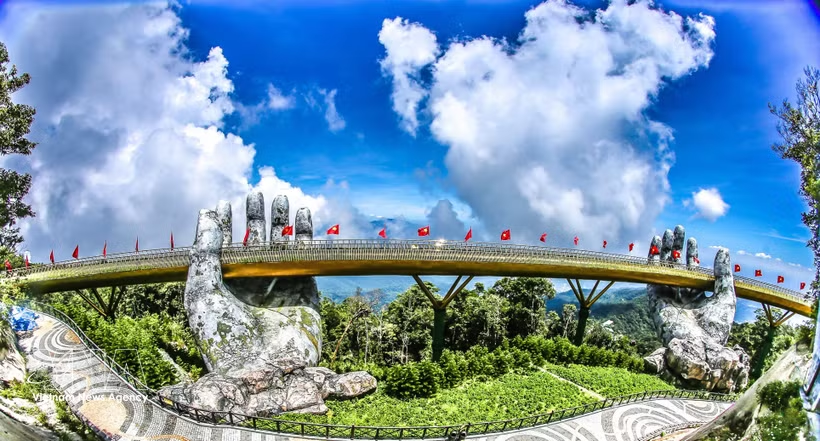
The Golden Bridge at Ba Na Hills, Da Nang, is a popular tourist attraction for both domestic and international visitors. (Photo: VNA)

Hanoi (VNA) – Vietnam is rapidly emerging as a favourite destination among Australian travellers, with its growing appeal reflected in global travel trends and search data.

According to Australia’s travel site Escape, Vietnam is gaining traction as a leading destination in 2026, with the potential to rival traditional European itineraries that are becoming increasingly expensive.

Amid geopolitical uncertainties in the Middle East and rising travel costs in Europe, Asia, particularly Vietnam, is being seen as a safe, accessible and cost-effective alternative.

Travel experts note that Vietnam offers a compelling mix of natural beauty, rich culture, diverse experiences and vibrant cuisine, making it highly attractive to international visitors. Direct flight connections of under 10 hours from Australia further enhance its competitiveness.

Data from Travel Agent Finder shows that Vietnam entered the top 10 most searched destinations for the first time in March 2026, signalling its rising profile on the global tourism map and positioning it as a key hotspot this year.

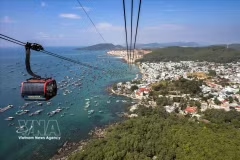
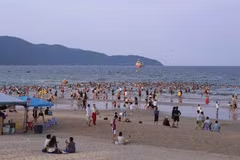
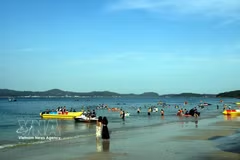
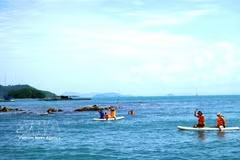
Meanwhile, Expedia has recorded a surge in demand for Vietnam’s coastal destinations. Nha Trang and Da Nang lead trending destinations in Asia, with accommodation searches rising by 65% year-on-year. Phu Quoc follows with a 45% increase, outperforming well-known beach destinations in Indonesia and Thailand.

According to Sarah King of Expedia, Nha Trang is often described as Vietnam’s “beach resort capital” thanks to its long coastline, year-round sunshine and relaxed atmosphere – qualities that Australian travellers traditionally seek in Mediterranean destinations.

Beyond natural assets, Vietnam’s affordability and cultural diversity further boost its appeal. Visitors can enjoy distinctive cuisine at reasonable prices, while accommodation and transport costs remain competitive compared to many international destinations.

Air connectivity between the two countries continues to improve, with direct flights linking major Australian cities such as Sydney, Melbourne, Brisbane and Perth to key Vietnamese hubs including Hanoi and Ho Chi Minh City, operated by carriers such as Vietnam Airlines, Qantas and VietJet Air. Singapore’s The Straits Times also highlighted Vietnam as one of Southeast Asia’s leading destinations, driven by strong engagement on social media platforms and sustained tourism growth in recent years.

The country continues to attract international visitors with its blend of historical depth, diverse landscapes and affordability. Street culture, cuisine and wellness services at accessible prices are increasingly drawing younger travellers from across the region.

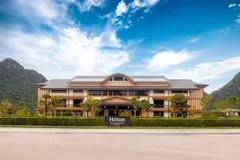
At the same time, international hotel groups such as Melia Hotels International and Hilton Hotels & Resorts are expanding their presence in Vietnam, reflecting confidence in the market’s long-term growth potential. Large-scale resort and hospitality projects are also underway in key destinations, including Phu Quoc and Vung Tau, helping to boost accommodation supply.

According to the Vietnam National Authority of Tourism, Vietnam's tourism revenue has surged from 1.34 trillion VND in 1990 to 355 trillion VND in 2010, reaching approximately 840 trillion VND (31.9 billion USD) in 2024. Following the COVID-19 pandemic, Vietnam has emerged as one of the fastest-recovering tourism markets in Southeast Asia, with international arrivals rebounding to around 98% of pre-pandemic levels.

In the first quarter of 2026, Vietnam welcomed 6.76 million international visitors, up 12.4% year-on-year, with key markets such as China, the Republic of Korea and Taiwan (China) continuing to drive growth./.
VNA

See more

The Dien Bien Phu campaign headquarters has become a popular tourist attraction in Dien Bien province. (Photo: VNA)

Dien Bien Phu tourism cable car project receives in-principle approval

The project aims to effectively tap the area’s natural landscapes, geographical advantages and distinctive historical value, while creating a high-quality tourism product with strong competitiveness. It is also intended to preserve, honour and promote the value of the Dien Bien Phu Victory special national historical relic site.

Da Lat station is the hub of the roughly 84-km Phan Rang–Da Lat railway (Photo: VNA)

Da Lat city's century-old railway station doubles as tourist draw

It now functions as both a transport hub and a sought-after photo spot. In the early morning, with mist still threaded through the pines, the station radiates an old-world calm. Visitors arrive at dawn to breathe the mountain air and capture iconic images of the highland city.

Ha Long Bay in Quang Ninh province. (Photo: VNA)

Quang Ninh - magnet for affluent Indian travellers

Alongside wedding tourism, Quang Ninh is also seeing robust growth in arrivals of Indian MICE travellers. Delegations of hundreds, and sometimes thousands, of visitors have been coming to the province for conferences, seminars and incentive travel programmes combined with leisure stays.

Visitors explore the Tra Su cajuput forest in An Giang province. (Photo: Tra Su Tourism Area)

Mekong Delta eyes stronger foothold in global tourism

Enriched by the alluvial deposits of the Mekong River, the region stands out for its dense canal network, year-round fruit orchards, biodiversity-rich national parks, and vibrant folk festivals – invaluable assets for developing diverse tourism offerings, from orchard-based eco-tourism and river experiences to cultural, festival, resort and nature conservation tourism.

A Lunar New Year court ceremony of Nguyen Dynasty is reenacted at Thai Hoa Palace in the Imperial Citadel of Hue (Photo: VNA)

Culinary, heritage passports reshape cultural tourism

The central city of Hue is among the first to forge new paths. Its “Hue Tourism Passport” began as a destination brochure in 2018 and has since evolved into the “Hue City Passport” app, with a heritage-passport feature that strings monuments into a structured journey.

Phu Quoc International Airport in Phu Quoc special zone of An Giang province. (Photo: VNA)

Air travel surges to 1.68 million passengers during holiday periods

Domestic air travel accounted for 675,140 passengers and 3,400 tonnes of cargo, marking declines of 7.5% and 11.6%, respectively. In contrast, international transport showed robust growth, surpassing 1 million passengers and reaching 24,050 tonnes of cargo, up 10% in passenger numbers and 10.6% in cargo volume.

International visitors admire the beauty of the My Son Cham sanctuary in Duy Xuyen, Da Nang. (Photo: VNA)

Vietnam records 2 million foreign arrivals in April

The Vietnam National Authority of Tourism (VNAT) said the figures highlight the country’s rising profile as a safe, stable and increasingly compelling destination. It is the first time Vietnam has surpassed 2 million foreign arrivals for four straight months, and the first time the January – April tally has reached 8.8 million.

The Cau Vang (Golden Bridge) in the central city of Da Nang. (Photo: VNA)

Ho Chi Minh City, Da Nang lead Thai tourists’ searches

Data from the online booking platform Agoda shows that Ho Chi Minh City recorded the highest growth in searches from Thailand, reaching 134%, followed by Da Nang with a 58% increase. Other destinations such as Hong Kong (China) saw more modest growth.