US media outlines what makes Phu Quoc Southeast Asia’s most sought-after destination

According to TTW, Phu Quoc is emerging as "one of the most desired destinations in Southeast Asia" due to a rare convergence of pristine natural beauty and a heavily invested, modern tourism ecosystem. From sweeping white sands and turquoise waters to global-class resort and entertainment complexes, the island is drawing an increasing number of international travelers seeking an experience that seamlessly balances luxury with a rich local identity.

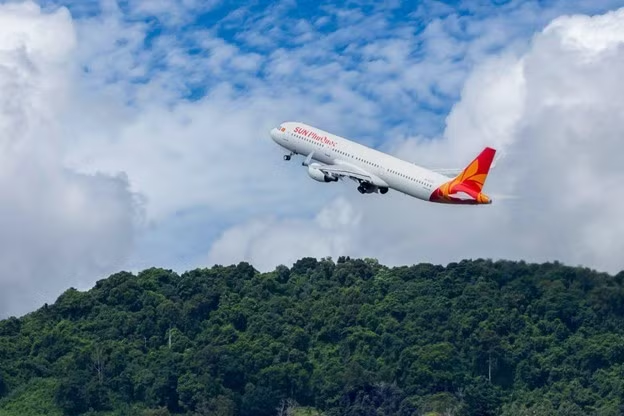
Sun PhuQuoc Airways opens the gateway for the world to experience the paradise Phu Quoc. (Photo: Sun Group)

Hanoi (VNA) - Boasting some of the region’s finest beaches, a world-class resort and entertainment ecosystem, and impressive infrastructure development, Phu Quoc is progressively redefining Asia’s concept of a "resort island." Recently, the renowned travel publication Travel and Tour World (TTW) recognised Phu Quoc as "a vivid testament to Vietnam's ambition to rise to the center stage of regional and global tourism."

According to TTW, Phu Quoc is emerging as "one of the most desired destinations in Southeast Asia" due to a rare convergence of pristine natural beauty and a heavily invested, modern tourism ecosystem. From sweeping white sands and turquoise waters to global-class resort and entertainment complexes, the island is drawing an increasing number of international travelers seeking an experience that seamlessly balances luxury with a rich local identity.

A major catalyst behind Phu Quoc's robust growth trajectory is its strategic focus on international connectivity. The island is continuously enhancing its global accessibility through a synchronised aviation network and newly launched flight routes. Notably, the multi-aircraft deal signed in early 2026 by the island's namesake carrier, Sun PhuQuoc Airways, for 40 Boeing 787-9 Dreamliners is seen as a milestone that reflects the ambition to transform Phu Quoc into a premier regional tourism and aviation hub.

Furthermore, international routes from key source markets such as Taipei, Seoul, and Hong Kong among other global destinations are set to expand in the near future. Paired with the ongoing upgrade and expansion of Phu Quoc International Airport, the Phu Quoc is fast becoming Asia's new "tropical resort gateway," where travelers can reach their destination faster and more conveniently than ever before.

Beyond its natural charm, Phu Quoc is cementing its status through a world-standard resort and entertainment ecosystem. TTW notes that the island is increasingly renowned for its upscale beachfront resorts offering "world-class amenities, private villas, fine dining, spas, and personalized services."

pq2.jpg
The pristine beauty of Kem Beach - one of the most beautiful beaches on the planet - is now on the must-visit list of every international traveler. (Photo: Fabl Belek)

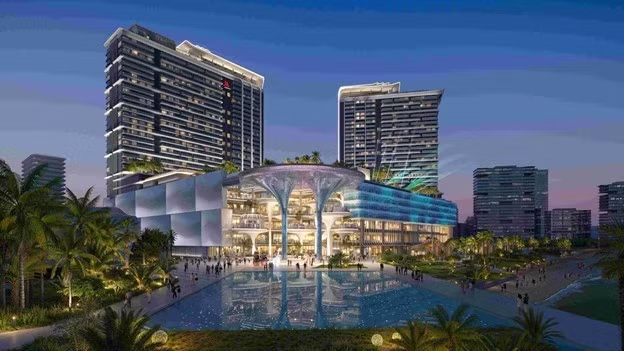
The presence of numerous international hospitality brands has positioned Phu Quoc as a premier destination for the elite and luxury-seeking travelers in Southeast Asia. In particular, the strategic partnership agreement signed in March 2026 between Sun Group and Marriott International to develop 10 hotels further solidifies the Phu Quoc’s allure on the global luxury resort map.

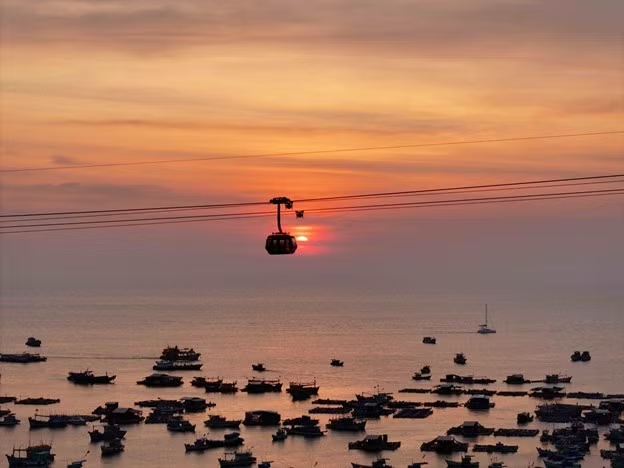
Moving beyond accommodation, Phu Quoc is taking shape as a comprehensive "experience ecosystem." Iconic landmarks such as the world’s longest three-wire cable car, mega entertainment complexes, multimedia art shows, bustling night markets in the South Island, and year-round fireworks have generated a vibrant energy rarely found on a tropical island. According to TTW, this seamless integration of leisure, entertainment, shopping, and culture makes Phu Quoc a highly versatile destination catering to all traveler segments, from families and millennials to ultra-high-net-worth individuals.
pq3.jpg
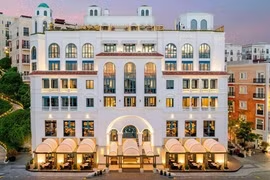
A lineup of brands under Marriott International is set to debut in Phu Quoc in the coming time, including W Hotels, Westin, Moxy Hotels, and Marriott Hotels. (Photo: Sun Group)

However, what international media praises most about Phu Quoc is its ability to balance development with heritage conservation. TTW observed: “Phu Quoc is an extraordinary example of how a destination can develop into a world-class tourism hub without losing its natural beauty and local charm.”

Despite the continuous arrival of mega-scale landmarks and modern resort complexes, the island preserves the authentic rhythm of its local fishing communities. International visitors can still immerse themselves in exploring traditional fish sauce villages, centuries-old pepper farms, or savoring fresh seafood rich in coastal flavors. These cultural experiences allow visitors to not only vacation in Phu Quoc but truly connect with its native heritage.
pq4.jpg
Gliding over traditional fishing villages on the world's longest 3-wire cable car is a signature, unparalleled experience for every traveler visiting Phu Quoc. (Photo: Sun Group)

Alongside tourism development, green and eco-friendly initiatives are being actively championed to secure a sustainable future for the island. This is considered a vital element for Phu Quoc to maintain its long-term appeal, particularly as global travelers increasingly prioritise destinations that balance high-end experiences with environmental responsibility.

The island's soaring growth figures offer tangible proof of its rising global popularity. In the first four months of 2026 alone, Phu Quoc welcomed approximately 3.8 million visitors, a staggering 38% increase compared to the same period last year. This momentum brings the island closer to its target of 8 million visitors this year, while anchoring its position as one of the most dynamic tourism markets in the region.

Evolving from a well-known local getaway, Phu Quoc is progressively transforming into Asia's new "super destination" - a place where tropical nature, state-of-the-art infrastructure, premium experiences, and cultural depth converge. The spectacular breakthrough of Phu Quoc not only mirrors the rapid rise of Vietnam's tourism industry but also speaks to the nation's aspiration to anchor its brand firmly on the global tourism map with world-class destinations./.

VNA

See more

Local culture makes Vietnamese destinations appealing. (Photo: VNA)

Vietnam targets tourism breakthrough by filling gaps

Industry officials said advances in sci-tech, innovation and digital transformation are already wrenching tourism away from a bulk-volume model toward one built on data, customised experiences and smart governance. Deeper global integration is further widening market access, tightening value chain links and sharpening Vietnam’s destination brand.

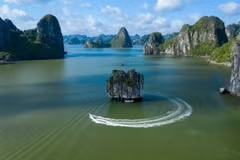
The 7 Wonders Day will be held on July 7 to celebrate Ha Long Bay as one of the best known world natural heritage site. (Photo: courtesy of Ha Long Bay - Yen Tu World Heritage Management Department)

7 Wonders Day to spotlight UNESCO heritage jewel Ha Long Bay

A special event entitled 7 Wonders Day with a series of attractions and experiences for both residents and visitors will be held in Ha Long city, Quang Ninh province, on July 7 to honour the elected New 7 Wonders of the World and Nature.

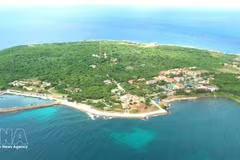
Con Co “steel island”: a green gem in the open sea. (Photo: VNA)

Con Co “steel island”: a green gem in the open sea

Unlike well-established destinations, this small island quietly preserves its layered heritage: tens-of-thousands-year-old basalt formations, pristine tropical forests and enduring wartime memories. Together, they create a distinctive “green gem” in the open sea, subtle yet captivating enough to hold any visitor.

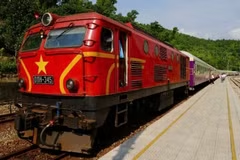
The Hue–Da Nang “Central Heritage Connection” train takes passengers along one of Vietnam’s most spectacular coastal railway routes. (Photo: nhandan.vn)

Heritage rail journey brings new identity to central Vietnam tourism

The heritage train offers passengers not only a means of transport, but also a sense of connection linking destinations across central Vietnam, tourism with transport, and nostalgic memories with contemporary experiences. While older travellers are reminded of journeys from decades ago, younger passengers and international visitors are discovering a greener, culture-rich way to explore the region.

Many Vietnamese travellers love to plan the trip by themselves even when it requires a lot of time. (Photo courtesy of Booking.com)

Vietnamese travellers enjoy planning for trips

The Booking.com’s Travel Trends 2026 data revealed that a growing number of Vietnamese travellers, about 74% of respondents, are channelling “Main Character Planning Energy”, where planning and booking is just as enjoyable as the trip itself.

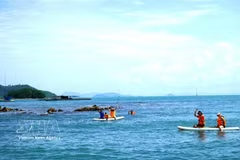
Hai Tac Island in An Giang province is increasingly attractive to visitors. (Photo: VNA)

Slow travel increases connections, reshapes tourism trends

Rather than rushing to “check in” at as many attractions as possible, slow travel allows visitors to immerse themselves in local life. Travellers may spend time wandering through a highland market, learning to cook a traditional dish, cycling around a coastal fishing village, or simply enjoying the tranquil rhythm of life in the countryside.

Sunlight streams into the Dinosaur Eye while visitors join the Son Doong adventure tour (Photo: VNA published)

Quang Tri province boosts tourism promotion through international television, films

A special documentary on Son Doong Cave, the world’s largest cave, was aired on March 29 in the renowned “60 Minutes” programme of CBS News. The report retraced the discovery of Son Doong Cave and years of expeditions conducted by the British Cave Research Association, offering global audiences a comprehensive look at the cave through scientific, historical and human perspectives.

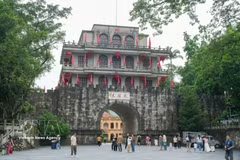
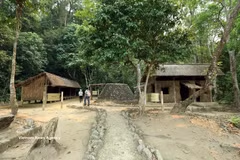
The Dien Bien Phu campaign headquarters has become a popular tourist attraction in Dien Bien province. (Photo: VNA)

Dien Bien Phu tourism cable car project receives in-principle approval

The project aims to effectively tap the area’s natural landscapes, geographical advantages and distinctive historical value, while creating a high-quality tourism product with strong competitiveness. It is also intended to preserve, honour and promote the value of the Dien Bien Phu Victory special national historical relic site.

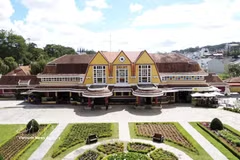
Da Lat station is the hub of the roughly 84-km Phan Rang–Da Lat railway (Photo: VNA)

Da Lat city's century-old railway station doubles as tourist draw

It now functions as both a transport hub and a sought-after photo spot. In the early morning, with mist still threaded through the pines, the station radiates an old-world calm. Visitors arrive at dawn to breathe the mountain air and capture iconic images of the highland city.

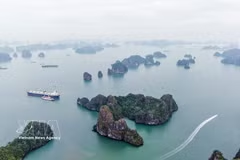
Ha Long Bay in Quang Ninh province. (Photo: VNA)

Quang Ninh - magnet for affluent Indian travellers

Alongside wedding tourism, Quang Ninh is also seeing robust growth in arrivals of Indian MICE travellers. Delegations of hundreds, and sometimes thousands, of visitors have been coming to the province for conferences, seminars and incentive travel programmes combined with leisure stays.