Hanoi (VNA) - An overseas-based organisation has once again issued a flawed assessment of press freedom in Vietnam, relying on a narrow perspective and externally imposed standards. In reality, however, Vietnam has made efforts to consolidate its legal framework, facilitate media operations, and expanded public access to information.
Press freedom within legal framework and social responsibility
Vietnam’s approach is reflected in its press legislation. Under existing regulations, press agencies and journalists are protected by law and provided with conditions to carry out their professional duties. Interference with lawful journalistic activities is prohibited.
The Press Law 2025/QH15, adopted in December 2025 and due to take effect on July 1, 2026, further defines the rights, responsibilities and obligations of the press. It outlines citizens’ rights to freedom of expression through the media, press agencies’ responsibility for safeguarding press freedom, the State’s obligations regarding freedom of speech and press, prohibited acts and policies supporting comprehensive media development.
Notably, Article 27 of the law specifically details journalists’ rights and obligations, affirming their ability to conduct reporting activities both in Vietnam and abroad under legal protection.
The legislation also grants journalists the right to access and use information for reporting purposes, work with agencies and organisations upon presenting their press credentials, and obtain documents that do not fall under protected categories such as state secrets, as well as personal and family privacy. Journalists may cover public court hearings, work in designated media areas and directly interview judicial officials and participants in accordance with the law.
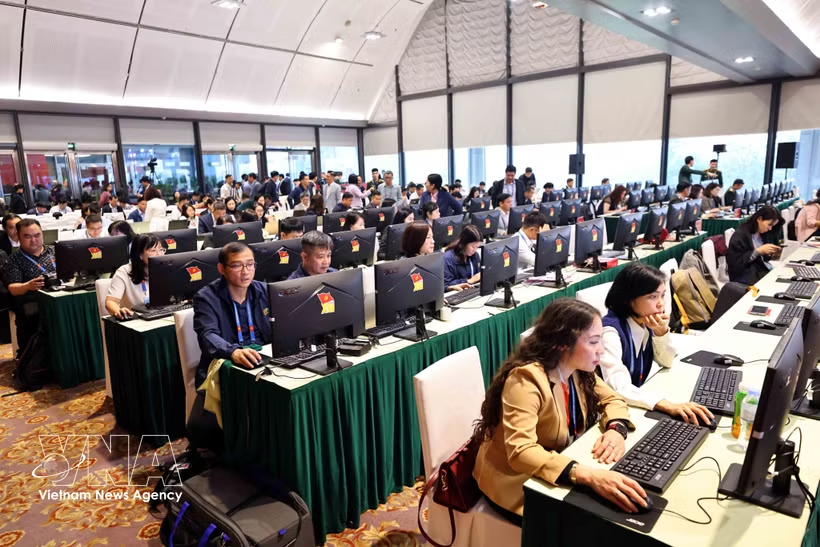
The 14th National Party Congress in Hanoi in January 2026, one of the country’s most significant political events, offered a recent example of media access in practice. The event attracted 597 reporters and technicians from 113 domestic press agencies, up from 498 journalists at the previous congress. A further 79 foreign correspondents, media assistants, overseas Vietnamese journalists and reporters from foreign political parties were accredited to cover the event.
Accompanying national development
Vietnam has accelerated digital transformation across the media sector to meet rising demand for information, expanding public access through digital platforms. Domestic media outlets have increasingly adopted converged newsroom models, multimedia production and stronger audience engagement online.
Leading media outlets are also investing in data journalism, multi-platform publishing and digital-first content strategies to improve information delivery and serve increasingly diverse audiences.
Speaking at a ceremony marking the 100th anniversary of the Vietnamese Revolutionary Press Day on June 21, 2025, Party General Secretary To Lam described revolutionary journalism as an integral part of the Party’s and nation’s development. He called on the media to maintain a pioneering spirit, challenge outdated practices, drive innovation, lead public discussion on major national issues, and inspire creativity, reform and public contributions to national development.
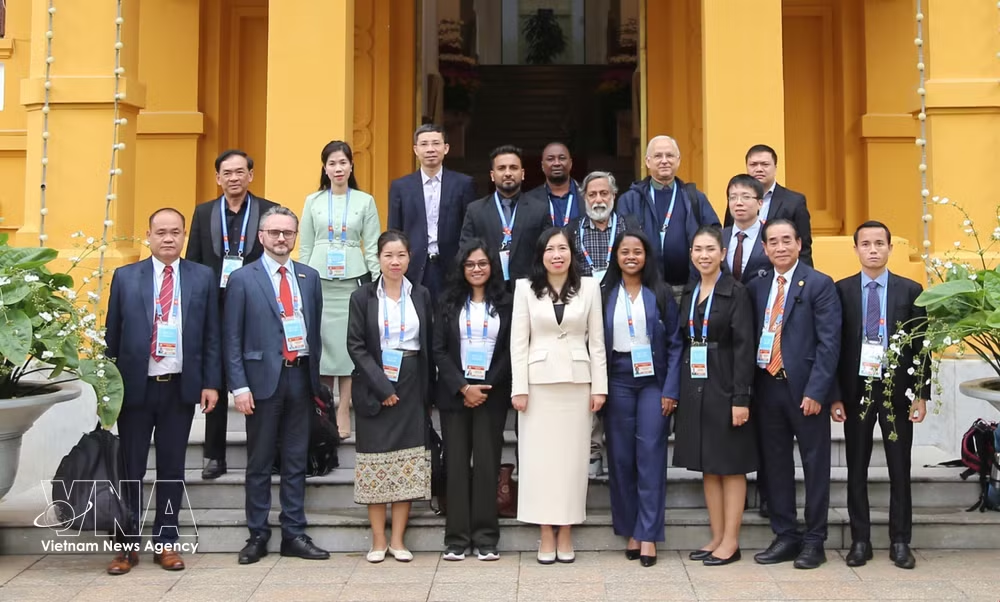
Those orientations underscore the importance attached to journalism and the role of media professionals in Vietnam’s development process.
Press freedom is not a uniform concept applied identically across all countries. Every nation balances freedom of expression alongside considerations such as national security, social order, public morality and broader public interests.
In fact, Vietnam’s media operates within a clear legal framework that both safeguards citizens’ right to information access and broader social interests, stability and national development. Against that backdrop, assessments based exclusively on standards derived from fundamentally different media models, such as private-ownership systems, risk overlooking important aspects of Vietnam’s media environment.
Vietnam also continues to engage with international media outlets and partners to raise mutual understanding and information exchange. Evaluations of press freedom are therefore best considered within the broader socio-economic, cultural and institutional context of each country in order to provide a more objective and balanced reflection of reality.
As digital transformation and global integration reshape the information landscape, Vietnam’s press sector continues to solidify its role as a key channel connecting the Party, State and people while providing comprehensive coverage of social life. The sector’s evolution reflects the country’s efforts to advance press freedom in line with its development goals and national circumstances./.