Thai Nguyen (VNA) – With diverse natural landscapes, a strategic location next to Hanoi, and rich cultural heritage, the northern province of Thai Nguyen is poised to transform its tourism sector into a key economic driver.
Following a major administrative merger with Bac Kan province, Thai Nguyen now borders multiple localities, including Hanoi, Phu Tho, Tuyen Quang, Lang Son, Cao Bang, and Bac Ninh. This geographical advantage positions the province as a crucial tourism hub linking the Capital Region with the wider northeastern region.
In the new development phase, local authorities identify tourism as an important economic sector helping drive economic restructuring, generate jobs, improve local living standards, and uphold the unique cultural, historical and natural heritage values of Vietnam’s premier tea-growing land.
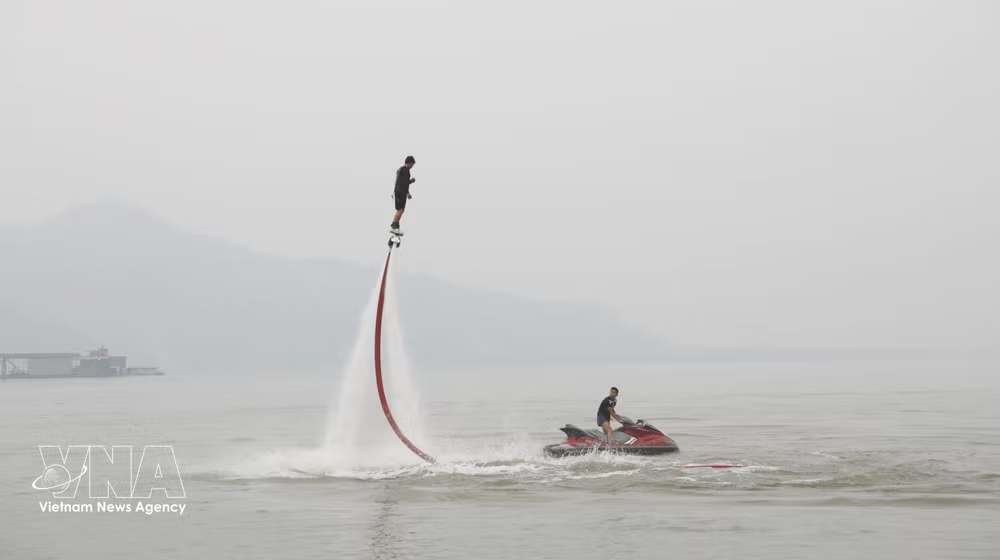
The province boasts exceptional potential for eco-tourism, wellness tourism, and adventure travel. A famous destination is Nui Coc Lake, a 2,500-hectare reservoir currently being developed into a complex for leisure, spiritual, and eco-tourism.
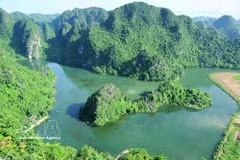
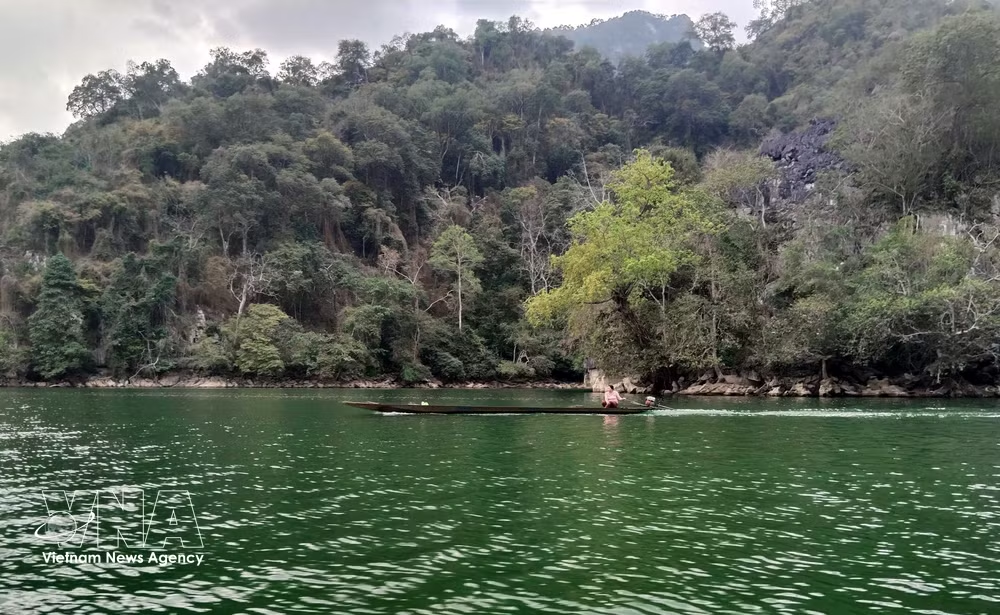
Following the merger, Thai Nguyen also encompasses Ba Be Lake. Covering over 500 hectares of water surface and surrounded by primary forests and a majestic cave system, Ba Be is already an established destination deeply tied to the cultural identities of the Tay, Nung, and Dao ethnic groups, a magnet for both domestic and international visitors.
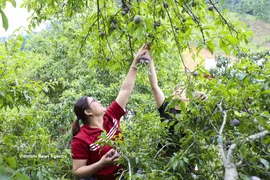
The province is home to 69 natural and artificial lakes like Nam Cat, Suoi Lanh, Vai Mieu, and Ghenh Che, along with striking karst landscapes, deep valleys, and famous caves like Phuong Hoang, Nguoi Xua, Hua Ma and Tham Phay. Aside from natural beauty, it features renowned tea hills like Tan Cuong, Trai Cai, La Bang, Phu Do and Vo Tranh, which double as agricultural tourism sites.
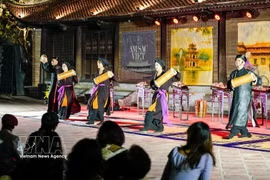
Thai Nguyen also boasts three special national relic sites, 67 national sites, and 323 provincial-level ones, together with 45 national intangible cultural heritage elements. They include the Dinh Hoa and Cho Don revolutionary bases – two of the special national sites, Then singing, Soong Co singing, and Tac Xinh dance.
All form special values hard to be found anywhere else and ideal for tourism development.
Tran Nu Ngoc Anh, Vice Chairwoman of the Thai Nguyen Tourism Association, highlighted considerable tourism progress over the past years. The province welcomed over 900,000 visitors in the first quarter of 2026 alone. Key sites like the Tan Cuong tea farming zone, the Dinh Hoa revolutionary base, Nui Coc Lake and Ba Be Lake continue to draw crowds.
Thai Nguyen currently offers over 300 lodging establishments and dozens of travel agencies. Many operators have reformed tourism offerings and launched new ones linked with local advantages such as the tea culture, eco-tourism, community-based tourism, and heritage tourism. Some of them are adopting digital technology for marketing and management, Anh added.
Under its 2026–2030 development strategy, the province aims to turn tourism into an important industry with sustainable development, strong innovation, and high competitiveness, in tandem with upholding and bringing into play natural, cultural and historical values. By 2030, it targets at least 12 million visitors annually, including one million international arrivals, 25 trillion VND (nearly 950 million USD) in annual revenue, and 10,000 jobs in the sector.
To achieve these goals, Thai Nguyen is applying itself to developing Nui Coc and Ba Be lakes into signature tourism sites with high-end ecological, resort and entertainment tourism services, leveraging cultural and historical heritage values, creating livelihoods for locals, and stepping up digital transformation. In addition, it is boosting smart, green and night-time tourism to improve tourist experiences and extend their stays.
Nguyen Chu Thu, Deputy Director of the provincial Department of Culture, Sports and Tourism, emphasised that diversifying products, specifically community-based tea culture tourism, heritage tours, and premium eco-resorts, and improving service quality are key to enhancing destinations' attractiveness, attracting high-spending visitors, and developing tourism sustainably.
To support this growth, Thai Nguyen is accelerating major infrastructure projects. New transport routes are being built to connect Nui Coc Lake with the eastern slopes of the Tam Dao Mountain Range, along with roads linking with Tuyen Quang province. Once completed, this transport network will significantly cut travel times and create seamless travel itineraries.
Measures relating to human resources, cooperation with partners, and branding are also being taken, expected to help fully unlock the province's economic potential./.