Hanoi (VNA) – Deputy Prime Minister Ho Quoc Dung has called on the Ministry of Science and Technology’s Vietnam Atomic Energy Institute (VINATOM) to accelerate nuclear development and application, making nuclear science a key driving force of national development.
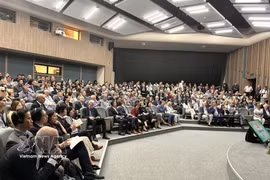
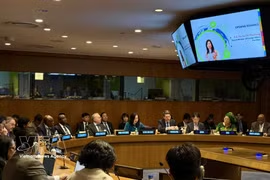
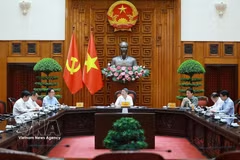
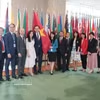
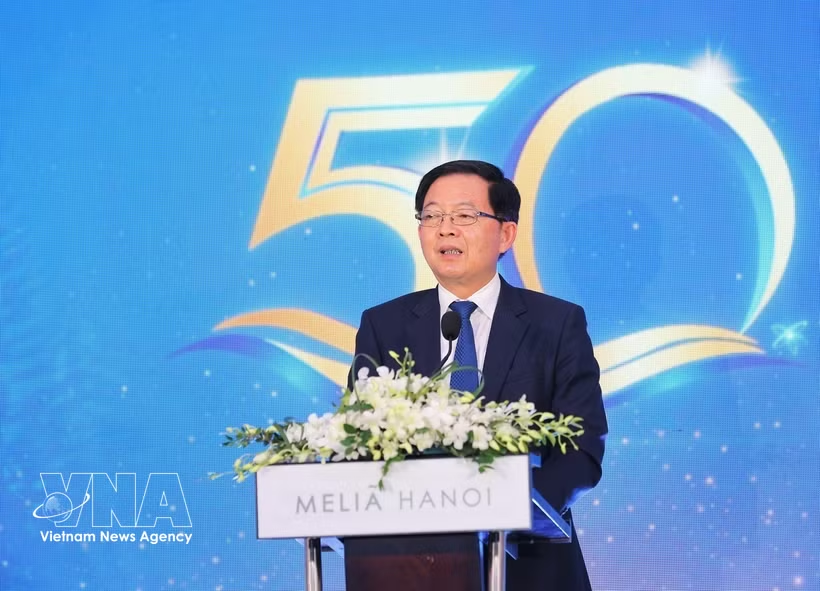
Speaking at VINATOM’s 50th anniversary ceremony in Hanoi on July 7, Dung said the half-century journey has affirmed the Party and State’s strategic vision of establishing the institute immediately after national reunification. Generations of scientists and officials overcame steep hurdles to build a nuclear science hub that has delivered for the economy and earned international credibility.
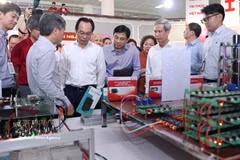
The 1984 restoration, capacity upgrade and operation of the Da Lat nuclear reactor, by Vietnamese scientists and Soviet experts, stood as a defining milestone. From that solid base, VINATOM expanded into a network of specialised research units, notching advances in nuclear technology and advanced radiation applications.
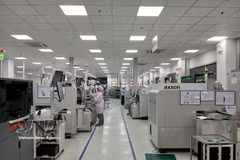
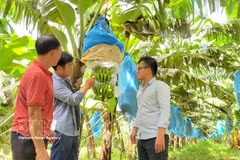
Beyond reactor operation, the institute has embedded itself across the economy. It now manufactures radioisotopes and radiopharmaceuticals for the domestic nuclear medicine market, deploys radiation-induced mutation breeding to generate high-value crop varieties, and supplies non-destructive testing and radiotracing to the oil, gas, and petrochemical industries. Irradiation technology also underpins medical sterilisation and export-oriented food and fruit treatment.
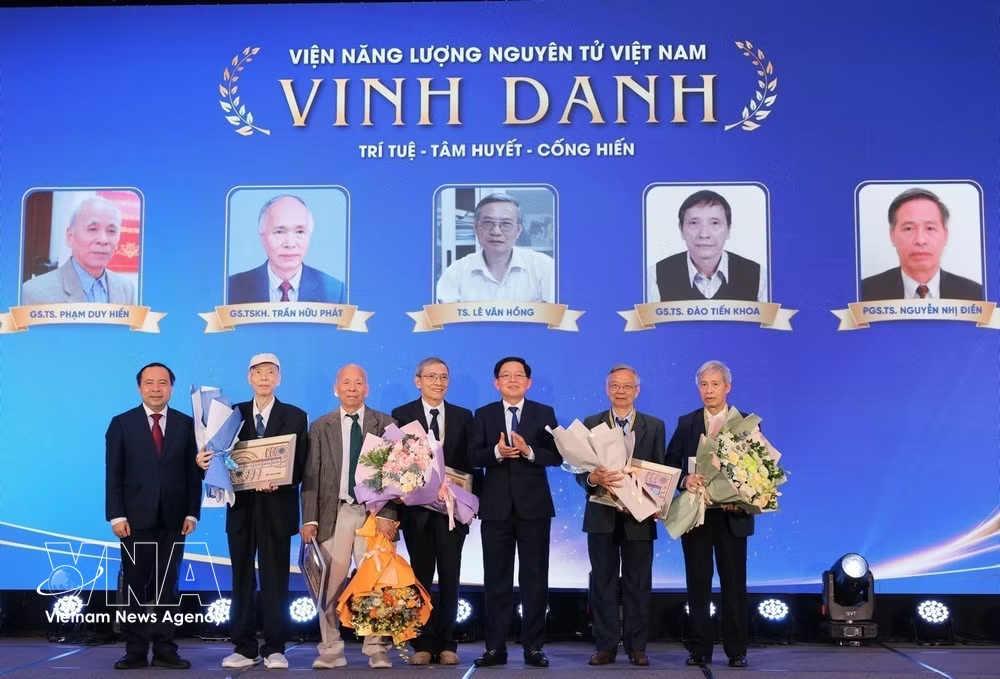
VINATOM runs the national environmental radiation monitoring and warning network, making it central to radiation safety and cross-border nuclear incident response. Such has produced a team of top-tier experts and a knowledge base primed for missions of national strategic significance.
Looking forward, Dung ordered the institute to further streamline its organisational structure and marshal all resources to roll out the nuclear sci-tech research centre project.
Minister of Science and Technology Vu Hai Quan said his ministry and VINATOM will move immediately to turn those plans into concrete action, aiming to push the nuclear energy sector into a phase of robust, sustainable expansion.
VINATOM Director Dr. Tran Chi Thanh described the 21st century as the era of nuclear science and technology, underpinned by ecosystems for nuclear technology and the atomic energy industry, succeeding the 20th century’s era of nuclear power and atomic energy applications in socio-economic development.
Thanh said VINATOM is targeting not just research strength but strategic national entity status, accompanying the country in building a modern nuclear industry. The roadmap includes progressively mastering advanced nuclear power technologies such as small modular reactors, deepening nuclear applications in healthcare, agriculture, industry, natural resources and environment, and capturing rare earth deep processing capabilities to fast-track strategic products and materials. It also plans new-generation radiopharmaceuticals for cancer diagnosis and treatment and push to build a modern nuclear sci-tech centre equipped with a new research reactor.
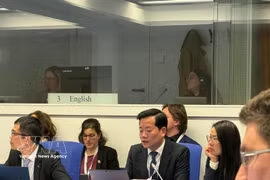
Najat Mokhtar, Deputy Director General of the International Atomic Energy Agency (IAEA), said Vietnam is embarking on 19 project contracts with the agency spanning food and agriculture, healthcare, nuclear safety and security, and physical and chemical sciences. As Vietnam moves to expand its nuclear power agenda and scale non-power applications, the IAEA will continue its five-decade partnership with VINATOM, she added./.