Phu Quoc reflects Vietnam’s “Unprecedented” wave of tourism infrastructure investment: US magazine

Amid this investment wave, Phu Quoc is emerging as a representative destination, with a series of infrastructure, hospitality and international cooperation projects being developed in preparation for APEC 2027 and the years beyond.

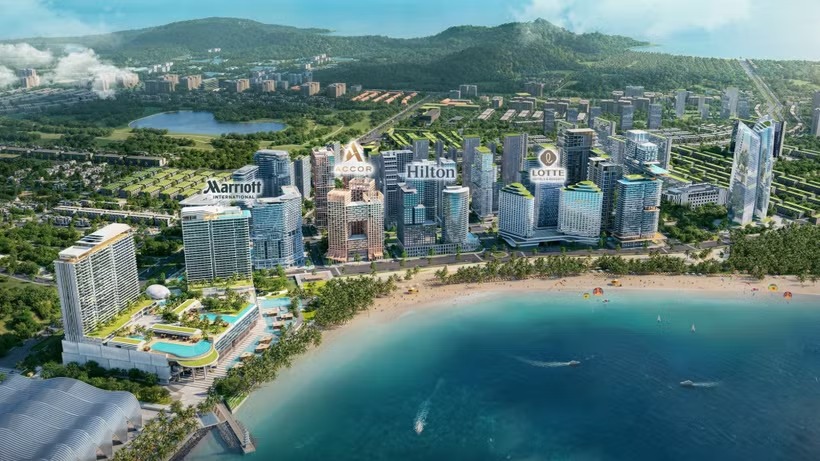
A hotel “city” is being developed by Sun Group in the Bai Dat Do area of Phu Quoc, bringing together 13 high-end hotel brands from five of the world’s leading hotel management groups. (Photo: Sun Group)

Hanoi (VNA) - Leading US business magazine Fortune has noted that Vietnam is entering a phase of tourism infrastructure investment at a pace rarely seen in the region. Citing a senior Hilton executive, Fortune described this as something “not seen in any other country, even in the Middle East.” Amid this investment wave, Phu Quoc is emerging as a representative destination, with a series of infrastructure, hospitality and international cooperation projects being developed in preparation for APEC 2027 and the years beyond.

“Unprecedented, even in the Middle East”

In an article on the rise of Vietnam’s tourism sector, Fortune quoted Alexandra Murray, Vice President and Head of Southeast Asia at Hilton, as saying that the pace of tourism infrastructure development in Vietnam is something she has “not seen in any other country, even in the Middle East.”

This is one of the most noteworthy observations in the article. According to Fortune, the momentum behind Vietnam’s tourism breakthrough comes not only from increasingly open visa policies and expanded air connectivity, but also from a strong infrastructure investment strategy and the growing involvement of the private sector in shaping new destinations.

These investments are not merely intended to increase visitor capacity. They are aimed at a longer-term goal: enhancing the quality of experiences, extending visitors’ length of stay and increasing tourist spending. This is also the foundation for Vietnam to gradually strengthen its competitiveness against leading destinations in Southeast Asia.
pq2.jpg
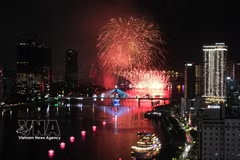
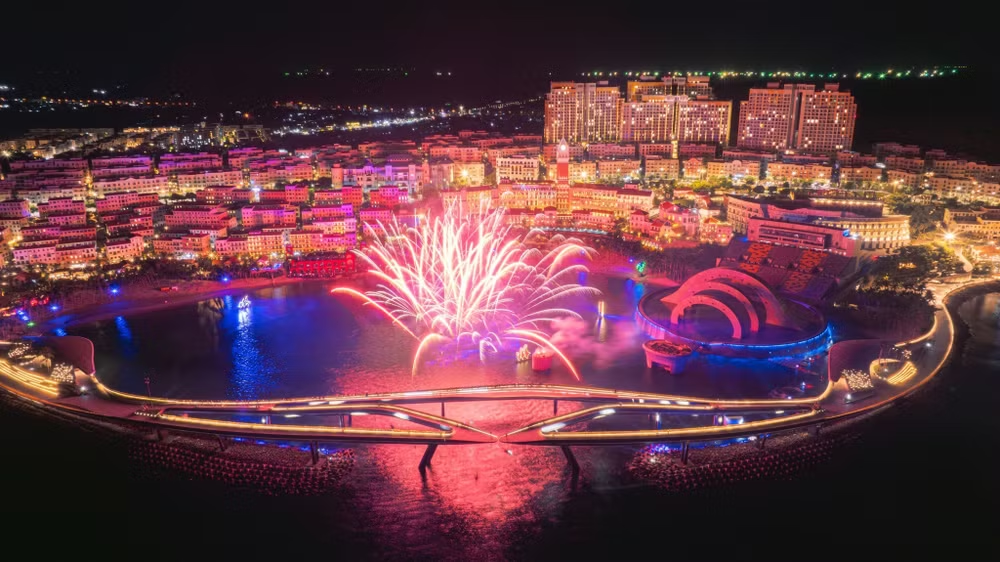
Phu Quoc is lit up by two fireworks shows every night in Sunset Town. (Photo: Sun Group)

To realise this goal, alongside public investment, the Government is encouraging greater participation from the private sector in the development of infrastructure and large-scale tourism ecosystems. It is this synergy between policy and enterprise that is creating a new wave of investment in Vietnam’s tourism industry.

Phu Quoc: A focal point of new investment wave

Within this tourism development strategy, Phu Quoc has emerged as one of the clearest examples.

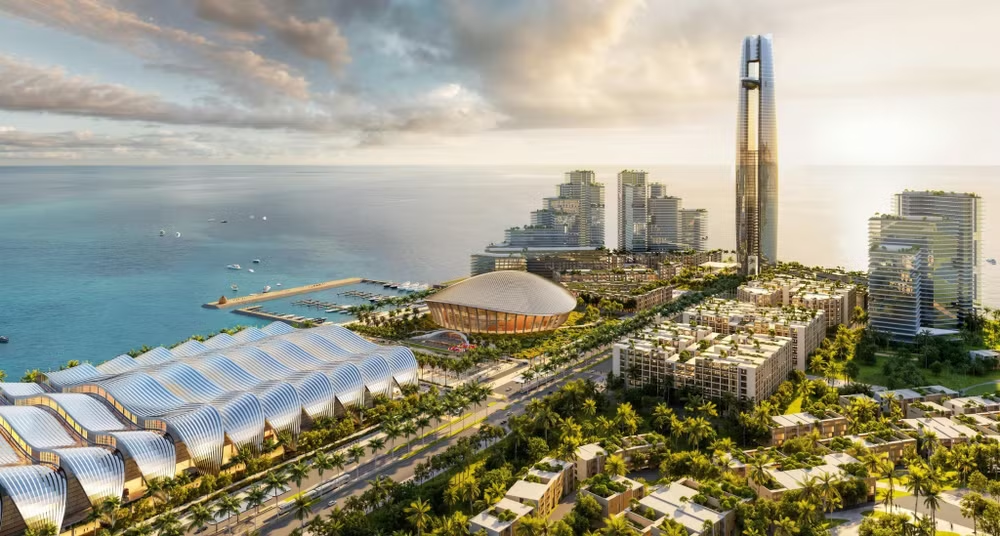
Ahead of APEC 2027, the Pearl Island is undergoing a comprehensive infrastructure upgrade. Sun Group has been assigned to study and implement several key projects, including the expansion of Phu Quoc International Airport, the development of the APEC Complex, the expansion of Provincial Road DT.975 and the development of an LRT line connecting the airport with the APEC Convention and Exhibition Centre.
pq3.jpg
A perspective of the APEC Complex in Phu Quoc. (Sun Group)

These are not only projects designed to serve an international event, but also infrastructure that will lay the groundwork for Phu Quoc’s long-term development. Once completed, the new infrastructure system will increase visitor capacity, ease traffic pressure and expand the island’s space for urban, commercial, service and tourism development.

In parallel with transport infrastructure, Sun Group is also investing heavily in the hospitality sector, with plans to develop around 17,400 high-end hotel rooms and serviced apartments, with a total investment of nearly 91.6 trillion VND. Part of this supply will be put into operation to serve APEC 2027, while also creating a foundation for Phu Quoc to welcome MICE groups, high-end leisure travellers and markets with more demanding service standards.

One point Fortune particularly highlighted in its article is the growing trend of partnerships between Vietnamese enterprises and international groups to raise product and service standards. In Phu Quoc, Sun Group has partnered with Changi Airport International (CAI), a subsidiary of Changi Airport Group, in the development and operation of Phu Quoc International Airport. According to Fortune, such partnerships not only bring international-standard management and operational expertise, but also help enhance the destination’s connectivity capacity.

In the resort sector, Sun Group continues to cooperate with Accor and Ennismore to bring the Rixos brand to Hon Thom, developing a premium all-inclusive resort model. Along the East-West axis of Hon Thom, brands such as TRIBE, Ibis Styles by Accor, Fairfield by Marriott and Moxy Hotels are also planned for development, serving a diverse range of guest segments, from high-end leisure travellers to young lifestyle-oriented customers.

It is the combination of domestic developers and the world’s leading management brands that is creating new appeal for Vietnam’s tourism industry. Large-scale infrastructure projects, together with an increasingly complete ecosystem of resorts and services, are helping reshape the way the world sees Vietnam not only as a destination rich in natural landscapes and cultural identity, but also as a country with modern infrastructure, high-quality products and the capacity to host international events at scale.

Seen from Phu Quoc, Fortune’s observation on Vietnam’s wave of tourism infrastructure investment is clearly reflected in the increasingly prominent role of the private sector. With pioneering enterprises such as Sun Group, from transport infrastructure and hospitality to cooperation with international partners, the Pearl Island is becoming a testament to how Vietnam is upgrading destination quality, strengthening competitiveness and gradually moving closer to its goal of becoming one of Southeast Asia’s leading tourism hubs./.
VNA

See more

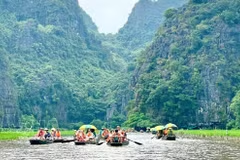
Ninh Binh is praised for its limestone mountains, rice fields and winding rivers. (Photo: VNA)

French magazine spotlights Vietnam as destination for diverse experiences

Paris Match says Vietnam's appeal extends beyond its landscapes and luxury resorts. Its unique combination of nature, history, cultural heritage and local life offers travellers a wide range of authentic experiences, making the country an increasingly attractive destination for international travellers.

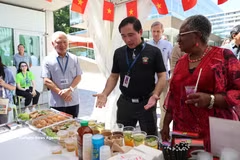
Minister Counsellor Pham Quang Huy (in black) introduces Vietnam's pavilion to WTO Director-General Ngozi Okonjo-Iweala. (Photo: VNA)

Vietnam's pavilion draws crowds at WTO Open Day 2026

Vietnam's pavilion emerged as one of the highlights of the World Trade Organisation (WTO) Open Day 2026 in Geneva on July 5, attracting a steady stream of visitors eager to savour authentic Vietnamese cuisine. Many said the experience had inspired them to visit Vietnam in the near future.

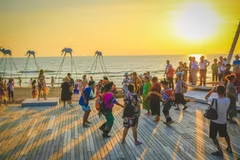
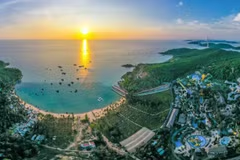
Visitors enjoy the sunset at Sunset Sanato Beach in Phu Quoc. (Photo: VNA)

Tourism emerges as key driver of economic growth

Vietnam’s tourism performance has been widely regarded as a bright spot at a time when the global tourism industry continues to face significant challenges, including geopolitical tensions, armed conflicts in several regions, slowing global economic growth, rising oil prices and higher travel costs.

Biba Magazine spotlights must-try Vietnamese dishes in a recent article. (Photo published by VNA)

French magazine highlights must-try dishes in Vietnam

According to Biba Magazine, Vietnam's regional culinary diversity, fresh ingredients and refined cooking techniques have elevated its cuisine far beyond iconic dishes such as pho and spring rolls, making it one of the country's most memorable attractions for international visitors.

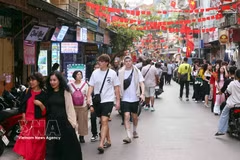
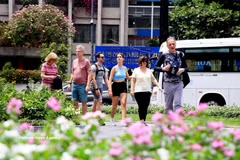
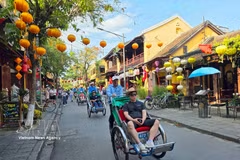
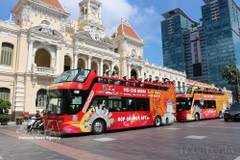
International tourists stroll through downtown Ho Chi Minh City. (Photo: VNA)

FIT boom creates new opportunities for Vietnam's tourism

According to Nguyen Trung Khanh, Director General of the Vietnam National Authority of Tourism (VNAT), FIT has become one of the defining trends in post-pandemic tourism. Increasingly, travellers are seeking flexibility, personalised experiences and authentic cultural engagement, prompting destinations worldwide to rethink their tourism products, services and marketing strategies.

The “5 Cua O” heritage train brings new experience to travellers (Photo: VNA)

Heritage trains carve new niche in Vietnam’s tourism strategy

On a weekend morning, the “5 Cua O” (Hanoi Five Gates) heritage train pulled out of Hanoi Railway Station to the strains of “xam tau dien” - a traditional folk music echoing through a community carriage. Outside the window, the bustle of the Old Quarter gradually receded and the iron span of the historic Long Bien Bridge slid into view.

Sun PhuQuoc Airways launches two new routes to Chengdu

Sun PhuQuoc Airways launches two new routes to Chengdu

As the first airline to operate scheduled nonstop flights between Phu Quoc and Chengdu, Sun PhuQuoc Airways is also introducing launch offers of up to 20% off fares, complimentary Sun World Hon Thom Cable Car tickets, and exclusive privileges across the integrated Sun Group ecosystem.

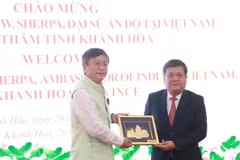
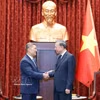
Secretary of the Party Committee of Khanh Hoa province Tran Phong (right) meets with Indian Ambassador to Vietnam Tshering Wangchuk Sherpa. (Photo: VNA)

Khanh Hoa looks to draw more travellers from India

Indian arrivals to Vietnam have risen sharply from around 100,000 before 2016 to 750,000 in 2025, 4.5 times higher than in 2019, driven by expanding direct air routes. The number of Vietnamese visitors to India has also maintained an average annual growth rate of 17–20%.

The cave, Thang (Victory) Cave, is named after a local resident who first identified its location. (Photo: Published by VNA)

New cave with rare stalactites, cave pearls discovered in Phong Nha – Ke Bang

Located between Voi (Elephant) Cave and Ma Da Lake in the Ma Da Valley, within the park’s strictly protected zone, the cave measures about 3,000 metres in length and 70 metres in average width, with several chambers extending beyond 100 metres. It has two entrances leading to separate branches. While the main entrance covers about 5 sq.m, the exit is narrow, allowing passage for only one adult at a time.

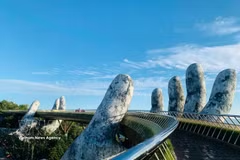
From Da Nang, tourists can easily access attractions such as Sun World Ba Na Hills with its iconic Golden Bridge. (Photo: VNA)

Da Nang emerges as hub for multi-destination travel

Da Nang’s appeal has been further strengthened after being ranked second on Lonely Planet’s list of Asia’s most attractive summer destinations. The recognition underscores the city’s growing role as a tourism and leisure hub in the region.