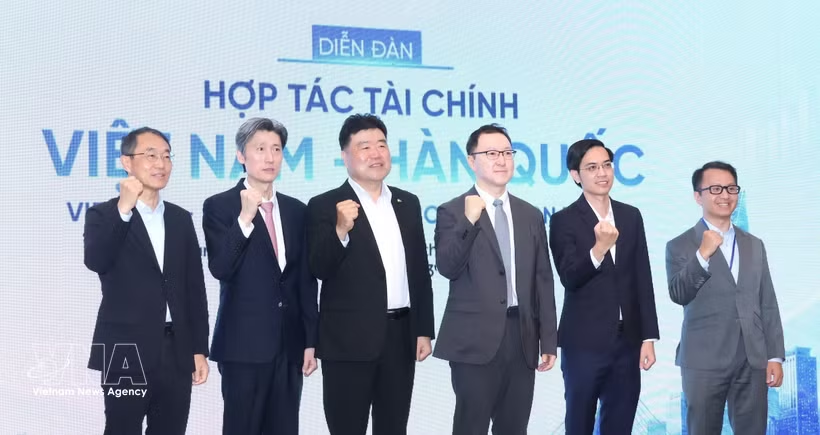
Ho Chi Minh City (VNA) – Cooperation in capital market development, cross-border payment, fintech and green finance has been identified as focal areas of the Vietnam – Republic of Korea (RoK) financial ties as the Vietnam International Financial Centre in Ho Chi Minh City (VIFC-HCMC) officially begins operations, heard a forum held in the southern metropolis on July 13.
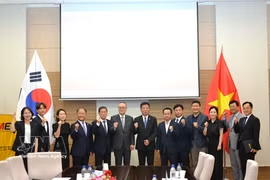
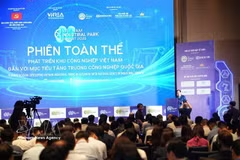
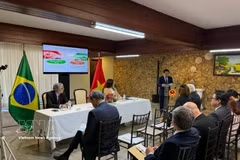
At the Vietnam – RoK Financial Cooperation Forum, organised by VIFC-HCMC and the Consulate General of the RoK in Ho Chi Minh City, experts, policymakers and business representatives discussed ways to strengthen financial market connectivity and attract international capital flows.
Deputy Consul General Kwon Tae Han said the forum came at a significant time as VIFC-HCMC enters operation. He noted that exchanges among Vietnamese and Korean financial experts will help lay the foundation for long-term cooperation.
Since establishing diplomatic ties in 1992, the two countries have achieved strong economic progress and are now deepening financial cooperation as Comprehensive Strategic Partners, he noted.
Amid rapid digital transformation and the rise of artificial intelligence, Kwon said financial cooperation is becoming increasingly important to growth. The two sides should strengthen institutional links, financial infrastructure and market connectivity to facilitate investment and provide safer and more convenient financial services.
He noted that Vietnam’s dynamic market and strong digital adoption complement the RoK’s expertise in digital finance, fintech and electronic financial infrastructure, creating momentum for the development of VIFC-HCMC and bilateral financial partnerships.
Potential areas for early cooperation include QR-code payment connectivity, bond market development and stronger links between their financial institutions, the diplomat went on, adding that the Korean Consulate General will continue serving as a bridge for investment and business projects.
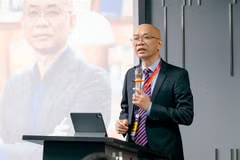
Assoc. Prof. Dr Nguyen Huu Huan, Vice Chairman of the Executive Board of VIFC-HCMC, said ASEAN remains an attractive destination for international investment, drawing around 226 billion USD in FDI in 2024, while Vietnam faces significant capital demand for infrastructure, digital transformation, green transition and innovation.
Huan considered the establishment of VIFC-HCMC as a strategic move to build a deeper and more diversified financial market capable of mobilising international capital more effectively.
VIFC-HCMC is not merely a concentration of financial institutions. It aims to become a modern financial ecosystem connecting international capital, technology and talent, piloting new financial models in a controlled manner and developing products that directly support the real economy, he said.
The centre is prioritising asset management and investment funds, international capital and bond markets, green finance, digital finance and fintech, cross-border payment, aviation and maritime finance, alongside supporting services such as credit ratings, auditing, legal consultancy, arbitration and training.
Describing the RoK as a strategic partner of VIFC-HCMC, Huan said cooperation potential is significant given the country’s developed capital market, modern banking system, technological strengths and experience in building financial centres in Seoul, Busan and Incheon.
VIFC-HCMC has proposed five key areas of cooperation: attracting Korean financial institutions and investors; developing international fundraising channels through green and sustainability bonds, investment funds and project finance; connecting payment systems and promoting cross-border QR payment; advancing fintech, AI, big data, digital identity and sandbox models; and developing high-quality human resources through expert exchanges and academic cooperation.
In green finance, the centre sees opportunities to connect Korean capital with Vietnamese green projects, particularly as Vietnam pursues its energy transition and net-zero emissions targets. VIFC-HCMC could facilitate the structuring, rating, underwriting, distribution and trading of green financial products.
The centre leader also pledged to establish a dedicated support mechanism for Korean investors, coordinate with authorities in product development and pilot programmes, and strengthen business connectivity./.
VNA