Hue awakens heritage through community strength

The city is now shifting its development strategy to focus on the community, empowering local residents to become true guardians of heritage by preserving, creating, and directly enjoying the benefits of their cultural legacy.

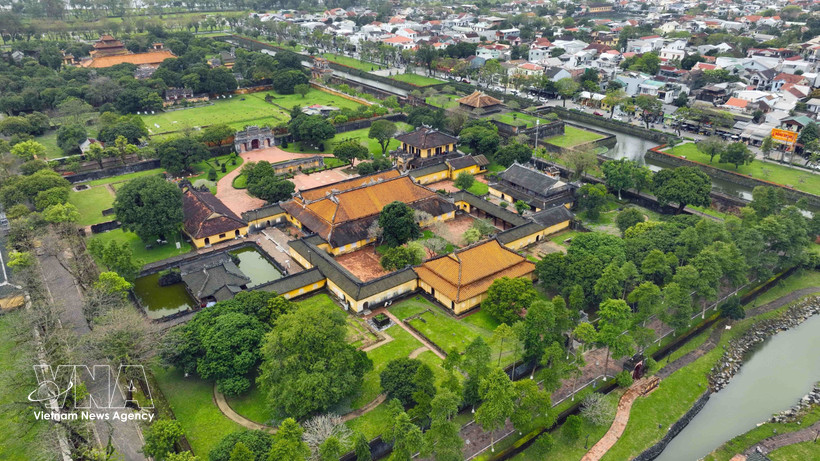
Dien Tho Palace (within the Complex of Hue Monuments) serves as the residence of the Empress Dowagers and Grand Empress Dowagers during this period. It is one of the distinctive architectural structures that has remained almost intact to the present day. (Photo: VNA)

​Hue (VNA) – Hue, often called a “living museum” of Vietnamese culture, is facing the challenge of having plenty of tourism products but not enough charm to draw visitors.

The city is now shifting its development strategy to focus on the community, empowering local residents to become true guardians of heritage by preserving, creating, and directly enjoying the benefits of their cultural legacy.

Diverse products, but lacking pull

From the imperial citadel complex, royal tombs and pagodas to traditional craft villages, court and folk cuisine, a tranquil lifestyle and vibrant festivals, Hue possesses a remarkably rich tourism landscape rarely matched elsewhere.

Various tourism types have emerged, from heritage tourism, community-based tourism, craft village experiences, wellness, and spiritual tourism, to culinary tours and nighttime activities. However, many remain small-scale, fragmented, and lacking depth of experience, failing to form a sufficiently strong ecosystem to retain visitors for longer stays.

After the success of the film "Mat Biec" (Dreamy Eyes by Victor Vu), several cinema-themed spots in Hue saw a surge of young visitors. But as the movie’s buzz wore off, many of these spontaneous tourism ventures slowed, highlighting both the city’s rich potential to blend culture, creativity, and tourism and the importance of a long-term, sustainable plan.

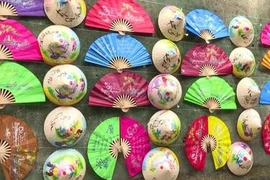
Meanwhile, many local traditional crafts are struggling to find their place in modern life. Once a source of pride for the former imperial capital, craft villages now risk decline due to volatile markets. Many survive primarily thanks to the dedication of artisans rather than a sustainable tourism value chain.

In Sinh village, artisan Pham Cong Khai is among the few remaining practitioners preserving a more than 400-year-old folk painting tradition, painstakingly carving woodblocks and printing zodiac worship prints. Yet industrialisation threatens the craft’s survival without adequate spaces for exhibition, experience and sales.

Similarly, Tran Dai Nghia, a well-known maker of "to he" (traditional figurines) in Huong Thuy, said the craft now exists largely as an experiential activity for schoolchildren. With products priced between 15,000 - 35,000 VND (0.57–1.33 USD), the income isn’t enough to make a living without extra support from events, night markets, or workshops. He hopes the city will provide more opportunities for the craft to grow and thrive within the community.
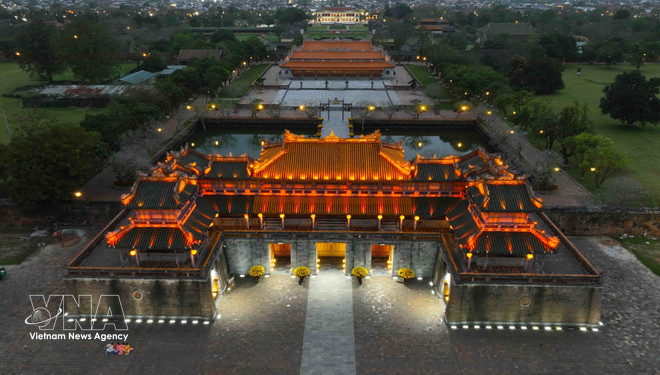
vnanet-ngo-mon-gate.jpg
Ngo Mon — the principal southern entrance to the Imperial City of Hue. (Photo: VNA)

Heritage must “live” with community

According to Phan Thanh Hai, Director of the municipal Department of Culture and Sports, Hue possesses an exceptionally rich repository of tangible, intangible, and natural heritage. However, current exploitation remains largely “static” and has yet to activate the broader heritage ecosystem. For sustainable development, heritage must live within the community and reflect contemporary life, with residents playing the central role.

Experience shows that when local people are directly involved in tourism activities, heritage naturally “awakens”. The series of events marking the Lunar New Year of 2026 in wards and communes illustrated this clearly. The participation by artisans and creative young people created a bridge between generations, revitalising local cultural identity while drawing renewed attention to traditional craft villages.

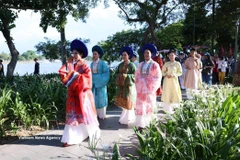
In recent years, movements such as the revival of traditional "ao dai" attire and digital-media culinary start-ups have demonstrated the increasingly important role of Hue’s youth in injecting fresh energy into heritage promotion.

Along with community involvement, technology is seen as a major force for innovation. Cultural experts highlight that using digital tools and artificial intelligence for preserving, promoting, and interpreting heritage can greatly improve accessibility, especially for younger people and visitors from around the world. Virtual 3D tours of royal tombs, multilingual audio guides through smart apps, and interactive digital storytelling can turn heritage from static displays into lively, immersive experiences./.
VNA

See more

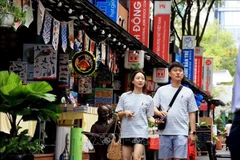
Korean tourists on Ho Chi Minh City's book street (Photo: VNA)

Vietnamese destinations attracting Korean visitors amid “micro-trip” trend

Last year, Vietnam welcomed more than 4.3 million Korean visitors out of a total of nearly 29.6 million Koreans traveling abroad. This volume significantly outpaces Korean arrivals to neighbouring competitors like Thailand, Singapore, and the Philippines, cementing Vietnam’s status as a premier regional hub for East Asian tourism.

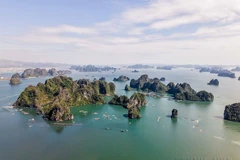
Ha Long Bay, located in northeast Vietnam, is beloved for its blue waters and spread of limestone islands - all occupied by tropical trees and wildlife. (Photo: VNA)

Vietnam named among world’s 28 most beautiful countries

In its latest list, the US-based magazine noted that while cities like Hanoi and Ho Chi Minh City attract millions of visitors each year, Vietnam’s true allure lies in its diverse natural landscapes and immersive travel experiences. The country, it said, is “a haven for outdoor enthusiasts” and anyone drawn to scenic beauty.

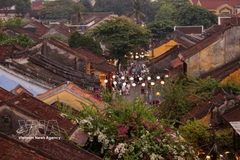
The enduring appeal of Hoi An's heritage lies not in static structures, but in its vibrant presence in everyday life. (Photo: VNA)

Hoi An, Da Nang Int’l Airport named among world’s best

Hoi An has been named among “The 51 most beautiful places in the world” by British magazine Time Out, while Da Nang International Airport has, for the third consecutive year, secured a place in the world’s Top 100 airports by Skytrax.

French tourists learn about Vietnamese tourism at the 49th World Travel Fair held in Paris (Photo: VNA)

Vietnam refines tourism promotion strategy to elevate national brand

At the fair, Vietnam’s pavilion drew strong interest from travel businesses, experts, and European visitors. According to organisers, Vietnam, along with Japan and Thailand, was among the Asian countries most searched for by French tourists, reflecting growing European attention to Southeast Asia and Vietnam.

International tourists visit the historical sites of the Dinh and Le Kings' temples in the ancient capital of Hoa Lu, Ninh Binh province (Photo: VNA)

Vietnam sees surge in foreign tourist arrivals, driven by safe destination image

Tourism experts attributed the strong growth to a combination of factors, including more open visa policies, diversified tourism products, and intensified promotion activities. Vietnam’s growing reputation as a safe and friendly destination has also played a significant role in attracting international travellers.

Through the lens of Travel + Leisure, Phu Quoc emerges as an open-air showcase of global architecture

US magazine calls Phu Quoc “a global showcase for architecture”

In a fresh perspective on the island, Travel + Leisure moves beyond beaches and resorts to spotlight Phu Quoc’s evolving identity. The magazine highlights how internationally inspired architectural works are increasingly shaping the destination, forming a new tourism character.

Unlocking tourism potential of Hoi An’s southern coastline

Unlocking tourism potential of Hoi An’s southern coastline

The central city of Da Nang possesses nearly 200km of coastline – the longest in Vietnam, with scenic landscapes and favourable natural conditions for tourism and service development. However, only about half of this coastline has been utilised for tourism activities, mainly concentrated in central Da Nang and Hoi An Ancient Town. Large stretches of coastline south of Hoi An remain largely untouched, holding significant potential for future development.

The Hanoi Tourism Festival 2026 at Thong Nhat Park attracts large numbers of residents and visitors for sightseeing and hands-on experiences. (Photo: VNA)

New highlights define Hanoi Tourism Festival 2026

The festival featured nearly 100 booths designed as a journey through diverse themed spaces. The space of memory highlights heritage sites, the Old Quarter, architecture, traditional craft villages and Hanoi’s cultural life through destination models, photography exhibitions and fine art displays. The connection space provides a platform for travel businesses to introduce new tours, promotional programmes and attractive discount vouchers.

Visitors experience the Ta Nang–Phan Dung trekking route. (Photo: nhandan.vn)

Vietnam taps trail tourism potential

The trend of nature exploration tourism, particularly hiking in mountainous areas, is gaining momentum across Asia, especially among young people. In Vietnam, more young travellers are choosing short weekend trips to explore forests, mountains and local ecosystems.

Passenger Terminal T2 draws inspiration from the Phoenix.

Singapore’s CPG Consultants designs Phu Quoc Airport – A world-class vision for the Pearl Island’s gateway

CPG Consultants, a subsidiary of CPG Corporation, an internationally renowned multidisciplinary consultancy group headquartered in Singapore, is the design firm for Phu Quoc International Airport. The project is led by Mr. Steven Thor, Executive Vice President (Global Atelier Collective) at CPG Consultants. He has more than 30 years of experience in international design and has worked on multiple award-winning developments, including large-scale infrastructure projects across several countries.

Phu Quoc is becoming a crossroad for the world's architectural marvels

The allure of Phu Quoc’s timeless architectural DNA

Phu Quoc’s architectural allure doesn't merely stop at honoring the past; it actively creates "contemporary heritage" that cements the Pearl Island's name on the map. A shining example is the Kiss Bridge, envisioned by architect Marco Casamonti—a profound piece of humanistic art where mankind and Phu Quoc’s natural beauty become one.

Visitors admire Ho Chi Minh City from above. (Photo: VNA)

Ho Chi Minh City launches helicopter sightseeing tours

Globally, helicopter tourism has become a popular offering in many major destinations. By introducing this experience, Ho Chi Minh City aims to expand its portfolio of high-end tourism products and further enhance its destination image.