Indonesia launches plan to boost national productivity

Through this campaign, Indonesia aims to enhance competitiveness, reduce regional disparities, and build a stronger foundation for sustainable growth in pursuit of its “Golden Indonesia 2045” vision.

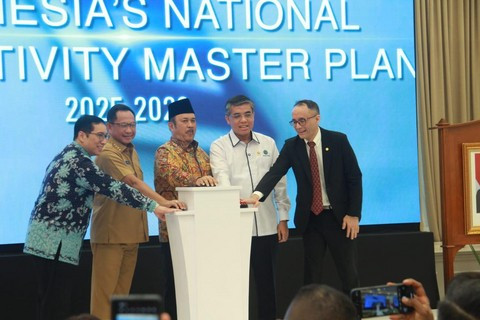
Formal joint launching moment of Indonesia's National Productivity Master Plan (MPPN) 2025–2029 by Vice Minister Febrian Alphyanto Ruddyard (left), Minister Tito Karnavian (second from left), Minister Pambudy (centre), Minister Yassierli (second from right), and APO Secretary-General Dr. Indra (right). (Photo: bernama.com)

Jakarta (VNA) – The Indonesian government has launched its National Productivity Master Plan (MPPN) 2025–2029, a five-year strategy designed to accelerate innovation, strengthen industrial competitiveness, and improve living standards through sustained productivity growth.

The Ministry of Manpower reported that labour productivity has grown by an average of only 2.6% annually, lower than that of Vietnam and Malaysia. To address this, the National Development Planning Agency (Bappenas) has unveiled a comprehensive National Productivity Master Plan for 2025–2029, aiming to help Indonesia become one of the world’s top five economies by 2045.

Minister Yassierli said the campaign will focus on revitalising productivity centres across the country and developing “talent and innovation hubs” within vocational training institutions. He noted that low productivity is not only caused by limited workforce skills but also by complex administrative procedures and poor coordination among government bodies.

The minister emphasised the need for a long-term, integrated strategy involving government, businesses, and local authorities.

National Development Planning Minister Rachmat Pambudy stated that the new master plan will strengthen Indonesia’s productivity ecosystem through increased investment, improved infrastructure, and modern technology. It will also draw on lessons from member economies of the Asian Productivity Organisation (APO), including Vietnam, Thailand, Malaysia, and Japan. He stressed that fostering a nationwide “efficient work culture” and enhancing worker motivation are crucial to achieving sustainable improvements.

Through this campaign, Indonesia aims to enhance competitiveness, reduce regional disparities, and build a stronger foundation for sustainable growth in pursuit of its “Golden Indonesia 2045” vision./.
VNA

See more

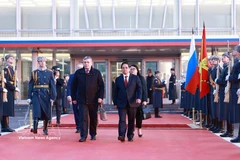
Singaporean Prime Minister Lawrence Wong (R) welcomes Thai Prime Minister Anutin Charnvirakul (Photo: thestar.com)

Thailand, Singapore enhance bilateral collaboration

The Thai and Singaporean PMs witnessed the signing of several memoranda of understanding (MoUs), notably an MoU on rice trade cooperation between the two governments, under which Thailand agreed to sell Singapore up to 100,000 tonnes of rice annually.

Indonesia to add 30 urban trains in Jakarta

Indonesia to add 30 urban trains in Jakarta

The addition of new trains is expected to help Indonesia ease traffic congestion, improve the quality of public transport services, and promote sustainable socio-economic development in Indonesia’s most densely populated urban area.

Illustrative image (Photo: Antara)

Indonesia to end diesel imports by 2026

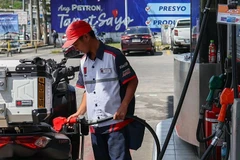
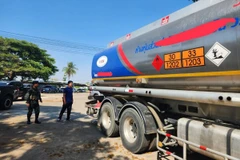
Indonesian Minister of Energy and Mineral Resources Bahlil Lahadalia has reported to President Prabowo Subianto that Indonesia is on track to stop importing diesel fuel by early 2026, marking a major milestone in national energy independence.

Director General of the Metal, Machinery, Transportation Equipment, and Electronics (ILMATE) Industry at the Ministry of Industry Setia Diarta during the Opening of GIIAS Makassar on November 5. (Photo: ANTARA)

Indonesia to downstream EV batteries in two years

Indonesia is projecting the downstreaming of electric vehicle (EV) batteries for motorcycles and cars within the next two years, according to Director General of the Metal, Machinery, Transportation Equipment, and Electronics (ILMATE) Industry at the Ministry of Industry Setia Diarta.

At the launch of the programme. (Photo: nationthailand.com)

Thailand launches programme to reduce healthcare costs for citizens

Under the new Memorandum of Understanding (MoU), private hospitals in Thailand must provide complete and accurate prescriptions listing drug names and usage details. This transparency allows patients to choose whether to buy their medicines directly from the hospital or from registered pharmacies outside.

Illustrative photo (Photo: bangkokpost.com)

Thailand delivers tepid rice export forecasts for 2026

Thailand maintains its export target for next year at 7.5 million tonnes, including 3.5 million tonnes of white rice, 1.7 million tonnes of hom mali rice, 1.4 million tonnes of parboiled rice, 600,000 tonnes of Thai fragrant rice and 300,000 tonnes of sticky rice.

ASEAN Secretary-General Kao Kim Hourn (Photo: Bernama)

ASEAN Secretary-General: Higher education will shape the region’s future

The ASEAN chief revealed that the ASEAN Socio-Cultural Community (ASCC) Strategic Plan designates education as a driver for equity and sustainable development. Its agenda calls for enhancing access to quality education, promoting lifelong learning, and integrating green skills into curricula. In short, academic purpose serves societal and community purpose.

Thailand aims for 129 gold medals at 33rd SEA Games

Thailand aims for 129 gold medals at 33rd SEA Games

At the 32nd SEA Games held in Phnom Penh, Cambodia, from May 5–17, 2023, Thailand ranked second overall with 108 gold, 96 silver, and 108 bronze medals. Vietnam topped the standings with 136 gold, 105 silver, and 114 bronze medals.