Indonesian expert warns of risks to global supply chains from uncertainties in Venezuela

Setijadi said geopolitical shocks in oil-producing nations risk triggering volatility in global crude prices, which would ultimately raise fuel costs and international shipping expenses.

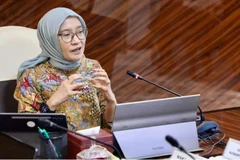
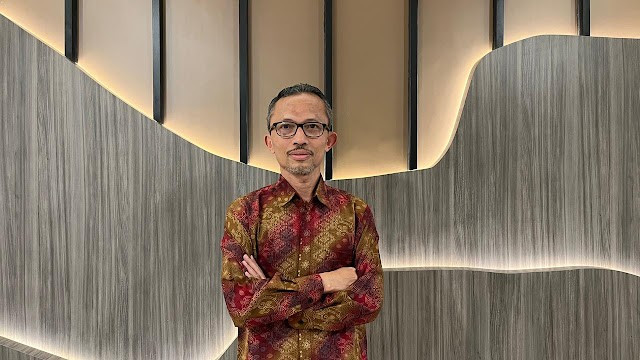
The founder and Chief Executive Officer of Supply Chain Indonesia (SCI), Setijadi (Photo: islnewstv.com)

Jakarta (VNA) – The founder and Chief Executive Officer of Supply Chain Indonesia (SCI), Setijadi, has urged caution over the potential spillover effects of escalating tensions between the US and Venezuela, warning that geopolitical instability in energy-producing countries could disrupt global logistics despite no immediate impact on Indonesia’s trade routes to South America.

Setijadi said geopolitical shocks in oil-producing nations risk triggering volatility in global crude prices, which would ultimately raise fuel costs and international shipping expenses, according to the Tempo.co.

Such dynamics, he noted, can create new pressures on energy supply security and global supply chain efficiency at a time when Indonesia is seeking to diversify its export markets, particularly in South America.

He warned that shipping costs could rise on trans-Pacific routes as well as routes transiting major global logistics hubs, driven by higher bunker fuel prices and additional surcharges imposed by shipping lines.

These cost increases could undermine the price competitiveness of Indonesian exports, especially manufactured goods and medium value-added products that are highly sensitive to logistics expenses.

Setijadi also highlighted the risk of declining shipping reliability amid heightened global tensions. Adjustments to shipping routes, cargo consolidation practices, and port calls by shipping companies could extend delivery lead times and increase supply uncertainty for South American destinations such as Brazil and Peru, as well as other markets.

According to him, buyers in the region are already showing signs of caution, including tightening contract clauses, requesting greater delivery flexibility, and seeking stronger guarantees of supply continuity amid growing global uncertainty.

In response, SCI has recommended that Indonesian exporters strengthen supply chain resilience by diversifying shipping routes and logistics partners to reduce dependence on single corridors or service providers.

Exporters are also advised to proactively review and adjust contract provisions, particularly those related to delivery schedules, logistics cost adjustments, and force majeure clauses.

Setijadi also said such measures are crucial to maintaining long-term commercial relationships with overseas buyers as global dynamics continue to shift rapidly.

He added that exporters should also improve inventory planning and lead time management, including the use of buffer stocks or safety lead times for recurring contracts, to ensure service reliability and preserve market confidence despite potential disruptions to international transport.

The expert emphasised that rising geopolitical tensions should not derail Indonesia’s efforts to expand exports to South America. Transparent communication with trading partners and stronger supply chain risk management could instead enhance Indonesia’s standing as a reliable and competitive trading partner in the region./.
VNA

See more

Deputy Prime Minister and Agriculture Minister of Thailand Thammanat Prompao (Photo: The Nation)

Agricultural envoys ordered to boost Thai crop exports

Deputy Prime Minister and Agriculture Minister of Thailand Thammanat Prompao said that the ministry is prioritising a “market-led, innovation-supported, higher income” strategy, built on three key pillars: strengthening confidence in core, established markets to protect Thailand’s market share; targeting high-potential products to open new opportunities, including dried seahorses, dried geckos, live crocodiles for consumption, and breeding crocodile parent stock for farming; and expanding networks by deepening cooperation with key trading partners, including China, and widening sales channels, such as digital platforms, so Thai products can reach consumers more directly.

Illustrative image (Photo: Internet)

Thailand maps out national semiconductor strategy

Under the strategy, Thailand will prioritise power, sensor, photonics, discrete and analog semiconductors, which are closely linked to the country’s established electronics manufacturing base and supply chains serving the automotive, energy, data centre and industrial sectors.

MDEC headquarters (Photo: nabalunews.com)

Malaysia’s digital exports surge

Malaysia's digital exports recorded 6.8 billion RM (1.67 billion USD) between 2024 and the first half of 2025, marking a milestone in the country’s development journey of digital economy.

Malaysian Minister of Economy Akmal Nasrullah Nasir speaks at the Economy Minister Mandate 2026 on January 8. (Photo: Bernama)

Malaysia seeks to translate economic policies into practice

Malaysia enters the preparatory phase for the 13MP on the back of encouraging economic indicators in 2025. Gross domestic product (GDP) expanded by 5.2% in the third quarter of 2025, bringing average growth for the first nine months of the year to 4.7%.

The Lao National Convention Centre in Vientiane, the venue of the 12th National Congress of the Lao People’s Revolutionary Party. (Photo: VNA)

Laos steps up drive to move beyond least developed country status

The Lao Government will also work to foster strong development momentum by mobilising public participation, encouraging self-reliance among citizens and businesses, and improving the quality of human resources, while building an independent and self-reliant economy capable of deeper regional and global integration.

CEO of Bioeconomy Corporation Mohd Khairul Fidzal Abdul Razak (Photo: The Star)

Malaysia boosts bio-economy, targets high revenue in 2026

MOSTI Minister Chang Lih Kang said the Bioeconomy Corporation, the ministry’s lead development agency for Malaysia’s biotechnology industry, will drive this growth and steer the country’s bioeconomy toward greater global competitiveness.

Secretary of the Central Committee of the Lao People’s Revolutionary Youth Union (LPRYU) Thongly Sisoulith (Photo credit: Lao Youth Mass Media)

Lao youth ready to contribute to national socio-economic development goals

Secretary of the Central Committee of the Lao People’s Revolutionary Youth Union (LPRYU) Thongly Sisoulith said that the Youth and Adolescents Development Strategy, which is integrated into the 10th five-year socio-economic development plan, is a key component reflecting the Party and State’s clear orientation toward human resources development in service of the country’s sustainable development in the future.

Given continued volatility in the global rice market, the Thai cabinet approved extending interest compensation for stockpiling paddy rice for another six months. (Photo: Bangkok Post)

Thailand extends support measures for rice industry

Government spokesman Siripong Angkasakulkiat said after a Cabinet meeting on January 6 that the Ministry of Commerce had proposed three measures for consideration. The first was the extension of the interest compensation scheme for rice traders storing paddy from the 2023–24 production year.

Thailand plans USD-based gold trading platform

Thailand plans USD-based gold trading platform

The BoT and 14 major gold traders made positive progress on a plan to develop a gold-trading platform using the USD as the main currency, expected to take no more than six months and possibly finish sooner – within the first half of the year.

More than 20 speedboats destroyed in Phuket fire

More than 20 speedboats destroyed in Phuket fire

Initial information from witnesses and officials indicated that an explosion and fire occurred on one speedboat in Phuket before sea winds carried burning debris to other vessels moored nearby, causing the blaze to spread rapidly.