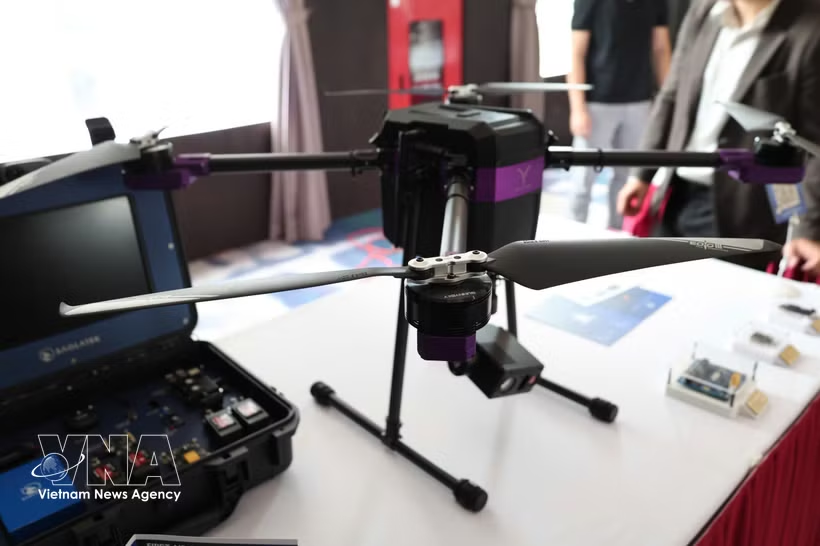
Kuala Lumpur (VNA) – Malaysia plans to pilot a project using unmanned aerial vehicles (UAVs) to deliver medicine to remote villages, aiming to shorten travel times for healthcare services and reduce the transportation burden on residents.
The project, implemented by the Malaysian Communications and Multimedia Commission (MCMC) in collaboration with the Health Ministry, is expected to begin in September or October as part of the National Information Dissemination Centre (NADI) smart services programme.
The initiative could serve approximately 12 villages, prioritising rural and remote communities where residents face significant difficulties in accessing medicine and healthcare services, said Dr. Mohd Arif Adenan, head of the NADI Office under the MCMC, as quoted by Bernama.
The project will be carried out in coordination with the Health Ministry, the Civil Aviation Authority of Malaysia (CAAM), the Sabah state government, and other relevant agencies to ensure smooth and safe operations.
Research by Universiti Malaysia Sabah (UMS) shows that people in many remote areas of Sabah have to travel 20–30 km to reach hospitals. Long distances and high travel costs are among the biggest barriers to accessing healthcare services.
UAV-based medicine transport is expected to help patients, especially those with chronic diseases, reduce travel time and costs while ensuring regular medication delivery. If successful, the MCMC will consider expanding the model to other localities with similar conditions.
In addition to testing UAVs, Malaysia is deploying a postal drug delivery service through Pos Malaysia, with NADI centres serving as one-stop collection points for medication in local communities. These centres also provide basic health check-up services such as blood pressure measurement, monitoring of periodic health indicators, and connecting patients with medical facilities when abnormal signs are detected./.