Jakarta (VNA) – Indonesia has officially resumed operations at its TRIGA 2000 research reactor after nearly 14 years, marking a significant milestone in the country's efforts to strengthen nuclear science and prepare for future nuclear power development.
According to ANTARA, Indonesia's National Research and Innovation Agency (BRIN) announced on July 16 that the 1 MW TRIGA 2000 reactor in Bandung, West Java has returned to service following a comprehensive modernisation programme.
Commissioned in 1965 during the presidency of Sukarno, Indonesia's first president, the reactor had been out of operation since September 2011.
It has been granted an operating licence by the Nuclear Energy Regulatory Agency (Bapeten) through July 2027.
The refurbishment upgraded the reactor building, cooling and ventilation systems, secondary pumps, cooling tower and other key components, significantly improving operational safety and reliability.
According to BRIN, the reactor resumption is expected to accelerate nuclear research, expand scientific cooperation with domestic and international partners, and strengthen Indonesia's capabilities in the peaceful use of nuclear technology.
Although Indonesia does not yet operate commercial nuclear power plants, it has developed a solid foundation in nuclear science through its network of research reactors, skilled workforce and nuclear medicine facilities.
Under its national energy development plan, Indonesia aims to commission its first nuclear power plants with a combined capacity of about 500 MW in the early 2030s, before expanding nuclear generation to 7-8 GW in the 2040s and 35-37 GW by the 2060s to diversify energy supplies and meet growing electricity demand./.
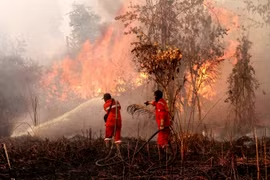
Indonesia strengthens forest fire prevention mechanisms
Under the approach, competent agencies will review existing regulations, strengthen inspections of fire prevention and firefighting systems, and implement measures including weather modification through cloud seeding, monitoring water levels in peatland areas, and pre-positioning personnel and equipment in high-risk locations.