VNA

The centre will provide essential infrastructure and public services to support semiconductor design and prototyping as part of Vietnam’s broader industrial strategy.

HCM City aims to promote UAV use in urban delivery - a promising field contributing to smart logistics and postal services for e-commerce, smart cities and high-tech public services, while fostering UAVs as a strategic technology sector underpinning the innovation ecosystem.

The accolade recognises the mastery of core technologies by the Viettel Artificial Intelligence and Data Services Centre (Viettel AI), while reaffirming the group’s capacity to successfully deploy “Make in Vietnam” artificial intelligence solutions in international markets.

The draft action programme of the Party Central Committee to implement the Resolution of the 14th National Party Congress identifies the shift to a new growth model, economic restructuring, and accelerated industrialisation and modernisation, with science, technology, innovation and digital transformation as the core engines, as key tasks.

The resolution has affirmed that in the digital era, science, technology and digital transformation are no longer optional but mandatory conditions, while innovation has evolved from a research activity into a core driver of national growth.
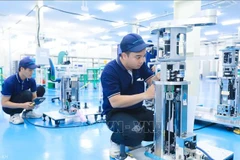
Vietnam is aiming to become a high-tech economy with the STI pillars identified as the enablers, and the local conditions enable their rapid development, said an Israeli expert.

Held annually on a rotating basis among ASEAN member states, the meeting plays a key role in shaping strategic orientations, formulating policies and promoting digital cooperation within ASEAN, while strengthening collaboration with partners and international organisations amid rapid digital and digital-economy transformation globally.

The achievement, marked as Vietnam’s first 5G Advanced trial, was made possible by carrier aggregation (CA) technology, enabling mobile devices to operate across multiple frequency bands simultaneously instead of a single band.
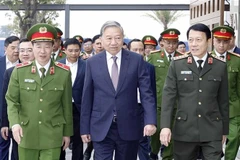
The National Data Centre No.1 has been positioned as a core and pivotal facility, serving as the “brain” and “heart” of the national digital transformation process, said Party General Secretary To Lam.

The cooperation framework is designed to be flexible, aligning with the capabilities and development orientations of both companies as well as legal regulations in different countries and territories.
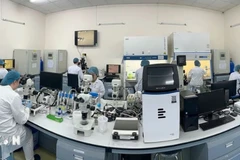
Prof. Dr. Tran Dai Lam, Director of the Institute of Materials Science at the Vietnam Academy of Science and Technology (VAST), emphasised that intellectuals should nurture national responsibility and ambition, be ready to take on challenges, evaluate research outcomes by international standards, and engage in collaboration across different sectors.
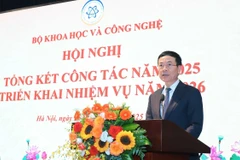
2025 represents a shift in development mindset, with the science and technology sector tasked to turn concepts into tangible capabilities, concrete results, and measurable value for the country.

The resolution also seeks to create stronger mechanisms to mobilise social and private resources and support an innovation ecosystem; link digital transformation in the public sector with the modernisation of national governance; and prioritise the development of elite human resources and internationally-standard research infrastructure.
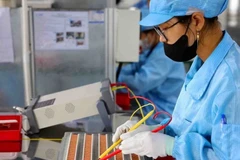
Assoc. Prof. Le Duc Anh from Tokyo University held that for fast and sustainable development, Vietnam should prioritise science – technology and innovation as the main driver of productivity, focusing on sectors with high spillover effects such as semiconductors, AI, data, new energy and materials, biomedical technology, automation – robotics, and cybersecurity.
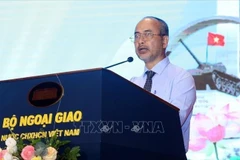
Once properly harnessed, intellectal and sci-tech resources of the OV community can both help narrow development gaps and serve as a strategic advantage for enhancing Vietnam’s competitiveness and global engagement in the new era.
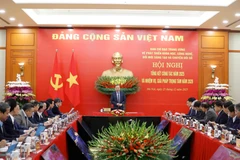
General Secretary Lam emphasised the need to develop concrete applications and products serving socio-economic development and people’s needs, with public and business satisfaction as the ultimate measure. Digital transformation must be closely linked with administrative reforms, organisational streamlining and the effective operation of the two-tier local administration model.

The portal, which can be accessed at sangkien.gov.vn, was built to address the urgent need to mobilise collective intelligence and unlock the creativity of the entire population, in accordance with the directives of the steering committee for the implementation of the Politburo’s Resolution No. 57-NQ/TW on creating breakthroughs in science, technology, innovation and national digital transformation.

The digital technology sector has contributed more than 1.075 trillion VND (41 billion USD) to GDP, an increase of 10% year-on-year, with estimated profits of over 371 billion VND, reflecting strong operational efficiency.
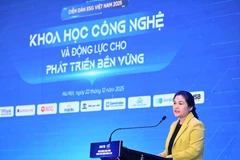
Deputy Minister of Home Affairs Nguyen Thi Ha said the forum took place at a particularly meaningful moment, marking one year since the implementation of Politburo Resolution No. 57-NQ/TW on breakthroughs in science, technology, innovation and national digital transformation, and ahead of 2026 which is described as the starting year of a new era for the country.

The partnership between two leading Vietnamese telecoms and technology groups is expected to help advance national digital transformation programmes, bringing technology more effectively into governance, production and public service delivery.