Mekong – Lancang cooperation marks decade of connectivity, development

Since its launch in 2016, the MLC has evolved from a nascent sub-regional initiative into a dynamic and effective cooperation mechanism, contributing to economic integration and shared prosperity in the region.

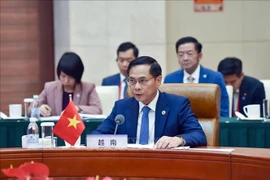
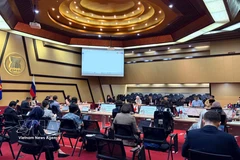
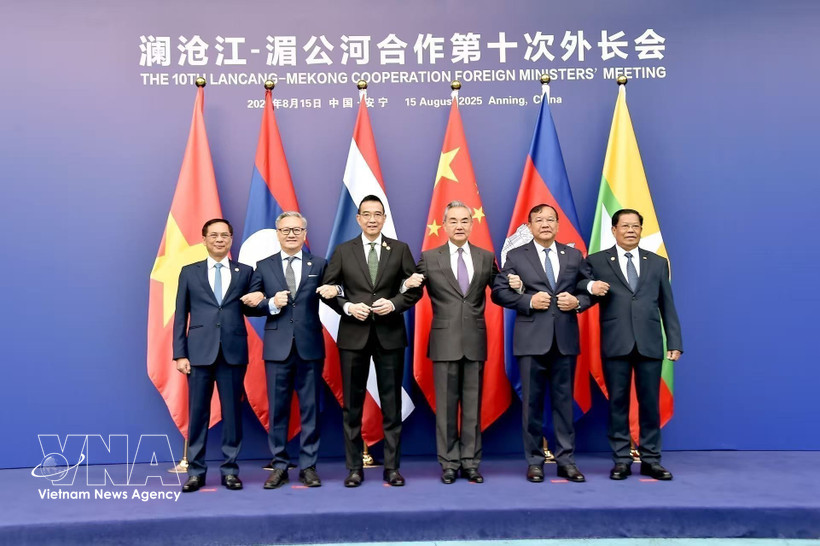
Deputy Prime Minister and Minister of Foreign Affairs Bui Thanh Son (first, left) and other officials at the 10th MLC Foreign Ministers’ Meeting in Yunnan, China, on August 15, 2025. (Photo: VNA)

Hanoi (VNA) – A series of events marking the 10th anniversary of the Mekong – Lancang Cooperation (MLC) has concluded across six member countries – Cambodia, Laos, Myanmar, Thailand, China and Vietnam, highlighting a decade of progress in regional connectivity, cooperation and sustainable development.

Since its launch in 2016, the MLC has evolved from a nascent sub-regional initiative into a dynamic and effective cooperation mechanism, contributing to economic integration and shared prosperity in the region.

Over the past decade, its achievements have been recognised in many areas. Political trust among member countries has been strengthened through regular dialogue and exchanges at multiple levels. Cooperation on water resources – an issue of vital importance to all Mekong countries – has recorded tangible progress, with year-round sharing of hydrological data helping improve flood and drought response.

Connectivity has also advanced significantly, with cross-border transport and logistics projects expanding across the sub-region. At the same time, cooperation has broadened to emerging areas such as the digital economy, green growth and climate change response.

Notably, nearly 1,000 community-level projects funded by the MLC Special Fund have delivered practical benefits, bringing electricity, clean water, schools and healthcare facilities to remote and disadvantaged areas across member countries, including Vietnam.

Vietnam has actively contributed to the mechanism over the past decade, promoting infrastructure connectivity, supply chain integration, and linkages between the MLC and other regional frameworks such as ASEAN, the Mekong River Commission and the Greater Mekong Subregion (GMS).

The establishment of the hydrological data-sharing mechanism among water management bodies has helped Vietnam better safeguard water resources and support sustainable development in its Mekong Delta.

Looking ahead, Vietnam has identified three priorities: strengthening trust through candid and constructive dialogue; deepening cooperation in line with practical development needs; and ensuring that the interests of people and businesses remain at the centre of all initiatives.

In a message marking the anniversary, Chinese Foreign Minister Wang Yi described the MLC as having grown “from a seed into a towering tree”, becoming a model for building a community with a shared future. Trade between China and the five Mekong countries has exceeded 500 billion USD, up 150% over the past decade, while cooperation in security, disaster response and public health has been reinforced.

People-to-people exchanges have also deepened through initiatives such as the Lancang – Mekong visa and numerous “small and beautiful” livelihood projects, helping strengthen mutual understanding among the six nations.

Wang highlighted three key principles underpinning the success of the mechanism: good-neighbourliness, friendship and a shared future; focusing on development to serve the people; and pursuing innovation and breaking new ground.

Amid global uncertainties, he proposed building an “MLC 2.0” focused on enhancing solidarity, promoting openness and win-win cooperation, advancing green and innovation-led development, strengthening cultural exchanges, and ensuring peace and security across the basin.

Entering a new decade, the six Mekong – Lancang countries are expected to build on past achievements and work towards a stable, prosperous and sustainable sub-region, contributing to peace and development in the wider region and beyond./.

VNA
See more

Illustrative image (Photo: Bernama)

Malaysia rolls out proactive measures to cushion global energy crisis impacts

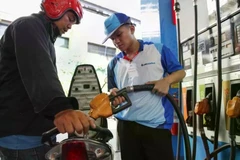
According to the Deputy PM, the government, in coordination with the national oil and gas company Petronas and industry players, is conducting daily monitoring of the fuel supply chain. A contingency plan has also been prepared to guarantee uninterrupted supply under all circumstances, including sourcing from alternative markets in the event of prolonged disruptions. As a result, Malaysia’s fuel supply has remained stable.

Indonesia reforms its stock market

Indonesia reforms its stock market

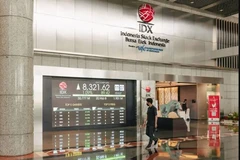
This move comes after global index compiler MSCI warned it might downgrade the Indonesian market amid investor concerns about a lack of transparency in shareholding structure and signs of coordinated trading activities.

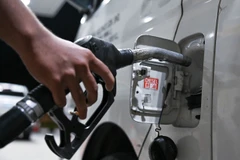
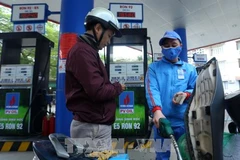
A customer purchases E5RON92 bioethanol fuel at a PVOIL gas station on Thai Thinh street, Hanoi. (Photo: VNA)

Golden time for biofuel energy in Vietnam: Japanese company

While Vietnam’s biofuel programme has been quietly building for nearly a decade since E5 bio-gasoline officially introduced in 2018, the programme itself has been pulled forward with the rollout of E10 biofuel nationwide from June 1, 2026, one month earlier than the previous schedule, due to the impact of the soaring global oil prices resulting from the Middle East tensions.

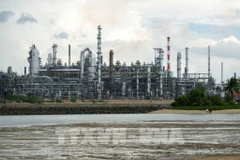
Illustrative image (Photo: EPA)

Thailand, Singapore respond to energy crisis

The Thai Government continues to spend 30 million THB daily to subsidise Liquefied Petroleum Gas (LPG), a move intended to keep food prices stable and protect the general cost of living.

Air pollution in northern Thailand remains at alarming levels

Air pollution in northern Thailand remains at alarming levels

Data from monitoring stations indicate that concentrations of fine particulate matter (PM2.5) have at times exceeded 900 micrograms per cubic metre, approximately 60 times higher than the 24-hour average guideline set by the World Health Organisation.

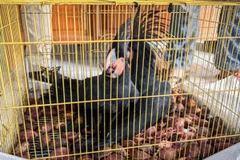
Authorities seize two palm cockatoos (Probosciger aterrimus) from an illegal wildlife trade in Manado, North Sulawesi, March 10, 2026.( Photo: ANTARA)

Indonesia cracks down on illegal rare bird trade

The operation was launched after authorities detected suspects advertising rare birds for sale online. Law enforcement officers conducted inspections, seized several protected bird species and arrested individuals suspected of involvement in the trafficking ring.

Indonesia works to keep budget deficit below 3% of GDP

Indonesia works to keep budget deficit below 3% of GDP

The Indonesian government has stepped up disclosure of financial information and corporate ownership structures, tightened oversight of capital flows and public spending, and maintained regular dialogue with international investors. These measures are seen as essential to reinforcing fiscal credibility, a decisive factor for emerging economies like Indonesia.

Mpox, caused by the monkeypox virus, is transmitted mainly through intimate or prolonged physical contact, said the Singapore's Communicable Diseases Agency. (Photo: straitstimes.com)

Singapore reports first community mpox cases

The two patients are men aged 30 and 34 who are believed to have contracted the virus through sexual contact. Both are currently in stable condition. The CDA noted that mpox is mainly transmitted through close or prolonged contact, meaning the overall risk to the broader community remains low.

Illustrative Image (Photo: nationthailand.com)

Thailand adjusts tourism strategy amid energy crisis

AT has accelerated its campaign titled "Healing moments everywhere, feel-good trips every time campaign under the “near-home travel” concept. The strategy aims not only to reduce travel costs for Thai tourists but also to align with sustainable tourism trends by promoting community-based tourism and distributing income to emerging destinations nationwide. The approach places stronger emphasis on creating value through unique experiences rather than increasing visitor numbers.

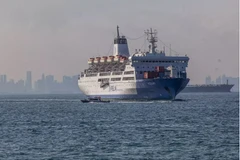
The ferry Kelud, operated by state-owned shipping company Pelayaran Nasional Indonesia, sails in the waters off Batam, Riau Islands, on March 11, 2026. (Photo: antaranews.com)

OECD lowers Indonesia’s growth forecast to 4.8%

In its March 2026 interim economic outlook, the OECD said Indonesia’s growth will moderate from an estimated 5.1% in 2025, reflecting external pressures including higher energy prices and geopolitical tensions.

Malaysian Minister of Housing and Local Government Nga Kor Ming (Photo: thestar.com.my)

Malaysia builds waste-to-energy plant

Once completed, the plant will be able to process up to 1,000 tonnes of solid waste per day and generate 22 megawatts of renewable electricity, enough to power around 46,000 households.

An overview of the 24th ASEAN-Russia Joint Cooperation Committee Meeting in Jakarta (Photo published by VNA)

ASEAN, Russia promote cooperation across multiple fields

Russian Ambassador to ASEAN Evgeny Zagaynov stressed that Russia views ASEAN as an important factor in Asia–Europe connectivity and cooperation, and will continue to promote substantive collaboration with the bloc, contributing to peace, stability and development in the region in line with international law and the principles of the United Nations Charter.

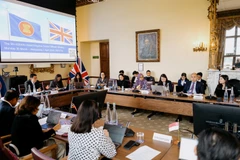
Delegates at the event (Photo: MoFA)

UK, ASEAN promote substantive cooperation toward new development phase

The meeting was co-chaired by Vietnamese Deputy Minister of Foreign Affairs Dang Hoang Giang, Head of ASEAN SOM Vietnam, and Christina Scott, Director General for International Network and Head of UK SOM. Vietnam currently serves as the coordinator for ASEAN–UK relations for the 2024–2027 term.