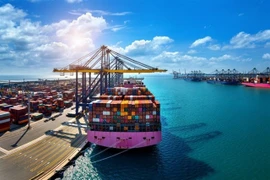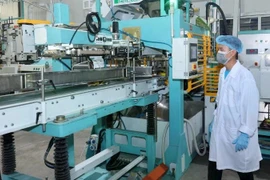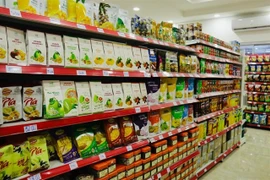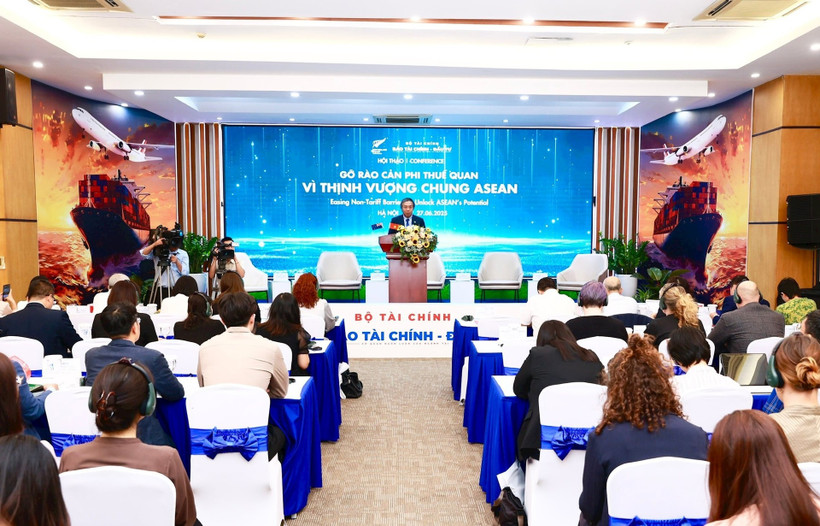
Hanoi (VNS/VNA) - Although intra-bloc tariffs have been almost eliminated, non-tariff barriers still increase costs and reduce the competitiveness of Vietnamese goods in the ASEAN market.
Experts made this assessment at a workshop titled "Easing Non-Tariff Barriers to unlock ASEAN’s potential" jointly organised by the Vietnam Investment Review and the New Zealand Embassy on June 27.
Opening the workshop, Deputy Editor-in-Chief of Vietnam Investment Review Le Trong Minh said that although the Association of Southeast Asian Nations (ASEAN) has eliminated more than 99% of intra-bloc tariffs, non-tariff barriers (NTBs) remain significant obstacles to trade and investment in the region.
“In the context of ASEAN moving towards its 2045 vision to strengthen economic connectivity and digitalising trade, removing NTBs is an urgent requirement,” said Minh.
According to a World Bank report, there are nine common groups of NTBs, of which animal and plant quarantine and food safety (SPS) account for 37.5%, as well as technical barriers to trade (TBT). Although these measures aim to protect health, the environment and consumers, if they lack transparency or are not consistent, they can become invisible barriers that increase costs, prolong customs clearance times and create risks for businesses.
“For small and medium-sized enterprises, the cost of complying with NTBs such as product re-inspection, lack of information on technical changes, halal certification or unsynchronised digital procedures is a significant burden. NTBs can account for up to 2-4% of the value of goods, and if 10% of costs due to NTBs can be reduced, ASEAN can increase trade by 3-4%, equivalent to tens of billions of US dollars,” Minh said.
Country Director of NielsenIQ in Vietnam, the Philippines and Myanmar Nguyen Anh Dung pointed out three major challenges for businesses when approaching the ASEAN market: separate domestic standards, fragmented distribution infrastructure and differences in consumer culture.
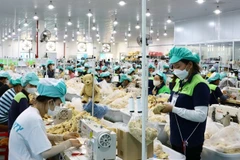
“For example, a cosmetic product licensed in Thailand may not be accepted in Vietnam if it does not have a secondary label or makes changes to the ingredient declaration. The food industry faces even more difficulties in Muslim countries like Malaysia and Indonesia due to the halal certification requirements with complicated procedures, high costs and a long processing time,” said Dung.
Dung also highlighted issues with logistics and domestic distribution barriers. Many global brands have difficulty penetrating provinces outside of major cities, due to fragmented distribution infrastructure and a lack of reliable domestic partners.
"To overcome barriers, businesses need to understand not only the law but also the market. Using data on purchasing behaviour and local consumer trends is key to helping businesses take the right approach, prioritise the right categories and choose the right local partners to accelerate," Dung added.
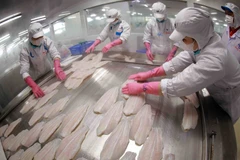
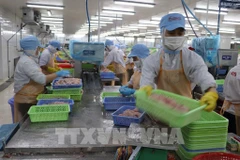
Le Hang, Deputy General Secretary of the Vietnam Association of Seafood Exporters and Producers (VASEP), said that NTBs are a major obstacle to exports to ASEAN, especially SPS and TBT measures as well as import licence requirements.
“ASEAN countries often apply strict regulations on quarantine, certification and food safety standards. To comply, businesses must provide additional documents, conduct laboratory testing or adjust production processes. For small businesses, this is a huge barrier,” said Hang.
To support businesses in overcoming barriers, VASEP has acted as a bridge between businesses and management agencies, proposed policies, organised trade promotion and provided training on traceability, ESG and raw material area development. Many recommendations have been acknowledged by the Government, contributing to removing bottlenecks and maintaining export orders, according to Hang.
The event is a platform for exporters and business leaders to share their experiences with non-tariff barriers. It will also explore actionable policy options for improving trade flows and shaping future negotiations, particularly in light of the global trade environment, support Southeast Asian governments in enhancing long-term market competitiveness, strengthen regional business networks and equip companies with the tools needed to remain resilient and competitive./.
See more
HCM City’s remittances forecast to hit record high in 2025
In the first nine months of 2025, remittances to HCM City reached 7.94 billion USD, up 6.3% year-on-year, keeping it the country’s largest recipient, consistently accounting for about 60% of the national total.
Tra fish exports forecast to near 2.2 billion USD
Tra fish output in 2025 is estimated at around 1.67 million tonnes. To date, the sector has contributed approximately 2.1 billion USD to Vietnam’s total agro-forestry-fisheries export earnings.
Credit growth nears 18% in 2025: central bank
At a press conference on banking sector performance in 2025 and tasks for 2026, held in Hanoi on December 29, SBV Deputy Governor Pham Thanh Ha said that as of December 24, 2025, total outstanding credit to the economy exceeded 18.4 quadrillion VND (about 670 billion USD), up 17.87% compared to the end of 2024.
Vietnam urged to unlock bottlenecks to boost logistics competitiveness
In recent years, the country’s logistics services industry has experienced strong expansion, gradually establishing a presence in regional and global markets. However, development still falls short of Vietnam’s potential and advantages.
Key economic policies taking effect in January 2026
A wide range of new economic policies and legal provisions will come into force in January 2026, covering taxation, advertising, land use, minimum wages, public finance, railways, technology transfer and statistics, among others.
Vietnamese tech firms step up investment in strategic high-tech sectors
Vietnamese technology enterprises are committing strong investment in strategic technologies as they seek to master core platforms and enhance national competitiveness.
Hanoi leads 2025 Vietnam eBusiness Index
The average score of the rankings is 9.3 points. The gap in e-commerce development between the two major economic centres–Hanoi and HCM City–and the remaining provinces and cities is very large.
Reference exchange rate down 3 VND at week’s beginning
With the current trading band of +/- 5%, the ceiling rate applicable for commercial banks during the day is 26,381 VND/USD, and the floor rate 23,869 VND/USD.
Vietnam Airlines adds 270 flights to during 2026 New Year holiday
Vietnam Airlines said the swift deployment of additional flights during the New Year holiday demonstrates the carrier’s proactive approach and readiness in mobilising resources to serve passengers during peak travel periods at the end of 2025 and the beginning of 2026.
Vietnam’s seafood exports gain momentum in Singapore
The year 2025 marked a significant breakthrough for Vietnamese seafood exports, reflecting Singapore’s growing demand and increasing confidence in the quality and branding of Vietnam’s seafood products.
Railway sector adds 20,000 seats for four-day New Year holiday
Alongside the new services, the company will also attach additional carriages to the North–South Reunification trains and other daily routes, supplying about 6,600 more seats.
PM urges faster progress on key infrastructure projects in Dat Mui, Ca Mau
During an aerial survey of Dat Mui commune, home to the five islands of Hon Khoai, Hon Sao, Hon Go, Hon Doi Moi and Hon Da Le, the Prime Minister underscored the area’s strategic importance for national defence, economic development and connectivity across the province, the Mekong Delta and the wider southern region.
High standards key for businesses to unlock VEFTA benefits
The EFTA bloc, comprising Switzerland, Norway, Iceland, and Liechtenstein, has a relatively small population but a combined GDP of about 1.3 trillion EUR (1.5 trillion USD), high living standards, and strong demand for high-quality products.
Hanoi craft villages bustle as Lunar New Year approaches
Hanoi is home to the largest number of craft villages nationwide, with about 1,350 villages and craft-based communities, accounting for roughly 56% of rural villages in the capital. Of these, 318 are officially recognised as traditional craft villages.
Forum discusses ways to green chemical and fertiliser industry
Greening chemical and fertiliser production requires the use of renewable materials, energy efficiency and emissions reduction to protect the environment, as well as the application of modern technologies.
Vinh Long unlocks billion dollar potential for coconut exports
Vinh Long province is rapidly positioning itself as Vietnam’s most promising hub for coconut export growth, capitalising on outstanding natural conditions and an expanding processing industry to move towards a billion dollar breakthrough.
HCM City seeks new growth drivers as megacity takes shape
As traditional growth engines show signs of reaching their limits, HCM City is recalibrating its long-term development strategy in search of new drivers capable of sustaining momentum and reinforcing its role as the economic nucleus of the southern region.
AFD provides 76-million-EUR loan for Vietnam’s first pumped-storage hydropower plant
The Bac Ai hydropower project has a designed capacity of 1,200 MW, comprising four turbines of 300 MW each, with a total investment of 21.1 trillion VND (802.5 million USD).
Southern housing market gains momentum on the back of growing infrastructure
Experts forecast that in 2026 a stronger shift towards outlying areas, especially projects linked to public transport and green standards, will shape product trends and developers’ strategies.
Quang Tri province tightens control to keep unqualified fishing vessels ashore
Through inspections, awareness campaigns, and the collection of vessel documentation from local fishermen, authorities aim to equip the provincial monitoring system with full data to manage all vessels and block non-compliant boats from fishing, he said.