Nui Chua Biosphere Reserve seeks to unlock full potential for sustainable development

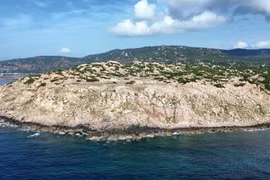
The Nui Chua – Phuoc Binh National Park Management Board in the south-central province of Khanh Hoa has taken a series of measures to develop the Nui Chua World Biosphere Reserve, while preserving its rich biodiversity, supporting local livelihoods, and promoting tourism potential.

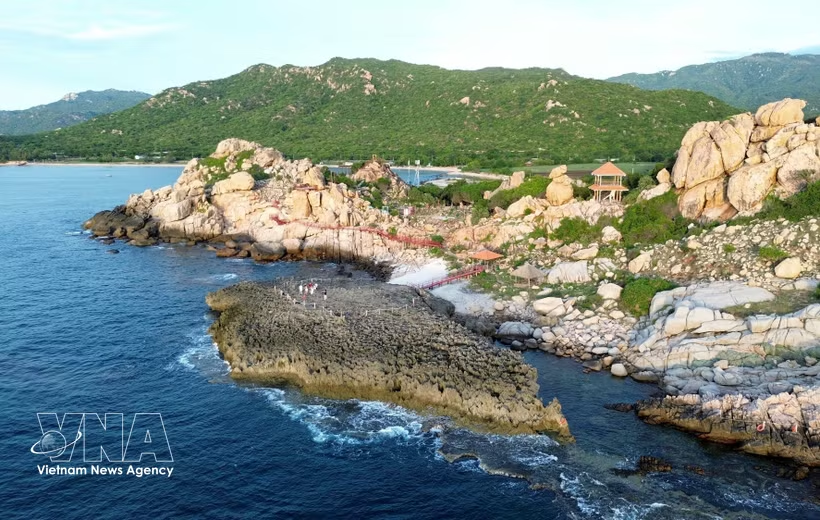
Rai Cave is located in the Nui Chua National Park in Vinh Hai commune, Khanh Hoa province, which is part of the Nui Chua World Biosphere Reserve. (Photo: VNA)

Khanh Hoa (VNA) – The Nui Chua – Phuoc Binh National Park Management Board in the south-central province of Khanh Hoa has taken a series of measures to develop the Nui Chua World Biosphere Reserve, while preserving its rich biodiversity, supporting local livelihoods, and promoting tourism potential.

Located in Vinh Hai commune, the reserve covers more than 106,646ha, including core, buffer and transition zones. In September 2021, Nui Chua National Park was recognised by UNESCO as a world biosphere reserve.

The area boasts more than 1,500 plant species and 766 animal species, including over 50 species listed in the Red Data Books of the world and Vietnam. Its marine ecosystems include coral reefs, seagrass beds, intertidal zones and mangroves.

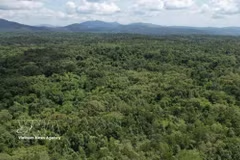
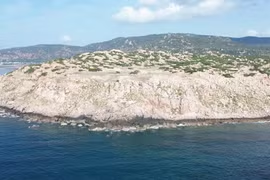
With hot and sunny weather year-round and low rainfall, the biosphere reserve is considered one of Vietnam’s driest and harshest climatic areas. Its unique landscape combines forests, sea and semi-desert areas, creating distinctive ecosystems and earning it the reputation of a unique “thorny plant steppe” in Vietnam.

The reserve also features more than 40km of coastline, sea turtle nesting grounds and the country’s largest nearshore coral reef, home to 350 species. Its pristine beaches and natural attractions, including Hang Rai, Binh Tien, and Nuoc Ngot, enhance its tourism potential.

Tran Van Tiep, Director of the Nui Chua – Phuoc Binh National Park, said Khanh Hoa province had established a dedicated management board to strengthen conservation while developing the reserve into a leading eco-tourism destination.
nc2.jpg
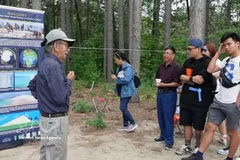
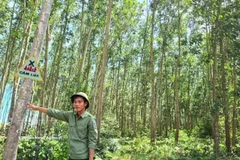
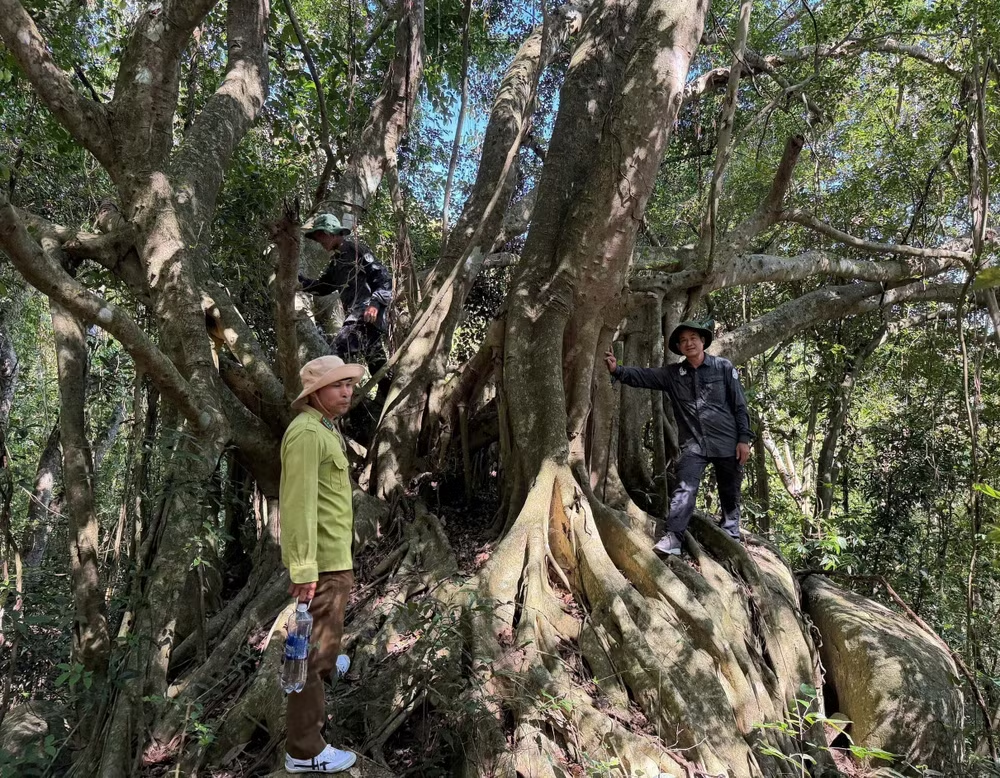
The Nui Chua - Phuoc Binh National Park's personnel inspect forest management and protection in the Nui Chua World Biosphere Reserve. (Photo published by VNA)

According to Tiep, in addition to environmental education and public awareness campaigns, the management board is coordinating with relevant agencies to develop a comprehensive biodiversity database and formulate management plans for endemic, endangered and rare terrestrial species.

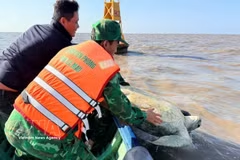
The reserve is also participating in assessments under the National Action Plan for Marine Turtle Conservation, he noted.

Other ongoing initiatives include training programmes to strengthen conservation capacity, surveys of seagrass ecosystems and the launch of a captive breeding programme for the silver-backed chevrotain, the only hoofed mammal species endemic to Vietnam.

It has also proposed a “green wall” model to combat desertification and soil erosion, contributing to the net zero goal in the province’s arid southern areas.

Meanwhile, the management board is expanding botanical gardens, plant nurseries and marine wildlife rescue facilities to conserve endangered genetic resources and restore forest cover. Comprehensive biodiversity surveys are also being carried out to produce updated ecological maps that will support future conservation planning.

The buffer zone is home to Raglay and Cham ethnic minority communities and ethnic Chinese residents, who maintain distinctive cultural traditions and livelihoods including salt making, farming, animal husbandry and the production of traditional musical instruments.

To create livelihoods for residents, the local authorities are promoting community-based ecotourism, nature conservation tourism and experiential tourism. These activities generate income, raise environmental awareness and help reduce pressure on the reserve’s core zone.

According to Nguyen Thanh Trung, Director of the Tourism and Environmental Education Centre under the Nui Chua – Phuoc Binh National Park Management Board, the park welcomed more than 105,000 visitors in the first six months of 2026.

The reserve is currently undergoing zoning adjustments to ensure consistency with legal regulations and UNESCO’s biosphere reserve model, while better connecting its forest, marine and coastal ecosystems, contributing to enhancing ecological resilience, conserving rare genetic resources while promoting tourism, scientific research and environmental education, and facilitating resource management and climate change adaptation.

The management board said the reserve has still faced difficulties, particularly a lack of resources for investment and technical assistance. It called for continued support from relevant ministries and organisations to ensure effective management and sustainable development in the time to come./.

VNA

See more

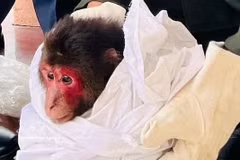
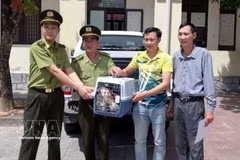
A stump-tailed macaque (Macaca arctoides) is handed over to the Cam Lo–Dong Ha forest ranger station in Quang Tri province on January 27, 2026 (Photo: VNA)

Rare primate handed over to Phong Nha - Ke Bang National Park

A stump-tailed macaque (Macaca arctoides) was handed over to the Centre for Rescue, Conservation, and Development of Creatures under the Management Board of Phong Nha - Ke Bang National Park in Quang Tri province on July 21, for rehabilitation and eventual release into the wild.

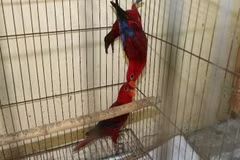
Two Red Lories (Eos rubra) found among the 104 wild animals being kept without documentation proving their lawful origin in Phuoc Thanh commune, Tay Ninh province. (Photo published by VNA)

Criminal proceedings launched against case of illegal keeping, trading of 104 wild animals

They recorded a total of 104 wild animals, comprising 92 African spurred tortoises (Geochelone sulcata) of various sizes, six Red Lories (Eos rubra) and six Green-cheeked Parakeets (Pyrrhura molinae). Authorities said the animals are subject to management under Vietnam's forestry legal regulations and are listed in Appendix II of the Convention on International Trade in Endangered Species of Wild Fauna and Flora (CITES).

BUYO Bioplastics' biodegradable plastic products are made from brewer's grains and sugarcane bagasse. (Photo: nhandan.vn)

Vietnam urged to shift from plastic waste treatment to full life-cycle management

For years, efforts to tackle plastic pollution in Vietnam have focused mainly on waste collection, recycling and disposal. However, as sustainable development and green trade standards become increasingly important, specialists argued that a broader approach is needed, covering everything from product design and material selection to production, consumption and recycling.

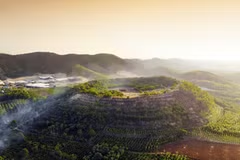
Bang Mo volcano in Lam Dong province (Photo published by VNA)

Lam Dong optimises value of UNESCO Dak Nong Global Geopark

Alongside conservation, Lam Dong aims to tap the geopark's tourism potential through geological, ecological and community-based tourism. Infrastructure and tourism development projects must ensure that heritage values, landscapes and the natural environment are preserved.

Dr. Dang Trung Phuoc (left) is introducing the history and origin of the Pinhey sand dunes (Photo: VNA)

Vietnamese Canadian scientist revives forgotten ecosystems

From restoring an ancient sand dune ecosystem in Canada to promoting the conservation of Vietnam's coastal dunes, native forests and ecological corridors, Vietnamese-born scientist Dang Trung Phuoc has remained committed to using science to revive ecosystems long misunderstood or neglected. His quiet but sustained efforts reflect both a scientist's responsibility to the communities he serves and the enduring commitment of a Vietnamese expatriate to his homeland.

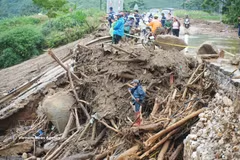
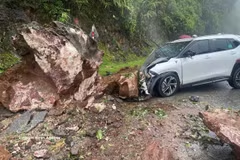
Police and military forces work together to rescue people and assist local residents in affected areas. (Photo: VNA)

PM orders proactive response to heavy rainfall in northern mountainous region

To minimise casualties and damage to public and private property, the PM instructed ministries, sectors and local authorities to strictly implement directions issued by Party General Secretary and State President To Lam, as well as the Government's directives on strengthening disaster prevention and response in 2026.

A view of the Ea So Nature Reserve in Dak Lak province (Photo: VNA)

Rare wild animals released into natural habitat in Dak Lak

Among them are two species classified under Group IB of Vietnam's protected wildlife list, namely the Bengal slow loris (Nycticebus bengalensis) and the Sunda pangolin (Manis javanica). Both are endangered forest species protected under Vietnamese law and are prohibited from commercial exploitation or use.

A large-timber plantation model in Gia Lai province (Photo: VNA)

96-million-USD project promotes agroforestry to cut emissions

The Reduction of Emissions in the Central Highlands and South Central Coast of Vietnam (RECAF) project will run from 2026 to 2031 across the provinces of Dak Lak, Gia Lai, Lam Dong, and Khanh Hoa covering about 145,000ha, according to the International Fund for Agricultural Development (IFAD).

Crested goshawks are handed over by the People's Committee of Dong Le commune, Quang Tri province. (Photo: VNA)

Quang Tri rescues six rare wild animals

The animals are now receiving quarantine, treatment and specialised care. Once recovering their physical condition and wild behaviour, they will be reassessed for release back into the wild.