Cuc Phuong turns wildlife recovery into new tourism model

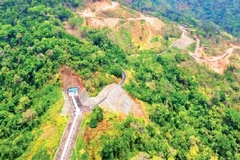
The park has kicked off a large-scale wildlife rewilding push in its core zone, the first move in a long-term nature restoration strategy, with full technical backing from Save Vietnam’s Wildlife (SVW).

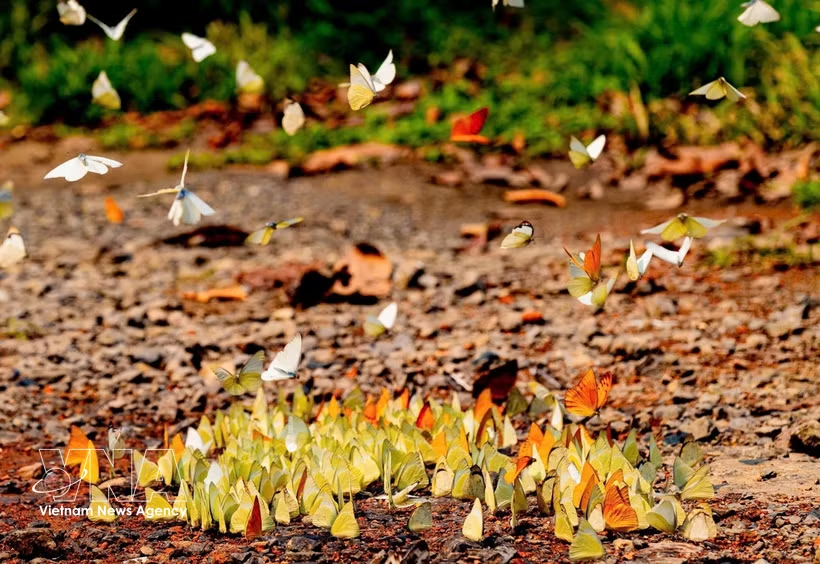
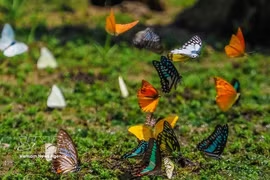
Delicate butterflies diversify tourism experiences at Cuc Phuong National Park. (Photo: VNA)

Ninh Binh (VNA) – For years, Cuc Phuong National Park has balanced forest protection with local livelihoods, keeping its green canopy intact, shielding wildlife habitat and generating income for surrounding communities.

Captive breeding meets soft-release rewilding

The park has kicked off a large-scale wildlife rewilding push in its core zone, the first move in a long-term nature restoration strategy, with full technical backing from Save Vietnam’s Wildlife (SVW).

The release of spotted deer and other deer species marks the start of an ecological restoration effort designed to repair weakened links in the natural ecosystem, the park’s representative said.

Around 60 deer will be freed in phases, with the park and SVW adopting a globally recognised soft-release model to maximise post-release survival.

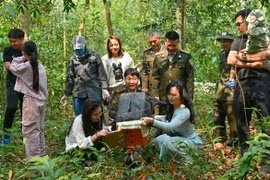
Before the release, animals are trained to shed human dependence and build natural behaviours, including foraging, finding food and water inside a roughly 2,000 sq.m acclimatisation enclosure for 30-40 days. Then the gate opens, and they move deeper into the forest.

Once the animals integrate, SVW experts and rangers monitor them using advanced tracking technology.

Rangers are also rolling out broad habitat protection measures under a philosophy of letting nature lead with human support, a push aimed at turning Cuc Phuong into a national model for ecological restoration.

Conservation gains fuel distinctive tourism products

Several experiential tours have become visitor favourites, including the “Journey of Revival” tour, night wildlife viewing, and seasonal butterfly and firefly photo trips.
vnanet-b.jpg
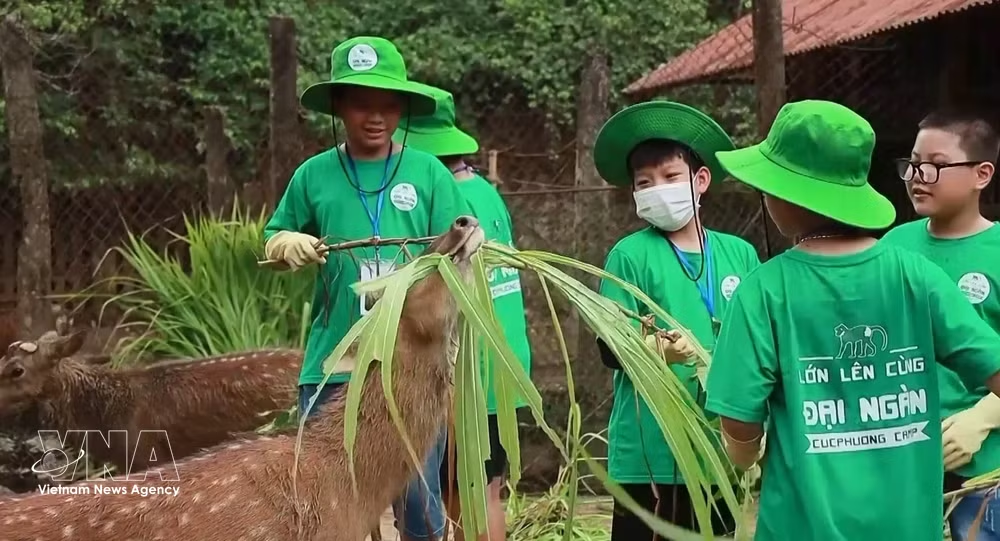
Children enjoy hands-on responsible ecotourism experiences at the park. (Photo: VNA)

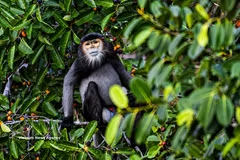
Do Hong Hai, Deputy Director of the Cuc Phuong Environmental Education & Services Centre, said the park has imposed strict visitor management rules for seasonal butterfly and firefly experiences to ensure absolute protection for endangered primates, small carnivores, pangolins and freshwater turtles.

Visitor numbers are tightly controlled and scheduled by time slots. High-emission vehicles are restricted, and guests on night-wildlife outings must stay completely silent and avoid light pollution to prevent disruption of natural behaviour.

An official from the provincial Department of Tourism said the shift from mass tourism toward tourism tied to wildlife rescue and nature conservation has gained strong momentum in recent years.

That niche is expected to draw urban residents seeking learning, exploration and healing through nature. By creating educational and immersive products, the park is effectively turning tourists into biodiversity ambassadors, the official added./.
VNA

See more

The Ministry of Industry and Trade has reported initial signs that the fuel is helping reduce emissions and protect the environment. (Photo: VNA)

E10 biofuel shows initial environmental benefits: Ministry

An official said the initial results indicate the nationwide rollout has begun to achieve its intended objectives, but more comprehensive monitoring over a longer period, with a wider observation network and more frequent measurement, is needed for a precise and objective assessment.

Forest development in Phan Son commune, Lam Dong province. (Photo: nhandan.vn)

Vietnam lays groundwork for transparent carbon market

Experts say the launch of the trading platform is only the first step. The long-term success of the market will depend on a transparent system backed by robust measurement, reporting and verification (MRV) standards to ensure every transaction reflects genuine emissions reductions.

A rubber plantation are in Dong Nai province. Vietnam has more than 900,000 ha of rubber plantations, with over 60% operated by smallholders. (Photo: VNA)

Rubber traceability accelerated as EU deforestation regulation deadline nears

Speaking at a conference held recently in Ho Chi Minh City to gather feedback on draft EUDR compliance guidelines for the rubber sector, Nguyen Quoc Manh, Deputy Director of the Plant Production and Protection Department under the Ministry of Agriculture and Environment, said that Vietnam had spent the past three years preparing for the regulation through awareness campaigns, training programmes and coordination with ministries, local authorities and businesses.

A view of the Can Gio mangrove forest, a crucial "carbon sink" ecosystem that contributes to generating carbon credits for operating Vietnam's carbon market. (Photo: VNA)

Vietnam earns 56.5 million USD from forest carbon credit sales to World Bank

Speaking at a conference in Hanoi on July 2 to introduce Decree No. 180 on forest carbon sequestration and storage services, Luong said the latest transaction brought the country's total revenue from the transfer to 56.5 million USD, covering 11.3 million tonnes of CO2 emission reductions at a price of 5 USD per tonne.

Dray Sap Waterfall is located within the UNESCO Dak Nong Global Geopark in Nam Da commune, Lam Dong province. (Photo: VNA)

UNESCO review spurs conservation drive at Dak Nong Global Geopark

The provincial Department of Culture, Sports and Tourism, in collaboration with the Vietnam UNESCO Global Geoparks Network and relevant agencies, surveyed 41 geological, cultural and tourism sites across the geopark, identifying a number of issues requiring urgent attention to safeguard the site's outstanding values.

The release site is carefully selected to provide suitable ecological conditions and improve the pangolin's chances of survival in the wild. (Photo: VNA)

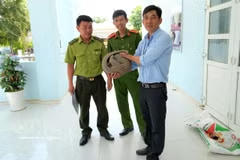
Tay Ninh releases rare pangolin back to nature

Following health checks, care and monitoring, the pangolin was confirmed be in good condition and fit for release. The release site was carefully selected to provide suitable ecological conditions and improve the animal's chances of survival in the wild.

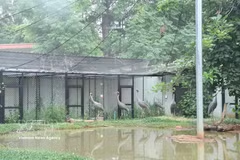
Sarus cranes cranes are being cared for at Nakhon Ratchasima Zoo in Nakhon Ratchasima province, Thailand. (Photo: VNA)

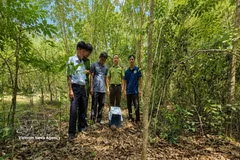
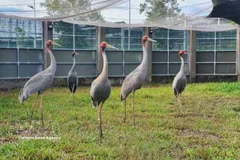
Six sarus cranes from Thailand arrive in Dong Thap

Of the six cranes, two are males and four females, with individual weights ranging from 5.3kg to 6.7kg. The birds were raised at Nakhon Ratchasima Zoo in Thailand and transported to Vietnam by air.