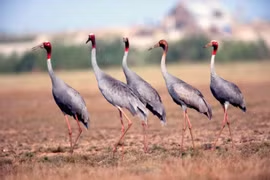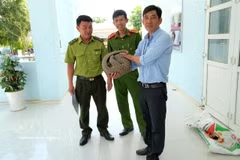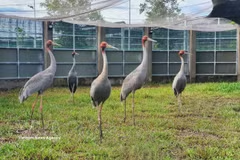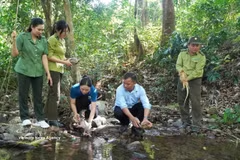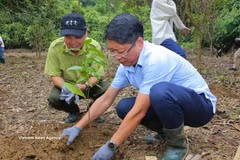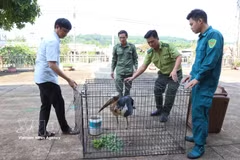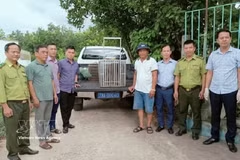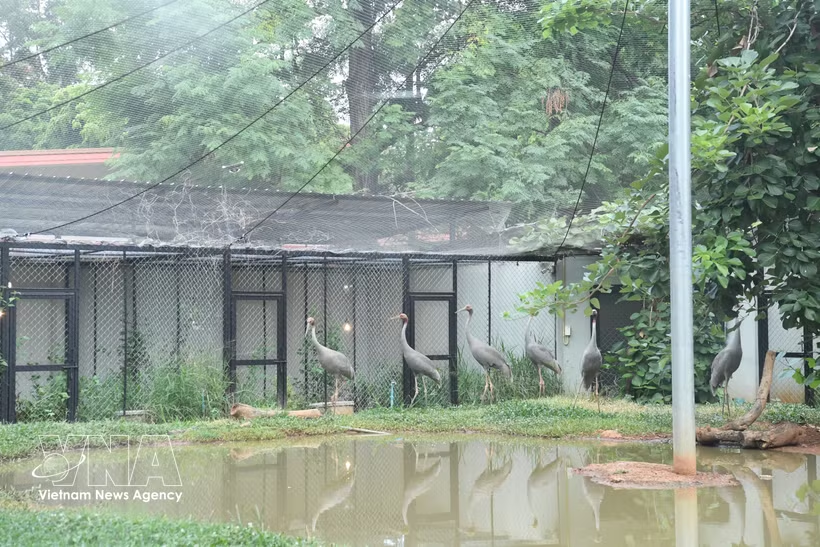
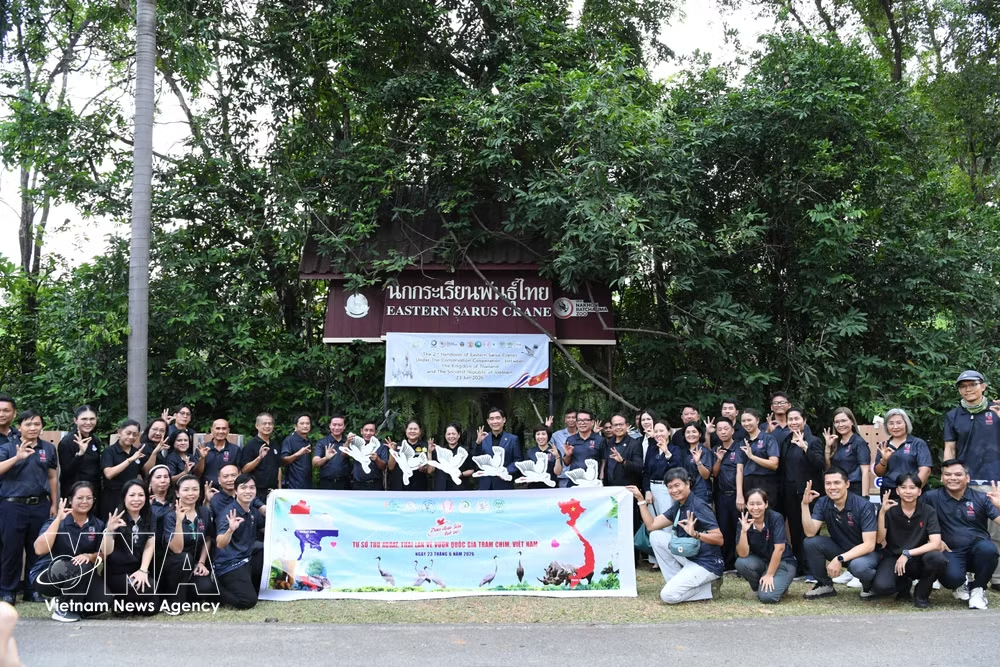
Dong Thap (VNA) – Six sarus cranes from Thailand were handed over to the Mekong Delta province of Dong Thap at a ceremony held in Tram Chim commune on June 24, as part of a project aimed at conserving and restoring this rare bird species at Tram Chim National Park during the 2022–2032 period.
Of the six cranes, two are males and four females, with individual weights ranging from 5.3kg to 6.7kg. The birds were raised at Nakhon Ratchasima Zoo in Thailand and transported to Vietnam by air. Their arrival reflects effective cooperation between the provincial People’s Committee, the Zoological Park Organisation of Thailand, the Vietnam Zoos Association, and the International Crane Foundation.
Nguyen Phuoc Thien, Vice Chairman of the Dong Thap People’s Committee, said the event represents more than the arrival of additional birds and marks a milestone affirming the province’s long-term vision and strong commitment to preserving natural heritage.
Earlier, in April 2025, Dong Thap received the first group of sarus cranes from Thailand. At present, the five birds transferred in the first phase have reached maturity, remain healthy and have adapted well to local climatic and environmental conditions. Since early 2026, they have entered the pairing stage, which is regarded as an encouraging sign for future breeding.
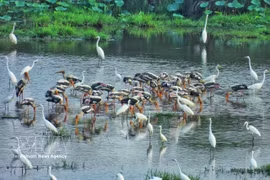
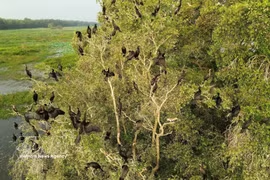
According to Nguyen Van Lam, Director of Tram Chim National Park, the park served for many decades as an important habitat and feeding ground for the sarus crane, a rare species protected under Vietnamese law and international conventions to which Vietnam is a party.
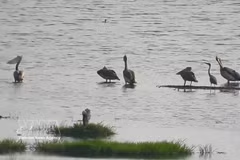
However, the number of sarus cranes returning to Tram Chim has declined sharply in recent years, and no wild individuals have recently been recorded at the site. In response, Dong Thap authorities introduced the conservation project for 2022–2032 to gradually restore their population, preserve biodiversity and support the sustainable development of Tram Chim’s wetland ecosystem.
The project’s overall objective is to restore and develop the sarus crane population at Tram Chim National Park through captive breeding and reintroduction into the wild. Over the ten-year period, the programme aims to release 100 cranes, with at least 50 expected to survive. The reintroduced population is intended to become self-sustaining, capable of breeding naturally and living year-round at the park./.