Dong Thap (VNA) – Tram Chim National Park in the Mekong Delta province of Dong Thap is stepping up efforts to restore a sustainable wetland ecosystem, one of the last remaining areas representing the typical wetland landscape of the historic Dong Thap Muoi region.
The park not only stores and regulates water resources but also serves as a foundation for sustainable socio-economic development in the locality.
Covering more than 7,313 hectares, Tram Chim National Park holds significant biodiversity value, conserving hundreds of plant species, waterbirds, and aquatic organisms. The park has been internationally recognised as Vietnam’s second Ramsar site and the world’s 2,000th Ramsar site.
Its ecosystem includes seasonal flooded grasslands, native plants such as nang kim, wild rice, and melaleuca forests, forming ideal habitats for waterbirds to live and forage.
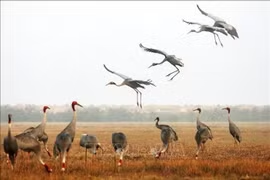
According to Bui Thanh Phong, Deputy Director of Tram Chim National Park, the wetland ecosystem plays a crucial role in conserving rare waterbird species, particularly the Sarus crane, an ecological symbol of the region. However, the ecosystem is facing serious challenges, including the increasing impacts of climate change, environmental pollution, declining water quality, and invasive alien species that disrupt ecological balance and threaten biodiversity.
These pressures not only affect the environment but also directly influence local livelihoods, water security, and sustainable development in Dong Thap and the Mekong Delta region in general. Therefore, restoring the wetland ecosystem has become an urgent and non-negotiable task requiring coordinated efforts from multiple sectors and stakeholders.
In addition to restoring the environment, Dong Thap authorities have been working to boost livelihoods for communities living in the buffer zones of the national park. Models such as experiential tourism (traditional mouse hunting and fishing methods), ecological rice cultivation, and seasonal fish conservation during flood seasons have helped create jobs and increase local incomes.
For example, the Quyet Tien Ecological Agricultural Cooperative in Phu Tho commune has implemented a seasonal fish conservation model. Each flood season, the cooperative harvests nearly 10 tonnes of wild fish, generating more than 220 million VND (8,350 USD) in revenue.
Nguyen Minh Tuan, director of the cooperative, said the model provides additional income for farmers during idle periods while also helping protect aquatic resources and biodiversity. Some fish species that had long disappeared have recently reappeared, indicating ecological improvement. The cooperative also combines fish conservation with tourism services to promote the local image and generate additional income for farmers.
Dong Thap province has identified several strategic directions for sustainable wetland restoration, including zoning strictly protected areas, ecological restoration zones, and eco-economic development zones. The province also plans to promote high-quality eco-tourism, ecological agriculture, and carbon economy initiatives.
At the same time, efforts will focus on restoring degraded wetlands, protecting critical habitats, and reviving native flora and fauna, particularly restoring habitats for the Sarus crane. The province is also calling for investment from businesses, cooperation with international organisations, and the development of carbon credit markets.
According to Nguyen Hoang Minh Hai from the Tram Chim National Park Conservation and Development Centre, prolonged heatwaves caused by climate change from 2016 to 2023 forced the park to maintain high water levels year-round to prevent forest fires. However, this led to stagnant water, high organic pollution, and low dissolved oxygen levels, negatively affecting aquatic life and vegetation.
In recent years, the park has taken several steps to restore its ecosystem. Between 2024 and 2026, it carried out controlled grass burning over about 1,000 hectares to clear thick vegetation, plough the soil, remove invasive species, and adjust soil pH, all to help the grass-like sedge, known locally as nang kim or Eleocharis ochrostachys, thrive. This rhizomatous perennial herb usually grows along streams and plays a key role in maintaining a healthy marsh ecosystem.
A key solution has been to adjust water levels seasonally rather than maintain high levels throughout the year. This hydrological management is considered crucial to restoring the park’s ecosystem.
In the Go Lao Voi area of Sub-zone A1, natural nang kim grasslands – the primary food source for Sarus cranes – had previously declined. Over the past three years, coordinated measures such as hydrological regulation, controlled burning, and soil cultivation have restored nearly 100 hectares of nang kim in the park’s core zone. The restored grassland now produces abundant tubers, providing an ideal natural food source for Sarus cranes.
Improved water management has also helped revive melaleuca forests and wetland vegetation. Native aquatic plants such as purple and yellow water algae, wild rice, and white water lilies have reappeared across the park’s canals.
Dr Tran Triet from the International Crane Foundation noted that the widespread presence of white water lilies – a species tolerant of acidic conditions – indicates significant improvement in water quality, resembling the historical wetland environment of Dong Thap Muoi.
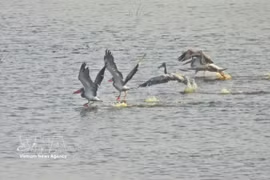
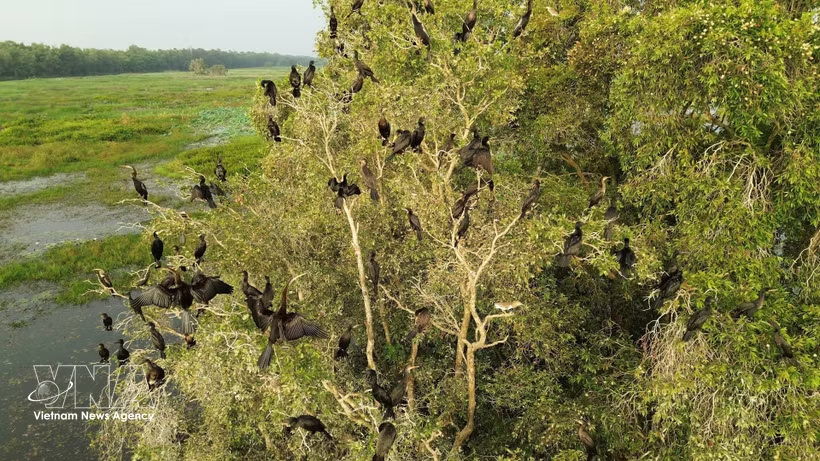
With improving ecological conditions, many rare bird species such as painted snipes, stilts, comb ducks, and Asian openbill storks have returned to Tram Chim National Park to forage and breed. In recent years, several Sarus cranes have also been recorded returning to the park.
According to Phong, adaptive hydrological management aligned with natural conditions will remain a key priority in the coming years to ensure favourable habitats for wildlife and vegetation to thrive./.