Rare bird returns to Tram Chim National Park

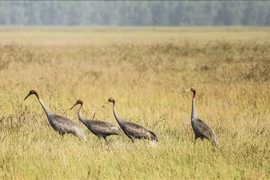
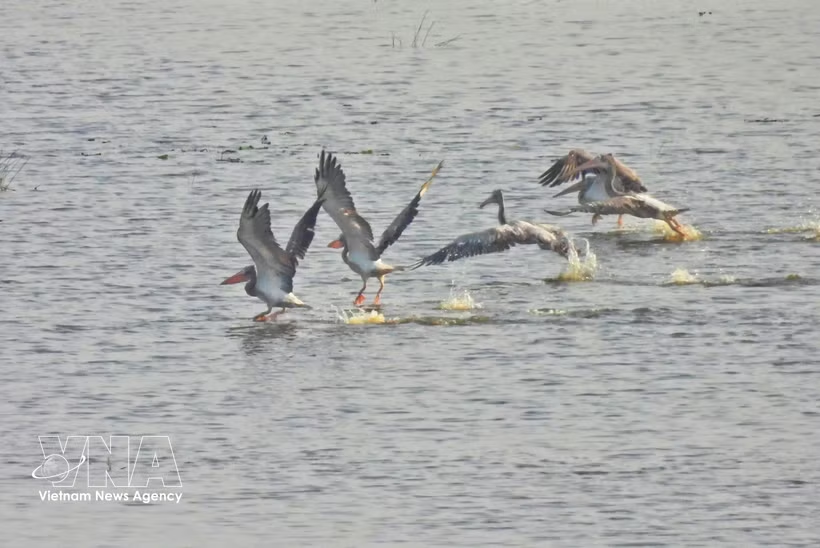
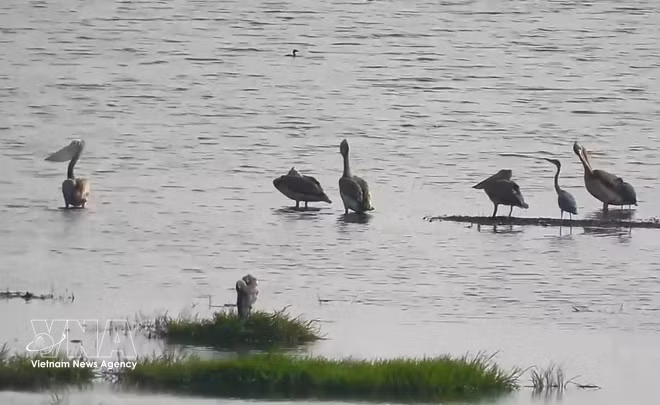
Six spot-billed pelicans were spotted in the strictly protected A1 zone, landing in the wetland area to forage for food.

Rare spot-billed pelicans appear at Tram Chim National Park after six years of absence. (Photo: VNA)

Dong Thap (VNA) – A flock of spot-billed pelicans (Pelecanus philippensis), a rare and endangered bird species, has reappeared in the Tram Chim National Park, the Mekong Delta of Dong Thap, after a six-year absence, local authorities said on April 8.

Doan Van Nhanh, Deputy Director of the park’s Conservation Centre, said six pelicans were spotted in the strictly protected A1 zone, landing in the wetland area to forage for food.

The spot-billed pelican is listed in both the Vietnam Red Data Book and the IUCN Red List due to its declining global population. The species is recognisable by its grey legs, large body length of about 1.2–1.4 metres, webbed feet, and a long bill with a distinctive expandable throat pouch used to scoop fish. Pelicans typically live and feed in groups.

The World Wide Fund for Nature (WWF) in Vietnam reported that the flock has been observed resting and feeding in several sub-zones of the park. As a migratory waterbird with strict habitat requirements, the species prefers open wetlands with abundant food and minimal human disturbance. Its return is therefore considered a positive sign that ecological conditions in Tram Chim are gradually improving.
vnanet-potal-xuat-hien-dan-chim-bo-nong-chan-xam-quy-hiem-tai-vuon-quoc-gia-tram-chim-dong-thap-8688238.jpg
Rare spot-billed pelicans appear at Tram Chim National Park after six years of absence. (Photo: VNA)

In recent years, the park has implemented a range of restoration measures to revive its wetland ecosystem. Between 2024 and 2026, controlled grass burning was conducted across about 1,000 hectares to clear dense vegetation layers. Other efforts included ploughing soil, removing invasive plant species and monitoring soil pH levels.

A key measure has been the seasonal regulation of water levels, rather than maintaining high water levels year-round. This approach is seen as critical to restoring the natural wetland environment and supporting the recovery of native flora and fauna.

Improved hydrological management has helped rejuvenate the melaleuca forest ecosystem and encouraged the return of characteristic wetland plants of the Dong Thap Muoi wetland region such as wild rice, Xyris indica, white water lilies and other aquatic plants.

With habitats gradually recovering, several rare bird species, including the Asian openbill stork, black-headed ibis, black-winged stilt, and other migratory birds, have also been recorded returning to the park. In recent years, Tram Chim has even recorded the reappearance of several Sarus cranes, an iconic species of the Mekong Delta wetlands.

Bui Thanh Phong, Deputy Director of the Tram Chim National Park, said water levels are now managed in line with natural cycles, which has significantly improved the park’s ecosystem. Moving forward, the park will continue adjusting hydrological conditions based on scientific recommendations to further support biodiversity conservation.

Covering more than 7,313 hectares, the Tram Chim National Park is one of Vietnam’s most important biodiversity sites. It is internationally recognised as Vietnam’s second Ramsar site and the 2,000th in the world.

The park is home to 139 plant species, more than 250 species of waterbirds (including 22 rare species), 67 fish species, 174 phytoplankton species, and 110 zooplankton species./.

VNA

See more

An overview of the kick-off meeting for the “Sustainable Management of Substances Controlled by the Montreal Protocol” project (Photo: VNA)

Vietnam launches 13 mln USD project to phase out ozone-depleting substances

Funded by the Multilateral Fund for the Implementation of the Montreal Protocol and implemented through the World Bank (WB) and the United Nations Environment Programme (UNEP), the project aims to help Vietnam meet its international commitments in managing and phasing out controlled substances. It will run from 2026 to 2031 with a total budget of over 13 million USD.

Tram Chim National Park and the Mekong Conservancy Foundation (MCF) organise the workshop on sustainable restoration of wetland ecosystems in the Mekong Delta on March 24. (Photo: VNA)

Solutions sought to restore Mekong Delta wetland ecosystems

Experts at the workshop described wetlands as the “ecological heart” of the Mekong Delta, playing a vital role in water storage and regulation, climate moderation, carbon sequestration, biodiversity conservation, and livelihoods for millions of people through aquaculture, agriculture, and ecotourism. These ecosystems also help reduce disaster risks and enhance climate resilience.

Deputy Minister of Agriculture and Environment Le Cong Thanh speaks at the ceremony to launch major environmental campaign. (Photo: VNA)

Vietnam calls for collective action on water, air, climate and sustainable future

Deputy Minister of Agriculture and Environment Le Cong Thanh underscored that water, climate, and energy are fundamental pillars of sustainable development. In Vietnam, water resources and weather patterns influence every aspect of life, from food and water security to livelihoods, ecosystem stability, and economic growth.

The population of trac (Dalbergia cochinchinensis) trees is strictly protected in the Dak Uy special-use forest. (Photo: VNA)

Vietnam highlights forests’ role in sustainable growth on International Day of Forests

According to Director of the Forestry and Forest Protection Department Tran Quang Bao, forests hold a strategic position in Vietnam’s development. They provide livelihoods for millions of people, particularly ethnic minorities and communities living in mountainous and forested areas, while contributing to environmental protection and disaster prevention.

The World Meteorological Day 2026 carries the theme “Observing Today, Protecting Tomorrow”. (Photo: VNA)

Ministry guides response to World Meteorological Day, World Water Day 2026

The Ministry of Agriculture and Environment urged ministries, agencies, local authorities, embassies, and international organisations to hold practical and effective activities aligned with the themes. Suggested activities include displaying eco-friendly banners, posters, and billboards in public spaces, streets, government offices, and other suitable venues to raise public awareness of the events’ importance.

Delegates launch the Green Hero Solution project in Ho Chi Minh City on March 12, 2026. (Photo: VNA)

Vietnam, Denmark cooperate to pilot circular food model

Under the “Green Hero Solution” project, organic food waste will be collected from partner organisations and businesses and processed into compost. The compost will then be used at two Food Bank community gardens, where fresh vegetables will be grown to support disadvantaged households.

Deputy Prime Minister Tran Hong Ha meets with UNDP Resident Representative Ramla Khalidi and WHO Representative in Vietnam Angela Pratt in Hanoi on March 11. (Photo: VNA)

Vietnam steps up partnership with UNDP, WHO in tackling air pollution

Highlighting Vietnam’s close partnership with the two UN agencies, Deputy PM Ha highly appreciated their important contributions to the country’s development over the years, particularly in policy consultation, institutional reform and promoting sustainable development initiatives.