Vietnam launches 13 mln USD project to phase out ozone-depleting substances

Funded by the Multilateral Fund for the Implementation of the Montreal Protocol and implemented through the World Bank (WB) and the United Nations Environment Programme (UNEP), the project aims to help Vietnam meet its international commitments in managing and phasing out controlled substances. It will run from 2026 to 2031 with a total budget of over 13 million USD.

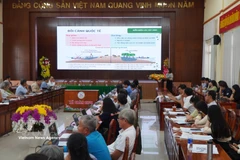
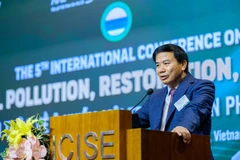
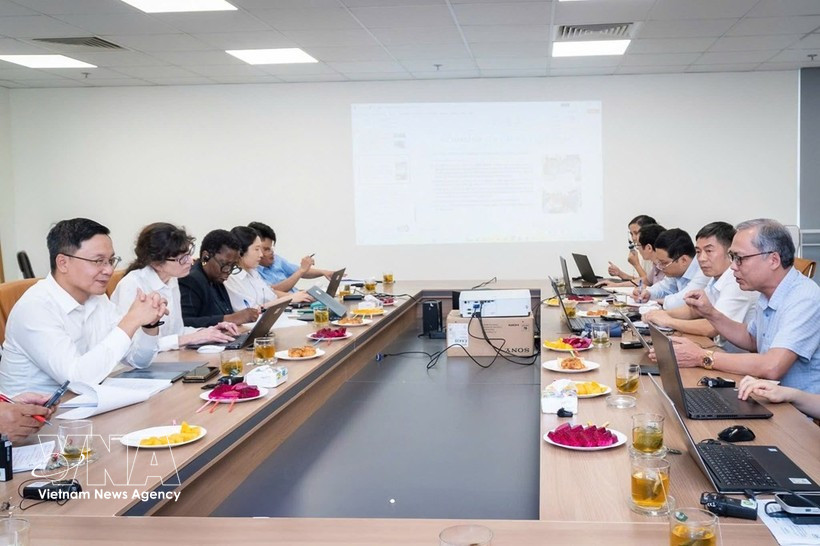
An overview of the kick-off meeting for the “Sustainable Management of Substances Controlled by the Montreal Protocol” project (Photo: VNA)

Hanoi (VNA) – The Department of Climate Change (DCC) under the Ministry of Agriculture and Environment on April 2 held a kick-off meeting for the project “Sustainable Management of Substances Controlled by the Montreal Protocol” (SMS-MP).

Funded by the Multilateral Fund for the Implementation of the Montreal Protocol and implemented through the World Bank (WB) and the United Nations Environment Programme (UNEP), the project aims to help Vietnam meet its international commitments in managing and phasing out controlled substances. It will run from 2026 to 2031 with a total budget of over 13 million USD.

DCC Deputy Director Le Ngoc Tuan said the department serves as the national focal point for implementing the Montreal Protocol and overseeing the management of controlled substances. It has coordinated with international partners and domestic agencies to develop the SMS-MP project.

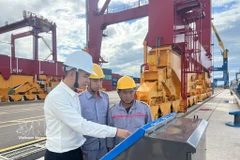
According to WB representative Mary Ellen Foley, the project will focus on the refrigeration servicing sector, where outcomes will depend heavily on coordination between vocational training institutions and the DCC. A key component involves cooperation with the Vietnam Railway Authority to pilot and convert air-conditioning systems on railway carriages to more climate-friendly alternatives.

The project will also support Department of Vietnam Customs through technical assistance to strengthen the monitoring and control of imports and exports of HCFCs (hydrochlorofluorocarbons) and HFCs (hydrofluorocarbons).

Ha Duc Ngoc, a representative of the Department of Vocational Education and Continuing Education said it will work with relevant partners to select qualified institutions to conduct assessments, issue vocational certificates and organise training activities for technicians in the refrigeration and air-conditioning sector.

At the meeting, participants discussed implementation plans, coordination mechanisms and solutions to ensure progress and effectiveness. The DCC is expected to sign cooperation agreements with relevant partners to roll out project activities in line with the roadmap.

Scheduled for completion by the end of 2031, the project aims to gradually reduce the use of HCFCs and HFCs, eventually maintaining only a minimal level of HCFCs for servicing purposes. It is expected to cut emissions equivalent to 6.1 million tonnes of CO2.

The project targets the phase-out of 97.5% of baseline HCFC consumption by 2030 and a 10% reduction in baseline HFC consumption from 2029, in line with the Montreal Protocol.

Key activities include strengthening the capacity of state management agencies, integrating training materials into vocational education programmes, and training and certifying technicians.

The project will also pilot alternative technologies in sectors such as railway transport, implement awareness-raising activities, enhance control over HCFC and HFC trade, and promote the adoption of climate-friendly technologies, thereby contributing to greenhouse gas emission reductions and improved energy efficiency./.
VNA

See more

Tram Chim National Park and the Mekong Conservancy Foundation (MCF) organise the workshop on sustainable restoration of wetland ecosystems in the Mekong Delta on March 24. (Photo: VNA)

Solutions sought to restore Mekong Delta wetland ecosystems

Experts at the workshop described wetlands as the “ecological heart” of the Mekong Delta, playing a vital role in water storage and regulation, climate moderation, carbon sequestration, biodiversity conservation, and livelihoods for millions of people through aquaculture, agriculture, and ecotourism. These ecosystems also help reduce disaster risks and enhance climate resilience.

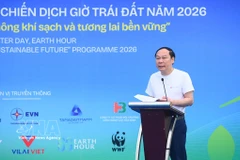
Deputy Minister of Agriculture and Environment Le Cong Thanh speaks at the ceremony to launch major environmental campaign. (Photo: VNA)

Vietnam calls for collective action on water, air, climate and sustainable future

Deputy Minister of Agriculture and Environment Le Cong Thanh underscored that water, climate, and energy are fundamental pillars of sustainable development. In Vietnam, water resources and weather patterns influence every aspect of life, from food and water security to livelihoods, ecosystem stability, and economic growth.

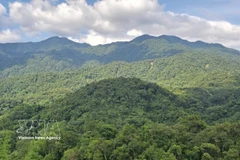
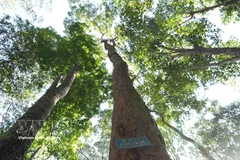
The population of trac (Dalbergia cochinchinensis) trees is strictly protected in the Dak Uy special-use forest. (Photo: VNA)

Vietnam highlights forests’ role in sustainable growth on International Day of Forests

According to Director of the Forestry and Forest Protection Department Tran Quang Bao, forests hold a strategic position in Vietnam’s development. They provide livelihoods for millions of people, particularly ethnic minorities and communities living in mountainous and forested areas, while contributing to environmental protection and disaster prevention.

The World Meteorological Day 2026 carries the theme “Observing Today, Protecting Tomorrow”. (Photo: VNA)

Ministry guides response to World Meteorological Day, World Water Day 2026

The Ministry of Agriculture and Environment urged ministries, agencies, local authorities, embassies, and international organisations to hold practical and effective activities aligned with the themes. Suggested activities include displaying eco-friendly banners, posters, and billboards in public spaces, streets, government offices, and other suitable venues to raise public awareness of the events’ importance.

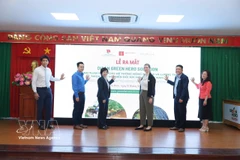
Delegates launch the Green Hero Solution project in Ho Chi Minh City on March 12, 2026. (Photo: VNA)

Vietnam, Denmark cooperate to pilot circular food model

Under the “Green Hero Solution” project, organic food waste will be collected from partner organisations and businesses and processed into compost. The compost will then be used at two Food Bank community gardens, where fresh vegetables will be grown to support disadvantaged households.

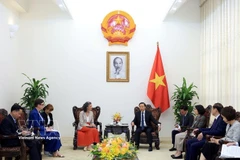
Deputy Prime Minister Tran Hong Ha meets with UNDP Resident Representative Ramla Khalidi and WHO Representative in Vietnam Angela Pratt in Hanoi on March 11. (Photo: VNA)

Vietnam steps up partnership with UNDP, WHO in tackling air pollution

Highlighting Vietnam’s close partnership with the two UN agencies, Deputy PM Ha highly appreciated their important contributions to the country’s development over the years, particularly in policy consultation, institutional reform and promoting sustainable development initiatives.