Hanoi (VNA) – Vietnam has eliminated significant volumes of ozone-depleting substances, cutting an estimated 240 million tonnes of CO2 equivalent by August 2025, under the Montreal Protocol, according to the Ministry of Agriculture and Environment.
Forty years ago, countries around the world signed the Vienna Convention to protect the ozone layer from depletion and safeguard human health.
Recognised internationally as an active and responsible member, Vietnam has, over many years, consistently implemented control measures and successfully phased out numerous ozone-depleting substances. It has eliminated HCFCs and HFCs in accordance with its committed roadmap.
These activities have made a significant contribution to protecting the ozone layer, reducing greenhouse gas emissions, and promoting sustainable and green development.
A major contribution to the ozone layer recovery
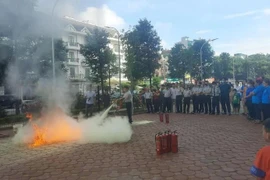
Deputy Minister of Agriculture and Environment Le Cong Thanh recalled that scientists had raised the alarm over the depletion of the ozone layer in the late 1970s and found a fast-expanding hole over Antarctica. The use of chemicals in refrigeration, air-conditioning and fire extinguishing was identified as the main cause.
In response, countries adopted the Vienna Convention in 1985 and the Montreal Protocol in 1987, now among the most successful environmental treaties.
Over 40 years, the treaty implementation and global cooperation has eliminated 99% of ozone-depleting substances, significantly aiding the recovery of the ozone layer – the Earth’s vital shield for life.
As an active participant, Vietnam joined the Vienna Convention and the Montreal Protocol in 1994. Over the past three decades, its efforts have been supported by international partners, notably the Multilateral Fund for the Implementation of the Montreal Protocol, the World Bank and the United Nations Environment Programme. Assistance has enabled Vietnamese businesses to adopt climate-friendly technologies and accelerate the transition towards sustainable cooling solutions.
The country has also integrated ozone protection into domestic law, including the 2020 Law on Environmental Protection and key decrees regulating greenhouse gas emissions reduction, ozone layer safeguarding, and environmental protection. Most recently, Decree 119/2025/ND-CP was issued by the Government in August to further refine the legal framework and facilitate implementation by enterprises.
At the same time, Vietnam has issued and applied national safety standards for the production and use of ozone-depleting substances.
According to the International Ozone Secretariat, by August 2025, the country had eliminated around 240 million tonnes of CO2 equivalent through the management and elimination of ozone-depleting substances under the Montreal Protocol, Deputy Minister Thanh noted.
The Ministry of Agriculture and Environment notes this as a significant achievement, demonstrating Vietnam’s commitment to the Vienna Convention and Montreal Protocol and its contribution to global greenhouse gas reduction efforts.

Working towards net zero emissions
Looking ahead, Thanh added, Vietnam aims to directly cut 11.2 million tonnes of CO2 equivalent by 2045 by implementing its national plan on managing and phasing out ozone-depleting substances and greenhouse gases.
Additional measures such as adopting low- or zero-GWP (global warming potential) substances, managing equipment lifecycles, and advancing sustainable cooling solutions are expected to contribute to further reductions towards the national target of net zero emissions by 2050.
An official from the Department of Climate Change under the Ministry of Agriculture and Environment noted that ozone protection activities are closely linked to other national goals of Vietnam. Therefore, the management and elimination of such substances form part of the broader roadmap for emission reduction, supporting the implementation of the Nationally Determined Contributions. They also open up opportunities for the country to participate in the global carbon credit market, access international financing mechanisms, and mobilise resources for businesses’ green technology innovation.
Ahead of the International Day for the Preservation of the Ozone Layer on September 16, the ministry will launch a series of awareness raising campaigns under the theme “40 Years of the Vienna Convention – From Science to Global Action”, alongside the 2025 International Exhibition on Refrigeration and Air-Conditioning to promote environmentally friendly technologies./.