Wildlife protection drive delivers encouraging conservation gains

Implemented under Plan 628, a joint initiative between the Ministry of Public Security and the Ministry of Agriculture and Environment, the campaign marks a shift towards a more coordinated and long-term approach to protecting wildlife and natural resources.

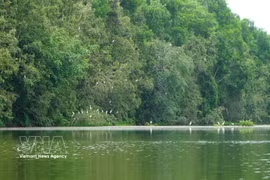
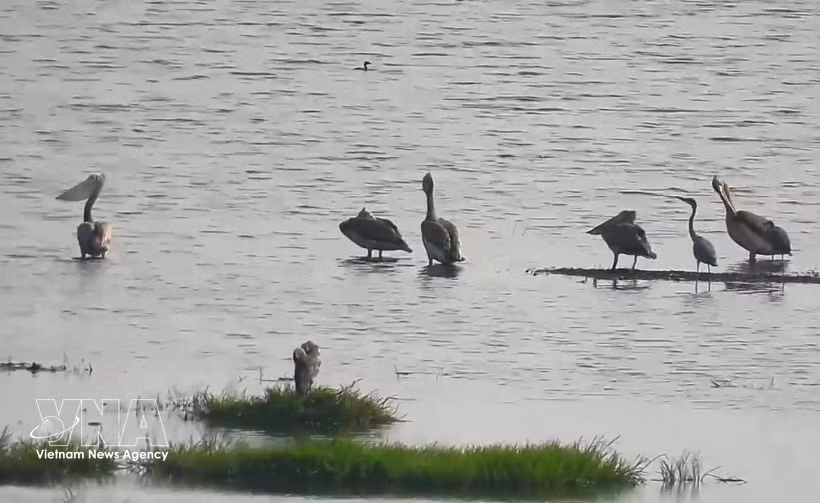
The rare spot-billed pelicans reappear at Tram Chim National Park in Dong Thap province after a six-year absence. (Photo: VNA)

Hanoi (VNA) – A nationwide campaign targeting wildlife crimes and fisheries-related violations is yielding encouraging results, helping strengthen biodiversity conservation efforts in Vietnam and contributing to the gradual recovery of ecosystems in several localities.

Implemented under Plan 628, a joint initiative between the Ministry of Public Security and the Ministry of Agriculture and Environment, the campaign marks a shift towards a more coordinated and long-term approach to protecting wildlife and natural resources.

Vietnam has witnessed a sharp decline in biodiversity over years as habitat loss, illegal hunting, and wildlife trafficking have increased. Wetlands, forests and farmlands that once supported thousands of bird species, including many listed as globally threatened, have come under growing pressure. Illegal wildlife consumption, fuelled by demand from specialty restaurants and the ornamental pet trade, has further complicated conservation efforts.

To address these challenges, the two ministries signed Plan 628 in October last year, launching a three-month nationwide enforcement and awareness campaign across all 34 provinces and centrally run cities. The initiative mobilised local authorities and commune-level police forces to crack down on wildlife crimes while monitoring illegal trading activities on social media, online forums and e-commerce platforms.

One of the campaign’s most significant breakthroughs was the dismantling of an inter-provincial wildlife trafficking ring. The operation, led by police in Nghe An province in coordination with specialised units under the Ministry of Public Security, uncovered a sophisticated network using Facebook, Zalo and Telegram to trade endangered species.

Authorities arrested on March 22 the alleged ringleader, Nguyen Van Chuong of Ninh Binh province, seizing 14 great hornbills, 16 otters, and 181 monkeys classified as protected species. Criminal proceedings have since been launched against the suspect for violations related to the protection of endangered and rare wildlife.
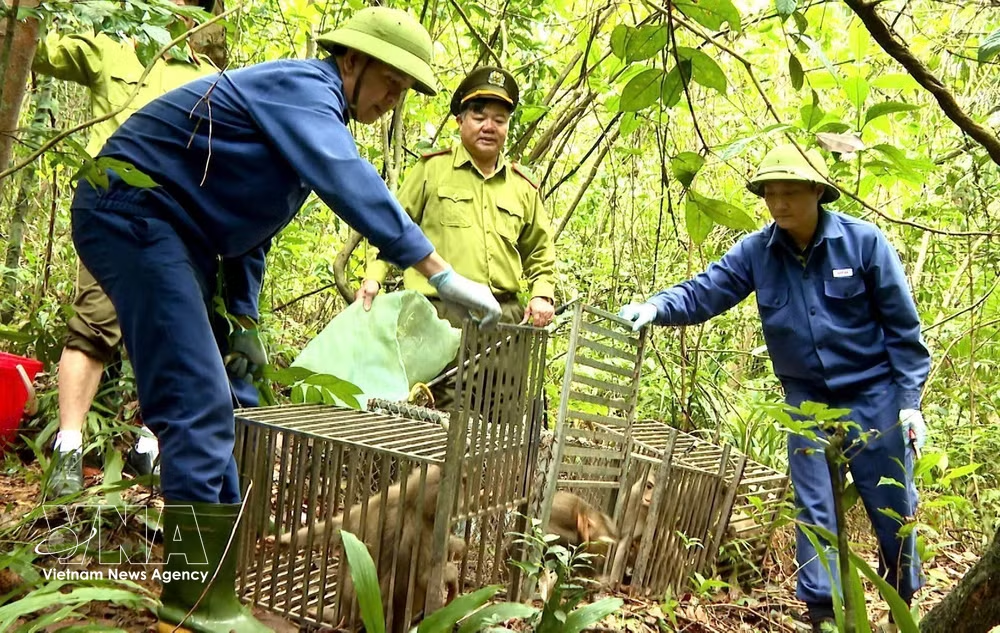
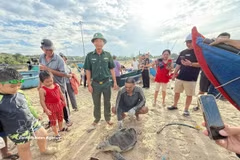
vnanet-vna-potal-quang-tri-hang-chuc-ca-the-dong-vat-hoang-da-duoc-tha-ve-rung-sau-khi-hoan-tat-cuu-ho-8296965.jpg
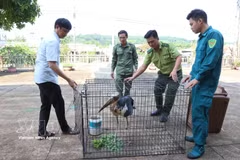
Staff of the Rescue, Conservation and Species Development Centre under the Management Board of Phong Nha-Ke Bang National Park release eight monkeys back into their natural habitat. (Photo: VNA)

Beyond enforcement, competent forces intensified inspections at markets, restaurants, business establishments, and transportation routes while rolling out a nationwide communications campaign under the message: “No hunting – No consumption – Protect wildlife, migratory birds and fisheries resources.” The campaign sought to curb consumer demand, a critical driver of wildlife exploitation and trafficking.

The strengthened coordination among police, forest protection forces, fisheries surveillance agencies, and local authorities has improved operational efficiency, shortened case-processing times and reduced overlaps in enforcement responsibilities.

Official data shows that nearly 1,800 violations were detected and handled during the campaign's three-month implementation period. Since April 1 alone, police nationwide have investigated 444 cases, initiated criminal proceedings in 31 cases involving 47 suspects, and imposed administrative fines in 327 cases, totalling more than 1.6 billion VND (60,700 USD).

Besides, tougher enforcement of criminal provisions, which carry penalties of up to 1 billion VND or seven years in prison, has significantly strengthened deterrence compared with the administrative sanctions that were more commonly applied in the past.

The campaign has also coincided with encouraging signs of ecological recovery. At Tram Chim National Park in Dong Thap province, six spot-billed pelicans, a species listed in the Red Data Book, were recorded for the first time in six years. Several other rare bird species have also returned to the park.

Similarly, a flock of around 300–400 Asian openbill storks has reappeared at Phong Nha–Ke Bang National Park, while 74 birds from 12 species, including seven protected species, were successfully released into the wild at Tam Dao National Park.

Looking ahead, Senior Lieutenant General Nguyen Van Long, Deputy Minister of Public Security, has called on local police forces to tighten discipline and put an end to lax or perfunctory handling of wildlife and fisheries-related violations. For 2026, he urged local police to focus on detection and investigations into offences involving explosives, electric fishing devices, prohibited fishing gear, homemade firearms and equipment used for illegal wildlife hunting.

The results of Plan 628 suggest that stronger enforcement, coupled with public awareness campaigns and inter-agency cooperation, can play a meaningful role in reversing biodiversity decline and supporting the long-term recovery of Vietnam’s natural ecosystems./.


VNA

See more

Bang Mo volcano in Lam Dong province (Photo published by VNA)

Lam Dong optimises value of UNESCO Dak Nong Global Geopark

Alongside conservation, Lam Dong aims to tap the geopark's tourism potential through geological, ecological and community-based tourism. Infrastructure and tourism development projects must ensure that heritage values, landscapes and the natural environment are preserved.

Dr. Dang Trung Phuoc (left) is introducing the history and origin of the Pinhey sand dunes (Photo: VNA)

Vietnamese Canadian scientist revives forgotten ecosystems

From restoring an ancient sand dune ecosystem in Canada to promoting the conservation of Vietnam's coastal dunes, native forests and ecological corridors, Vietnamese-born scientist Dang Trung Phuoc has remained committed to using science to revive ecosystems long misunderstood or neglected. His quiet but sustained efforts reflect both a scientist's responsibility to the communities he serves and the enduring commitment of a Vietnamese expatriate to his homeland.

Police and military forces work together to rescue people and assist local residents in affected areas. (Photo: VNA)

PM orders proactive response to heavy rainfall in northern mountainous region

To minimise casualties and damage to public and private property, the PM instructed ministries, sectors and local authorities to strictly implement directions issued by Party General Secretary and State President To Lam, as well as the Government's directives on strengthening disaster prevention and response in 2026.

A view of the Ea So Nature Reserve in Dak Lak province (Photo: VNA)

Rare wild animals released into natural habitat in Dak Lak

Among them are two species classified under Group IB of Vietnam's protected wildlife list, namely the Bengal slow loris (Nycticebus bengalensis) and the Sunda pangolin (Manis javanica). Both are endangered forest species protected under Vietnamese law and are prohibited from commercial exploitation or use.

A large-timber plantation model in Gia Lai province (Photo: VNA)

96-million-USD project promotes agroforestry to cut emissions

The Reduction of Emissions in the Central Highlands and South Central Coast of Vietnam (RECAF) project will run from 2026 to 2031 across the provinces of Dak Lak, Gia Lai, Lam Dong, and Khanh Hoa covering about 145,000ha, according to the International Fund for Agricultural Development (IFAD).

Crested goshawks are handed over by the People's Committee of Dong Le commune, Quang Tri province. (Photo: VNA)

Quang Tri rescues six rare wild animals

The animals are now receiving quarantine, treatment and specialised care. Once recovering their physical condition and wild behaviour, they will be reassessed for release back into the wild.

The Ministry of Industry and Trade has reported initial signs that the fuel is helping reduce emissions and protect the environment. (Photo: VNA)

E10 biofuel shows initial environmental benefits: Ministry

An official said the initial results indicate the nationwide rollout has begun to achieve its intended objectives, but more comprehensive monitoring over a longer period, with a wider observation network and more frequent measurement, is needed for a precise and objective assessment.

Forest development in Phan Son commune, Lam Dong province. (Photo: nhandan.vn)

Vietnam lays groundwork for transparent carbon market

Experts say the launch of the trading platform is only the first step. The long-term success of the market will depend on a transparent system backed by robust measurement, reporting and verification (MRV) standards to ensure every transaction reflects genuine emissions reductions.

A rubber plantation are in Dong Nai province. Vietnam has more than 900,000 ha of rubber plantations, with over 60% operated by smallholders. (Photo: VNA)

Rubber traceability accelerated as EU deforestation regulation deadline nears

Speaking at a conference held recently in Ho Chi Minh City to gather feedback on draft EUDR compliance guidelines for the rubber sector, Nguyen Quoc Manh, Deputy Director of the Plant Production and Protection Department under the Ministry of Agriculture and Environment, said that Vietnam had spent the past three years preparing for the regulation through awareness campaigns, training programmes and coordination with ministries, local authorities and businesses.