Dak Lak (VNA) – With the domesticated elephant herd in Dak Lak province down to just over 30 and facing decline due to ageing and low reproduction rates, conservation efforts in Buon Don have turned into both a technical challenge and a race to preserve a cherished cultural symbol of the Central Highlands.
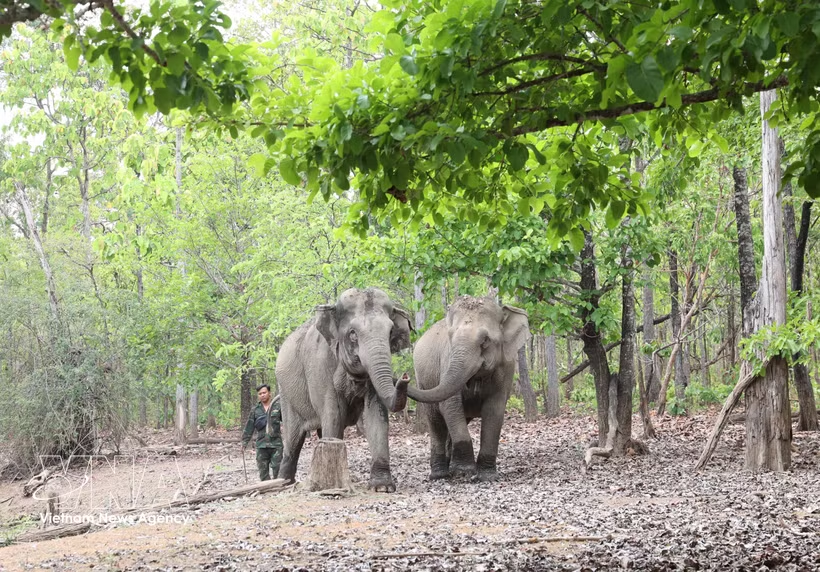
Amid the scorching dry season in the dipterocarp forests of Buon Don, mahouts from the Dak Lak centre for elephant conservation, wildlife rescue, and forest protection management trek alongside elephants in search of water and food, while tending to their health.
Elephant caretakers
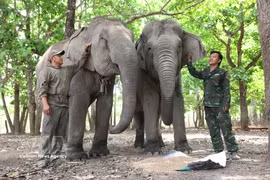
At a semi-wild care site managed by the centre, Jun and Gold are often seen closely interacting with their mahouts. Both were rescued in critical condition at a very young age, and their recovery from the brink of death reflects the dedication of the caretakers.
With more than a decade in elephant rescue work, Cao Xuan Ninh from the care and rescue unit regards the animals as part of his family. He recalled that Jun was caught in a trap in 2015, suffering severe leg injuries and bone infection, while Gold, rescued in 2016 after falling into a deep pit, was exhausted and traumatised. The toughest part was feeding milk and tending to wounds, with staff taking turns staying up at night to keep the calves comfortable and monitor their injuries.
Ninh said caring for elephants deep in the forest is demanding work, requiring dedication and a deep affection for the animals. Daily tasks include cleaning wounds, administering medicine, and closely monitoring feeding. Jun once suffered repeated infections, but through persistence, international support, and multiple surgeries, his life was saved.
Thousands of days of continuous care helped both elephants recover and become healthy and playful, Ninh noted.
Currently, the centre is caring for nine elephants. Injured or ageing individuals are kept under controlled conditions for treatment and monitoring, while healthier ones are allowed to roam semi-wild forest areas to maintain natural behaviours. The centre has also worked with the Animals Asia organisation to apply internationally standardised care practices, ensuring that the elephants are restored to the fullest extent possible, both physically and instinctively.
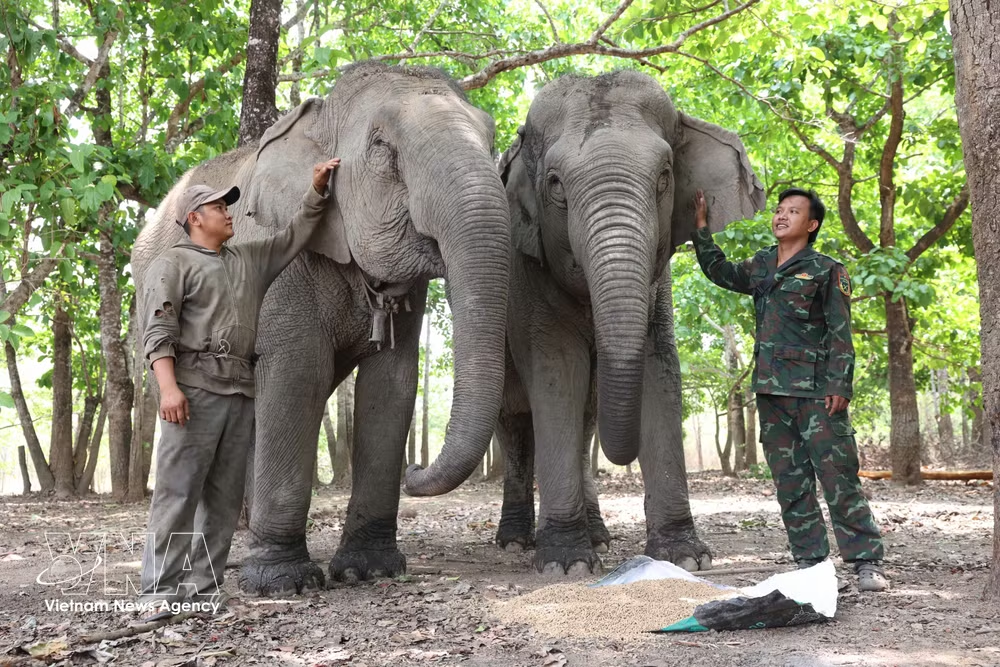
Elephant caretakers regard the animals as part of their family. (Photo: VNA)
Happy elephants
The ultimate goal of elephant conservation in Dak Lak is to improve the welfare of each elephant, requiring caregivers with deep knowledge of elephant behaviour and strong professional commitment.
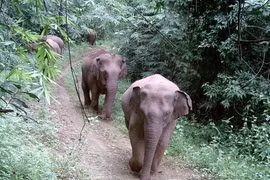
Coming from a family with long experience in elephant keeping, Xi Xa Vat from Yang Lanh village, Buon Don commune, said his early exposure helped him understand elephant emotions and habits. However, semi-wild care remains demanding, especially in the dry season when food and water are scarce. Caregivers often trek for kilometres in temperatures approaching 40°C in search of food and water, while also working to prevent conflicts when wild elephants approach managed herds.
Despite these difficulties, he said the greatest reward is seeing elephants move freely under the forest canopy, bathe in mud pools, and feed naturally without pressure.
Veterinarian Cao Dang Quan, working at the centre, said elephants are highly intelligent animals with complex emotions and distinct individual traits, requiring tailored nutrition and healthcare. Of nine elephants under care, four injured or ageing individuals are kept in controlled environments, while others roam semi-wild forest areas to maintain natural behaviour, he noted.
For these vulnerable elephants, the centre creates enriched environments such as mud pools and hidden food to encourage natural foraging. Others are accompanied by caretakers living in the forest to support herd-like behaviour and natural movement.
The centre also grows grass and provides feed supplements, vitamins, and medical supplies to ensure stable nutrition and timely treatment, Quan said.
Behind the recovery of Jun and Gold lies the silent dedication of mahouts in the Central Highlands. More than caregivers, they help maintain the fragile link between elephants and nature. Their work reflects a humane and sustainable approach to conserving Dak Lak’s declining domestic elephant population./.