Bangkok (VNA) - In recent years, Bangkok has undergone a profound urban transformation that goes far beyond infrastructure upgrades or isolated development projects. Across the city, a new pattern is emerging - one where green regeneration, cultural expression, and smart urban management intersect to redefine how people experience the modern metropolis.
From large-scale ecological redevelopment to viral cultural trends rooted in tradition, Bangkok is increasingly evolving into a city where urban space is not only functional, but also experiential, adaptive, and deeply human-centered.
Benjakitti Forest Park: From industrial site to urban ecosystem
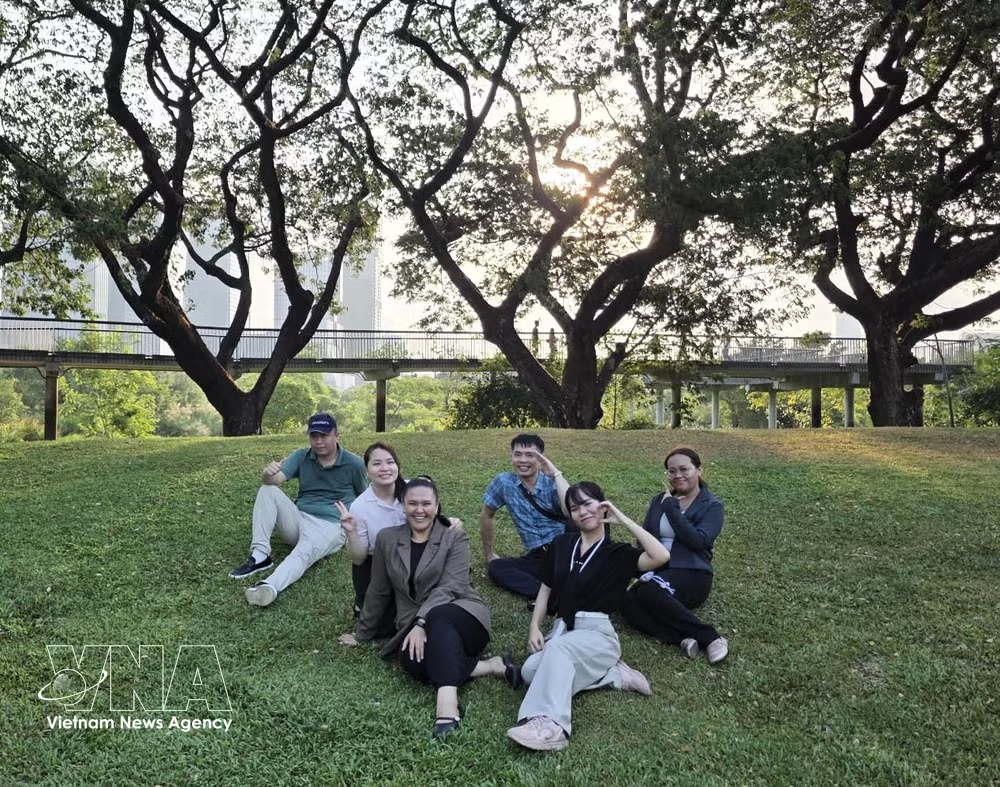
One of the clearest examples of this transformation is Benjakitti Forest Park. Once a tobacco factory site associated with industrial activity and environmental concerns, the area has been reimagined as a vast urban forest in the heart of the city.
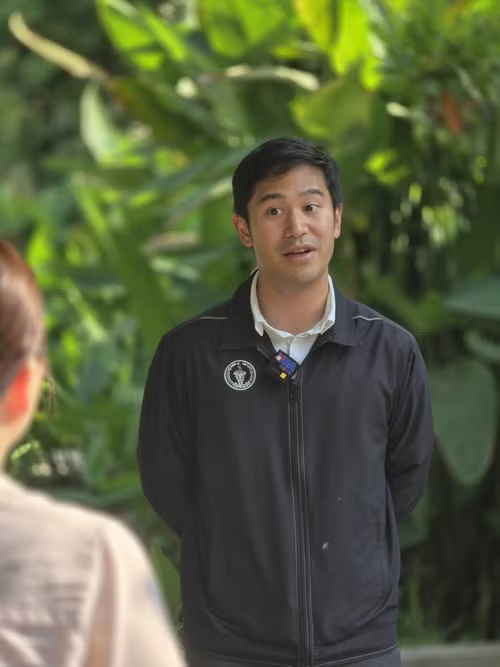
As Bangkok’s Deputy Governor Sanon Wangsrangboon explained in a recent interview with the Vietnam News Agency, the original vision was to transform a space that once “could potentially harm people’s health into one that promotes well-being.” The site, covering around 300 rai (480,000 square meters) or more, provided a rare opportunity for large-scale ecological redesign.
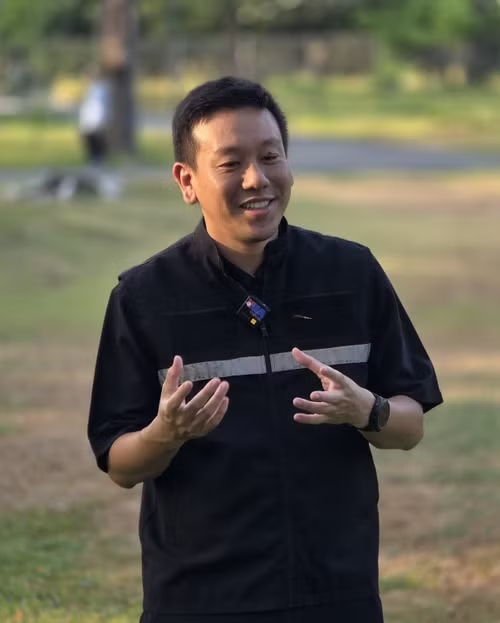
Instead of adopting a conventional park model, the project introduced the concept of a “forest park” - a relatively new idea at the time, according to the Bangkok official.
"Working with designers experienced in nature-based solutions, we aim to create an urban ecosystem that integrates biodiversity, shade, and ecological functions while reconnecting people with nature," he said.
The park opened around four to five years ago, shortly after the COVID-19 period, when demand for green space surged globally as people became more aware of the importance of mental and physical well-being. However, the transformation was not without challenges, the official noted.
The first was land consolidation. The site involved complex ownership structures, requiring coordination between public and private stakeholders before the land could be fully developed into a unified green space.
The second was public perception. Many visitors initially expected a highly manicured urban park, but instead encountered a more natural, forest-like environment. The less structured design led to confusion at first, before gradually gaining acceptance as the “forest park” concept became better understood.
The third challenge was maintenance. Unlike traditional parks, forest parks evolve with natural cycles. Seasonal variation means landscapes change significantly between rainy and dry periods. This requires a shift in mindset -from controlling nature to working with it.
The fourth challenge lies in managing diverse users. Benjakitti attracts joggers, cyclists, birdwatchers, families, yoga groups, and those seeking quiet recreation. Each group brings different expectations, making the park a dynamic but complex public space.
Despite these challenges, Sanon said, Benjakitti has become a multifunctional urban environment. On weekends, it hosts group fitness activities, yoga and Pilates sessions, cycling communities, book clubs, and family recreation. It is no longer just a park for exercise, but a layered social ecosystem.
Phra Phutthayotfa Bridge: When culture becomes urban experience
While Benjakitti represents planned ecological transformation, another shift is unfolding organically along the Chao Phraya River.
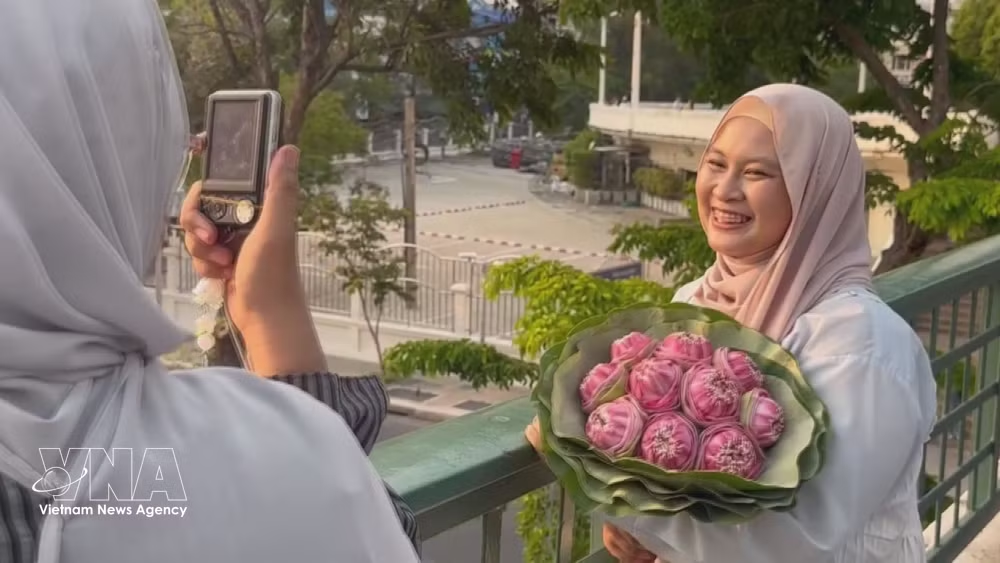
At Phra Phutthayotfa (Memorial) Bridge near Pak Khlong Talat, Bangkok’s historic flower market, a viral lotus photography trend has turned the area into a new cultural hotspot.
Pornphrom Vikitsreth, Chief Sustainability Officer and Advisor to the Governor of Bangkok, noted that this trend reflects a broader change in how people - especially younger generations - use public space.
Rather than relying solely on shopping malls, young people are increasingly gathering in parks, riverfronts, and bridges. The lotus trend combines cultural symbolism with modern visual storytelling, demonstrating how tradition is being reinterpreted through contemporary urban lifestyles.
This reflects a wider transformation in Bangkok’s public spaces. Streets are becoming more pedestrian-friendly, walkways are being improved, and high streets are gaining popularity over enclosed shopping malls. Public space is increasingly becoming experiential, social, and creative.
However, the rise of such trends also raises environmental concerns, particularly regarding waste. In response, Bangkok has adopted a structured approach to urban sustainability. Rather than treating waste as an afterthought, the city designs management systems tailored to specific events and behaviors, according to Pornphrom.
Lotus flowers, for example, are classified as organic waste. While they could be sent to landfill, they are instead redirected into composting systems and reused as soil for tree planting - forming part of a circular economy approach.
Authorities have introduced separate bins and clearer signage, while public communication encourages responsible behavior, Pornphrom said. Visitors are encouraged to reuse lotus flowers, take them home, or give them to family members after use. If disposal is necessary, organic waste bins ensure proper composting rather than landfill disposal.
This reflects Bangkok’s broader circular economy strategy, which treats waste as a resource rather than a burden, he added.
Bangkok is also working to reduce overall waste generation. Initiatives include discouraging single-use plastics, encouraging reusable water bottles, and expanding a network of around 2,000 water refill stations across the city.
The long-term goal is to reduce landfill waste from around 50% to 25%, while shifting toward a more sustainable, people-centered urban system, according to Pornphrom.
Shared lessons between Bangkok and Hanoi
According to Thai officials, cities in Southeast Asia share similar urbanisation patterns and a deep cultural connection to public space.
In both Thailand and Vietnam, young people frequently gather in parks, squares, and open urban areas. This creates opportunities for mutual learning in green infrastructure development, public space activation, and urban sustainability strategies, Sanon said.
Having visited major Vietnamese cities like Hanoi capital and the central city of Da Nang, Pornphrom observed the similarities between the two countries are evident.
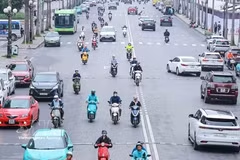
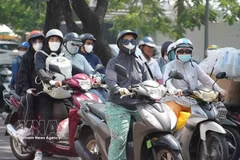
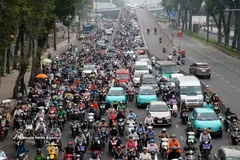
"Both Vietnam and Thailand are at comparable stages of development and face similar challenges in waste management and transportation. Shared food cultures produce similar waste streams, while heavy reliance on motorcycles creates parallel opportunities for electric mobility transitions," he said.
"These shared conditions provide a strong foundation for regional cooperation between Vietnam and Thailand in advancing more environmentally sustainable urban development," Sanon added.
Ultimately, cities today are evolving beyond physical infrastructure. They are becoming integrated systems where nature, culture, technology, and human behavior intersect. Strengthening green public spaces and sustainable systems is therefore not only an environmental priority, but also a foundation for more livable, resilient, and inclusive urban futures, according to Thai officials./.