Urgent action needed to save Vietnam’s elephants from extinction

Wild elephants, long regarded as a symbol of strength in nature and closely tied to the culture and belief of many communities in Vietnam, are now facing the real risk of extinction.

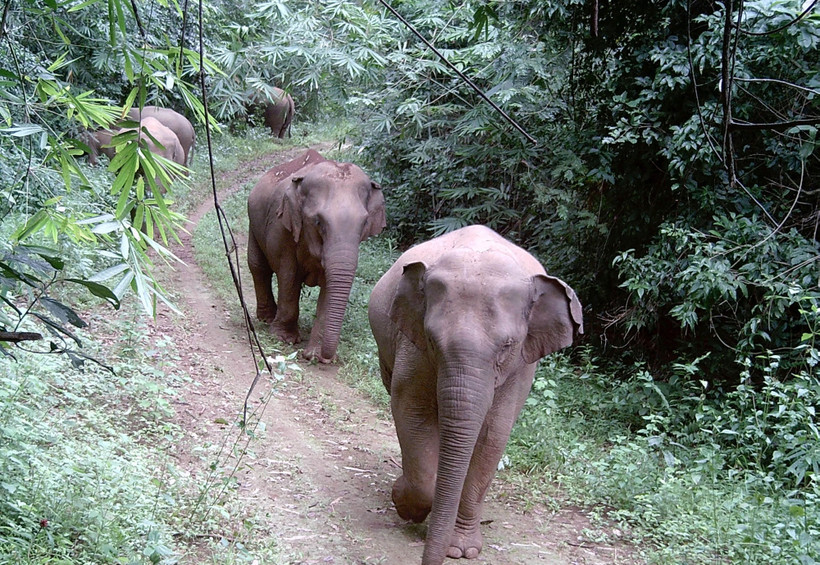
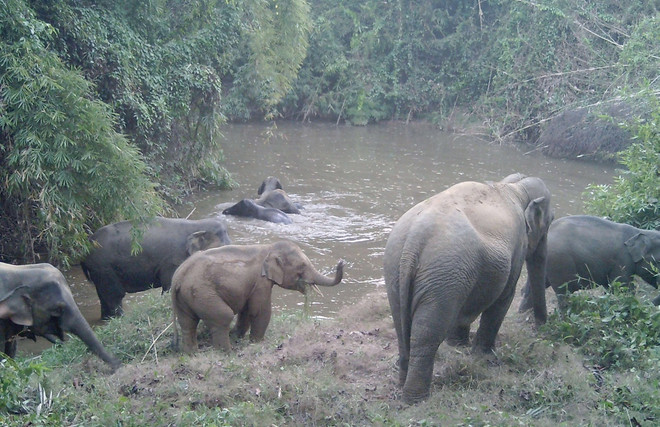
The Dong Nai elephant herd is photographed by the Humane World for Animals organisation's camera traps. (Photo: VNA broadcasts)

Dong Nai (VNA) – Wild elephants, long regarded as a symbol of strength in nature and closely tied to the culture and belief of many communities in Vietnam, are now facing the real risk of extinction.

The alarming population decline has prompted urgent calls for stronger conservation efforts, with the joint involvement of authorities, local communities, and international experts.

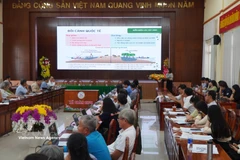
At the 12th meeting of the International Union for Conservation of Nature (IUCN Species Survival Commission (SSC) Asian Elephant Specialist Group (AsESG), experts warned that elephants are critically threatened and require global cooperation for survival.

Particularly, southern Dong Nai province, which manages over 370,000 hectares of forest with a forest cover rate of 25%, is home to Vietnam’s second-largest wild elephant population, numbering only 25–27 individuals.
voi-2.jpg
The Dong Nai elephant herd is photographed by the Humane World for Animals organisation's camera traps. (Photo: VNA broadcasts)

Since 1997, the province has been a pioneer in halting natural forest exploitation, creating a vast conservation area later recognised by UNESCO as the Dong Nai Biosphere Reserve.

The reserve shelters numerous endangered species listed in both Vietnam’s Red Data Book and the IUCN Red List.

According to provincial officials, surveys conducted from the 1990s to 2008 recorded severe human–elephant conflict in Dong Nai, causing casualties on both sides.

Today, fewer than 200 wild elephants remain across Vietnam, scattered in several provinces.

Doan Hoai Nam, Deputy Director of the Forestry and Ranger Department under the Ministry of Agriculture and Environment, said that this figure is a stark warning.
voi-3.jpg
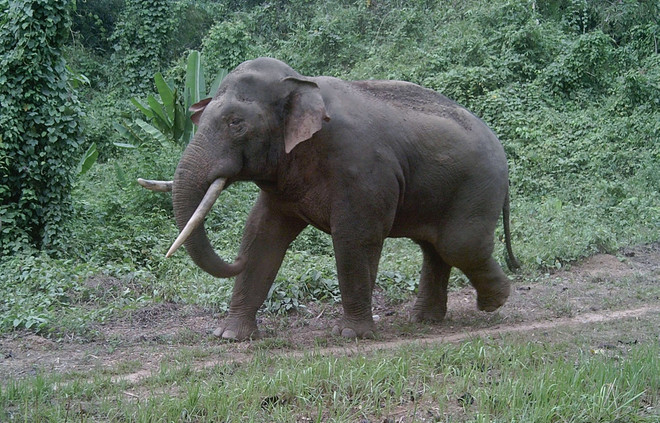
An elephant in the Dong Nai elephant herd. (Photo: VNA broadcasts)

Vietnam is implementing its National Elephant Conservation Action Plan to 2035, with a vision to 2050, aiming to protect elephants and promote coexistence between people and wildlife.

Although various measures have been implemented such as reducing human-elephant conflicts and supporting community livelihoods, conservation efforts face serious challenges due to the shrinking natural forest area, fragmented habitats, small elephant population.

These factors heighten the risk of losing wild elephant population.The presence of nearly 200 wild elephants in Vietnam serves as a stark reminder of the fragility of this animal.

In response to this alarming situation, Asian elephant experts have issued a series of urgent recommendations to protect and restore Vietnam’s elephant population.

These include safeguarding natural habitats, reducing human-elephant conflict, expanding migration corridors, enhancing international cooperation, and encouraging the entire community's involvement in research and conservation efforts.

Dr Pruthu Fernando, a member of the Asian Elephant Specialist Group, said Dong Nai has become a model through its elephant conservation project, which laid the groundwork for the National Elephant Conservation Action Plan launched in 2022.

The plan is already being implemented in five provinces and is expected to expand nationwide by 2026.Information is the most important factor in elephant conservation, Fernando explained.Only with accurate data on the number of male and female elephants, and baby individuals, and herd structure can scientists properly assess the population’s potential and design effective strategies for recovery, he said.

According to Vivek Menon, Chair of the Asian Elephant Specialist Group, elephant conservation requires prioritising habitat protection, promoting harmonious coexistence between humans and elephants to reduce agricultural conflicts, and urgently stopping the poaching of wild elephants.

He warned that elephants, like tigers and lions, once inhabited Vietnam, could disappear if decisive action is not taken, urging management agencies and stakeholders to join hands to act so that elephants continue to be present in Vietnam's natural life.

Addressing human-elephant conflict in Vietnam is complex, Menon said, explaining that elephants are large, social animals, and humans entering their space without understanding can provoke attacks.

Separating mothers from calves can increase aggression, so it’s crucial to allow elephants to live naturally in herds and maintain their wild behaviours to minimise conflict, he added./.

VNA

See more

Official heritage plaque i sinstalled on the 12 recognised Shan Tuyet tea trees in Dong Phuc commune. (Photo: VNA)

Thai Nguyen: 12 ancient Shan Tuyet tea trees win national heritage status

The recognition honours the biological, cultural and historical values of these centuries-old Shan Tuyet tea trees – natural treasures deeply woven into the livelihoods, traditions and identity of local ethnic communities. The title affirms the community’s commitment to preserving and promoting the value of this iconic local tea variety.

Sarus cranes at Tram Chim National Park (Photo: VNA)

Return of sarus cranes: Hope takes wing in Dong Thap wetland

Beneath the wide Mekong Delta sky, Tram Chim National Park is racing against time, pouring heart and science into a decade-long (2022–2032) plan to rescue the Eastern sarus crane – an elegant, scarlet-headed bird listed as endangered on the International Union for the Conservation of Nature (IUCN) Red List and a living emblem of both the park and all of Dong Thap province

French Ambassador Olivier Brochet speaks at the press conference in Hanoi on December 11 to mark the 10th anniversary of the Paris Agreement on climate change and highlighting the COP30 outcomes. (Photo: VNA)

International community ready to support Vietnam in energy transition, climate response

In a video message to the press conference, UN Resident Coordinator in Vietnam Pauline Tamesis said the UN is ready to support Vietnam in building a pipeline of projects capable of absorbing financing mobilised under the Political Declaration on establishing the Just Energy Transition Partnership (JETP), as well as from global climate finance sources, including the Green Climate Fund and the Loss and Damage Fund.

Forest rangers in Son La province apply technological devices and software to forest management, monitoring, and protection. (Photo: nhandan.vn)

Digital technology application enhances forest management, protection

With a total forest area of over 14 million hectares, including more than 10 million hectares of natural forests, forests exist in all 34 provinces and cities across the country. Given the large area and limited workforce, applying digital solutions in forest management and protection has become a top priority for the forestry sector.

Sunda pangolins (Manis javanica), also known as the Javan pangolin, are listed in Group IB – critically endangered and strictly protected from all commercial exploitation (Photo: VNA)

Quang Ngai releases rare pangolin back into nature

Initial verification showed that the animal weighed 3.7kg and measured over 60cm. It was identified as a Sunda pangolin (Manis javanica), also known as the Javan pangolin, listed in Group IB – critically endangered and strictly protected from all commercial exploitation.

Residents of Tuyen Quang province take part in the One Billion Trees Programme. (Photo: VNA)

Tree-planting programme exceeds one-billion-tree goal

The total comprises 573.9 million scattered trees and 865.2 million trees grown in concentrated plantations, equivalent to 429,125 hectares of forest. Provinces posting the strongest results include Phu Tho with 177.9 million trees, Lao Cai with 108.8 million, and An Giang with 98.5 million.

Construction activity is one of the causes of air pollution in Hanoi. (Photo: VNA)

Hanoi takes urgent measures to curb air pollution

The city requires the enhanced application of advanced technologies and remote monitoring systems, including satellite remote sensing, drones, and AI-integrated traffic cameras, to monitor, detect, and strictly address the illegal burning of garbage, straw, and agricultural by-products.