Hanoi (VNA) – Vietnam needs to move beyond collecting and treating plastic waste after it is generated and instead manage plastics throughout its entire life cycle if the country is to reduce pollution, accelerate the circular economy and strengthen its competitiveness in a greener global market, experts have said.
For years, efforts to tackle plastic pollution in Vietnam have focused mainly on waste collection, recycling and disposal. However, as sustainable development and green trade standards become increasingly important, specialists argued that a broader approach is needed, covering everything from product design and material selection to production, consumption and recycling.
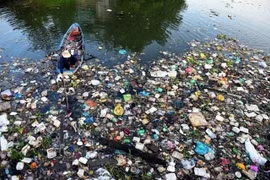
Vietnam generates around 3.1 million tonnes of plastic waste each year, with nearly 48% not properly treated. Single-use plastics and non-biodegradable plastic bags remain widely used in households, businesses and the service sector.
Experts said the scale of the problem means plastic pollution is no longer simply an environmental issue but a major challenge to sustainable development.
To address the issue, the Party and the State have introduced a range of policies, including the 2020 Law on Environmental Protection, the extended producer responsibility (EPR) mechanism, the National Action Plan on Marine Plastic Waste Management through 2030, and the national circular economy development programme. These policies aim to promote sustainable production and consumption while gradually reducing reliance on single-use plastics.
Despite this progress, the implementation remains challenging. Waste sorting, collection and recycling systems are still fragmented, recycling technologies remain limited, markets for recycled materials are underdeveloped, and replacing virgin plastics continues to face cost and commercialisation barriers.
Dr Nguyen Thi Hong Lieu of the Waste Management Department under the Environment Agency at the Ministry of Agriculture and Environment said that existing policies have largely focused on waste treatment after use, while economic tools to reduce the consumption of virgin plastics remain insufficient.
She noted that Vietnam has yet to establish mandatory targets for recycled plastic content, while infrastructure for waste sorting, collection and recycling, as well as databases tracking plastic material flows, still falls short of practical needs.
Dr Nguyen Trung Thang, Deputy Director of the Institute of Strategy and Policy on Agriculture and Environment, said Vietnam should adopt a life-cycle approach similar to those being introduced in many countries.
"Many countries are shifting from waste management to life-cycle management of plastics to reduce dependence on virgin plastics and promote the circular economy," he said. "Instead of focusing only on collection and treatment after use, new policies seek to control plastics from product design and material selection through production, consumption and recycling."
The European Union's Packaging and Packaging Waste Regulation (PPWR), for example, sets a roadmap to increase the use of bio-based materials in packaging from 2027–2028, encouraging alternative materials while reducing carbon emissions.
Vietnam has also begun applying this approach at the local level. Alongside implementing the EPR mechanism, several localities have introduced roadmaps to cut plastic waste and limit single-use plastic products.
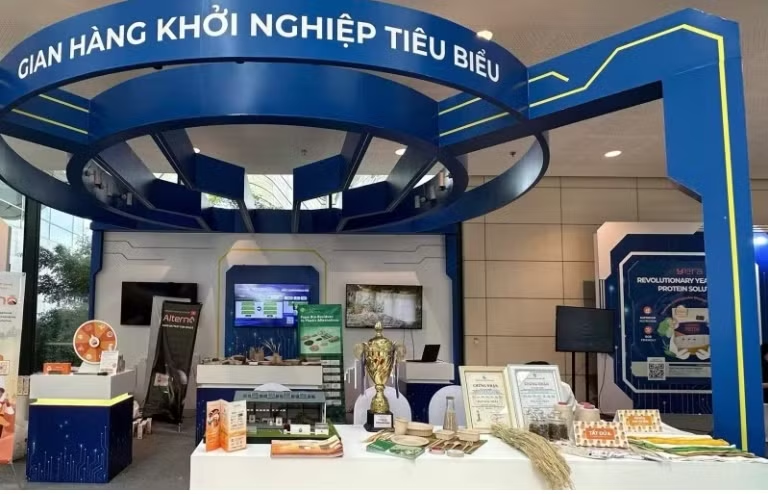
Hanoi is among the leading localities. The city has adopted Resolution No. 22/2025/NQ-HDND on plastic emission reduction and an action plan to strengthen plastic waste management, gradually reducing the use of single-use plastics in public agencies while encouraging environmentally friendly alternatives.
Thang said an effective transition requires three closely linked pillars: policy, science and technology, and innovation. Sound policies create incentives for sustainable production and consumption, technology enables the development of alternative materials and more efficient recycling, while innovation supports new business models and circular supply chains.
Technology is widely regarded as a key driver of this transformation.
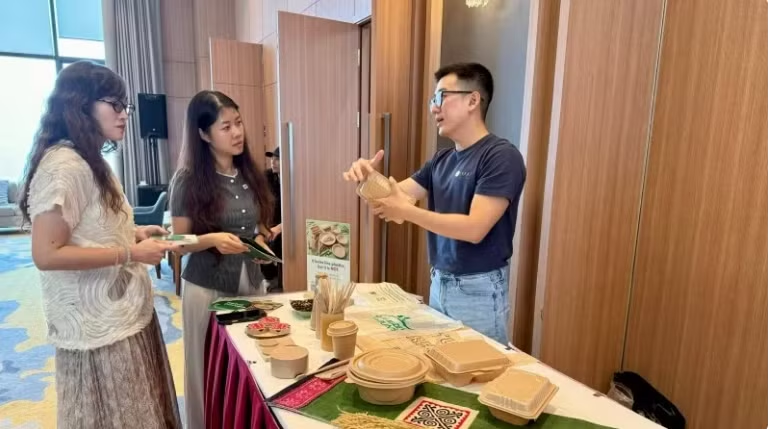
Do Hong Hanh, Director of BUYO Bioplastics, said agricultural and industrial by-products such as sugarcane bagasse and spent grain from breweries could be turned into raw materials for biodegradable plastics.
She said this approach would reduce dependence on petroleum-based plastics while creating additional value from agricultural waste. However, companies developing bio-based materials and recycling technologies continue to face obstacles related to technical standards, green product certification and access to finance.
Nguyen Tien Huy, Director of the Office for Business for Sustainable Development under the Vietnam Chamber of Commerce and Industry (VCCI), said enterprises that continue to rely heavily on virgin plastics will face growing risks as global markets tighten environmental, social and governance (ESG) requirements.
He called for stronger policy support, including regulatory sandboxes, clearer technical standards and measures to accelerate the commercialisation of bio-based materials.
Experts from the Ministry of Agriculture and Environment have also proposed introducing mandatory recycled plastic content for selected products, while expanding tax incentives and green credit programmes to encourage investment in recycled and alternative materials.
They believed that by combining effective policies, technological innovation and businesses' participation, Vietnam can reduce plastic pollution while building a more competitive, circular and low-carbon economy in line with increasingly demanding global green standards./.