Hanoi (VNA) – The Government’s Decree 46/2026/ND-CP dated January 26, 2026 guiding the enforcement of the Law on Food Safety, has been temporarily suspended, and congestion of goods at border gates has been cleared. However, two questions arise: How can policymakers prevent well-intentioned rules from backfiring due to poor feasibility and unintended consequences? And why do certain voices seek to frame enforcement hurdles for a single decree as evidence of broader systemic shortcomings or deficiencies in national administrative capacity?.
Amid rising risks to food safety, especially in the run-up to the Lunar New Year, numerous large-scale incidents involving counterfeit and unsafe food products have been uncovered. Against this backdrop, stronger regulatory oversight is essential to protect public health and consumer interests.
Decree 46/2026/ND-CP, which replaced the earlier Decree 15/2018/ND-CP, entered into force on January 26, detailing enforcement measures for the Law on Food Safety.
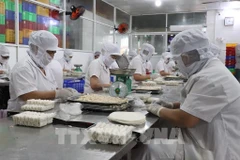
Enforcement quickly ran into difficulties. The absence of specific guiding documents and inadequate preparatory work disrupted state inspections and testing protocols for imported food, halting customs clearance. Tens of thousands of tonnes of goods piled up at border gates, threatening heavy financial losses for importers and exporters.
In response, the Prime Minister on February 3 issued an urgent dispatch instructing relevant ministries, agencies, and localities to promptly clear obstacles in food and exports-imports inspection, expedite clearance, and prevent any recurrence of congestion that would burden businesses. At the regular Government meeting on February 4, the PM directed the immediate issuance of a resolution to address the decree’s enforcement issues. Decisive action by the Government, ministries, agencies, and localities led to the temporary suspension of Decree 46 and the clearance of most stranded shipments. Many enterprises felt relieved as losses were kept to a minimum thanks to timely intervention.
A decree adopted in good faith but faltering in practice demands rigorous post-mortem review, potential accountability measures, and remedial steps, given the damage to public trust and the economic costs imposed not only on companies but on society at large. During debates on the Law on Administrative Procedures, some suggested subjecting normative acts like Decree 46 to judicial review when affected parties claim they infringe lawful rights and interests. Consistent with international norms and views upheld by the National Assembly (NA), however, such legal documents fall under the Law on Promulgation of Legal Documents, which mandates extensive consultation and mechanisms for revision or repeal. Both theory and practice show that legal documents requiring correction remain far outnumbered by individual administrative decisions.
However, responsibility for issuing impractical regulations cannot be entirely avoided. Recently, at the February 7 national conference to disseminate and implement the Resolution of the 14th National Party Congress, Party General Secretary To Lam reiterated that “practical outcomes remain the paramount criterion for evaluating officials”. Once immediate disruptions are resolved, authorities must pinpoint root causes, refine the policy to avert repetition, and conduct objective assessments of responsible officials.
Experts highlighted valuable lessons from the Decree 46 experience for future food safety rulemaking. Recommendations include building predictive transition periods of 6–12 months to accommodate implementation delays; eschewing sudden changes to inspection regimes without transitional phases, detailed instructions, or pilot schemes; and evaluating not just state enforcement capacity but also the readiness of regulated entities. Impact assessments, data-driven risk profiling, and a decisive pivot toward risk-based approaches and meaningful post-market surveillance over rigid pre-clearance formalities are widely seen as necessary.
These are objective, evidence-based views from experts and business leaders with deep expertise and a strong commitment to national development, entirely different from the “analyses” of certain actors who seek to force-fit and speculate, portraying Decree 46’s rollout challenges as a “systemic failure” of economic institutions, the political system, or even public service culture.
Such “blackening,” “exaggeration,” and “hyperbolic” assertions are wholly unfounded. Institutional framework once labeled a “bottleneck” were singled out by the 14th Party Congress, and earlier in the Politburo’s Resolution No. 66, as one of three strategic breakthroughs. In 2025 alone, the Government submitted 99 draft laws and resolutions to the NA, issued 377 decrees, the highest number to date, and adopted six resolutions to resolve regulatory impediments. During the current term, the Government has directed the drafting and submission of more than 178 laws, ordinances, and resolutions to the NA, and promulgated 936 decrees within its authority.
These early efforts to streamline lawmaking and enforcement contributed materially to Vietnam's 8.02% GDP growth in 2025, among the strongest globally. Nominal GDP reached an estimated 514 billion USD, lifting the country five places to rank 32nd worldwide; per capita GDP climbed to roughly 5,026 USD, 1.4 times the 2020 level, securing Vietnam's entry into the upper-middle-income group.
It is therefore untenable to extrapolate from the teething problems of one decree to condemn the entire governance framework. Only actors averse to Vietnam's advancement would overlook the tangible strides in state capacity, from strategic planning and policy design to efficient resource allocation, economic stewardship, rule-of-law adherence, and public service delivery.
The Party and State hold officials and civil servants, especially those shaping policies, to exacting standards. General Secretary Lam has stressed the need for continuous self-improvement to match the demands of the new development phase; those unable to adapt should step aside.
PM Pham Minh Chinh has openly acknowledged the recent border disruptions, urging ministries and agencies to avoid stop-and-go policymaking and incorporate clear transitional clauses in legal documents.
Temporary suspensions, adjustments, or revisions of newly enacted policies are never ideal and should be minimised. Yet such course corrections occur worldwide, irrespective of a country's development stage or market-economy maturity. What counts is rapid remediation to contain losses, extraction of lessons to prevent recurrence, and firm resistance to the dissemination of misleading or hostile allegations, which will help both enforcers and those subject to compliance maintain clarity and composure./.

PM urges swift resolution to tackle issues in enforcing new food safety decree
However, the guidance for implementing the decree was not issued in a timely and specific manner. As a result, difficulties emerged in applying new regulations on state inspections for certain imported agricultural products and fresh food items during the first days of enforcement.