Container throughput at Vietnamese ports continues upward trend: MSB

Statistics from the Vietnam Maritime and Waterways Administration showed that the number of seagoing vessel calls through Vietnam’s seaport system reached 134,600 last year, up 32% year-on-year.

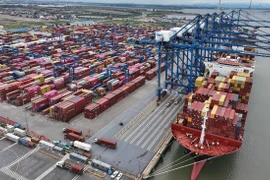
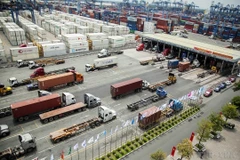
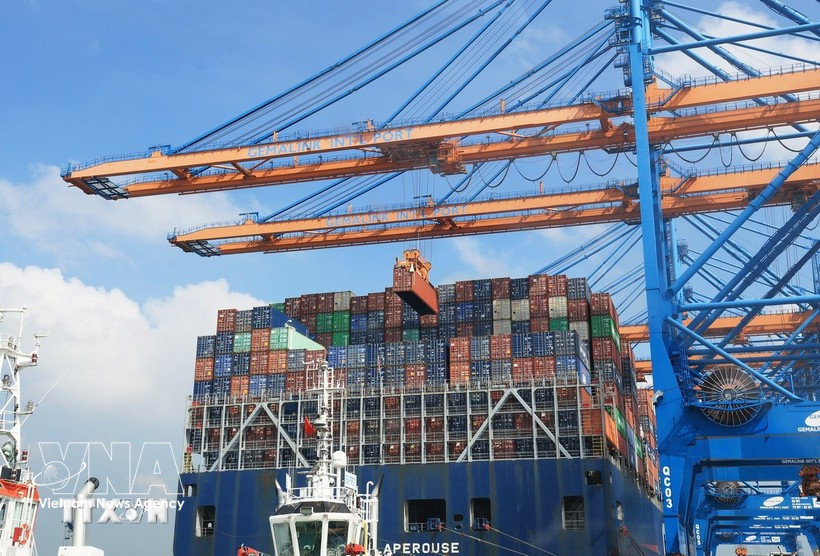
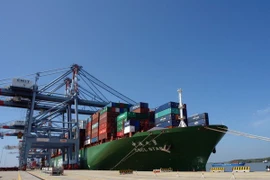
Containers are loaded onto a vessel at Gemalink International Port in Ho Chi Minh City. (Photo: VNA)

Hanoi (VNA) – Container throughput at Vietnam’s ports is expected to maintain growth, with deep-water ports in particular set to record higher efficiency thanks to larger vessel deployment and the accelerated development of infrastructure, which will help enhance competitiveness, according to MBS Securities JSC.

By 2030, total investment demand for Vietnam’s entire seaport system is estimated to reach 359.5 trillion VND (13.8 billion USD), including 72.8 trillion VND for public maritime infrastructure, with the remaining 286.7 trillion VND earmarked for commercial terminals providing cargo-handling services.

Accelerating investment in seaport infrastructure will improve the sector’s overall competitiveness in the medium and long term, MBS experts noted.

In Hai Phong, under the master plan for the development of Vietnam’s seaport system, Hai Phong seaports are classified as special-grade ports, serving as the principal maritime gateway for the northern region.

Hai Phong is expected to complete berths at the Lach Huyen International Port, develop the Nam Do Son Port, and strive to establish the Northern Hai Phong Economic Zone by 2030. This development will be based on the integrated and synergistic utilisation of the strategic advantages of Gia Binh Airport, Lach Huyen Port, and connection road networks, to position Hai Phong as a regional-scale port city and reach a throughput target of 215 million tonnes.

In the southern region, following an administrative merger, Ho Chi Minh City possesses the country’s most extensive seaport system, with 99 berths, including offshore oil and gas ones. This accounts for nearly one-third of Vietnam’s total number of berths and is 2.5 times higher than before the merger. By 2030, cargo throughput is targeted at around 253 million tonnes, of which container cargo is expected to reach 16.25–18.25 million TEUs.

To enhance the operational capacity of the entire seaport sector and position Vietnam as a strategic logistics hub in the global supply chain, accelerating the development of the seaport system and supporting infrastructure has become a key factor.

In 2025, transport management and maritime services met development requirements, with cargo volumes and vessel calls through ports recording positive growth.

Statistics from the Vietnam Maritime and Waterways Administration showed that the number of seagoing vessel calls through Vietnam’s seaport system reached 134,600 last year, up 32% year-on-year. The number of inland waterway vessel calls through seaports and inland ports totalled 733,200. Cargo throughput via seaports rose by 10%, while that through inland waterway ports increased by 17%./.
VNA

See more

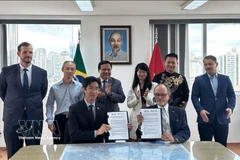
Delegates at the signing ceremony of the MoU between the Brazil–Vietnam Chamber of Commerce (BVC) and the Espirito Santo Chapter of the Brazil–Vietnam Chamber of Commerce and Industry (CCBV-ES). (Photo courtesy of the Vietnamese Embassy in Brazil)

Vietnam, Brazil step up trade promotion cooperation

The Brazil–Vietnam Chamber of Commerce (BVC) and the Espirito Santo Chapter of the Brazil–Vietnam Chamber of Commerce and Industry (CCBV-ES) recently inked the MoU to enhance cooperation and expand business opportunities for enterprises from the two countries, with support from the Vietnamese Embassy in Brazil.

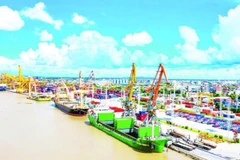
Chua Ve container port in Hai Phong (Photo: nhandan.vn)

Vietnam accelerates green transition for seaports

In recent years, while expanding infrastructure and boosting operational efficiency, the country has steadily rolled out a national green port initiative to align with international standards and encourage sustainable growth in the maritime industry.

More than 4.1 million air passengers are forecast during the peak travel period of the Lunar New Year 2026. (Photo: VNA)

19 additional aircraft to be deployed to serve Lunar New Year peak period

During the pre-Tet peak, several routes from Ho Chi Minh City to destinations such as Hue, Thanh Hoa, Vinh, Pleiku, Tuy Hoa, Quy Nhon, Chu Lai and Dong Hoi have recorded booking rates above 90%, with some reaching 100%. In contrast, return flights from localities to Ho Chi Minh City remain low, with many flights reporting booking rates below 35% and several operating as ferry flights to return aircraft.

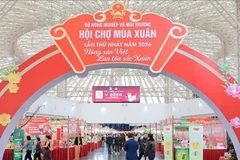
Shoppers at the first Glorious Spring Fair (Photo: VNA)

Spring Fair 2026: Opportunities for businesses to expand connections

Many businesses are doing more than presenting product functions; they are also telling the story of their raw-material regions, production processes, and social and environmental responsibility. This reflects a clear transition: companies are no longer competing solely on price, but increasingly on perceived value and consumer trust.

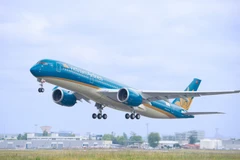
Vietnam Airlines will deploy wide-body Airbus A350 aircraft on its new nonstop Vietnam–Netherlands service starting June 16. (Photo: VNA)

Vietnam Airlines to launch first nonstop Hanoi–Amsterdam route

Nguyen Quang Trung, Deputy General Director of Vietnam Airlines, said that the nonstop Hanoi–Amsterdam route marks an important milestone in the carrier’s European network expansion strategy. Its presence at one of the world’s leading aviation hubs will not only broaden the airline’s business opportunities but also help strengthen economic, trade and investment connection, as well as people-to-people exchanges between Vietnam and the Netherlands, and Europe in general.

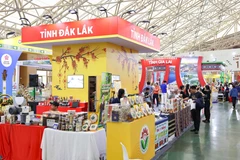
Central Highlands region's products on display at the first Glorious Spring Fair 2026 (Photo: VNA)

Spring Fair 2026: Traditional flavours find new pathways to market

Products rich in traditional flavours - from confectionery and processed agricultural goods to highland tea - are presented in refreshed designs that preserve cultural identity while meeting rising market standards, opening up prospects for expanded consumption and gradual entry into export markets.

Vietnamese fruits introduced to German consumers (Photo: VNA)

“Vietnamese Goods Day” promotes agricultural products in Germany

Vietnamese Ambassador to Germany Nguyen Dac Thanh said the event, held close to Vietnam’s Lunar New Year, helped promote Vietnamese tropical fruits while introducing Vietnamese cultural values to German consumers, and creating opportunities for Vietnamese businesses to connect directly with German importers.