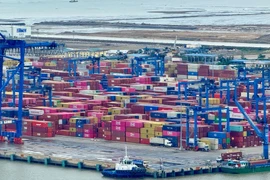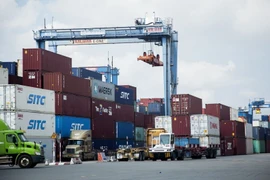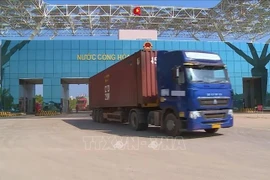
Hanoi (VNA) - Vietnam’s export–import activities are facing both heightened expectations and structural challenges as the country enters a new development phase marked by ambitious growth targets and an increasingly volatile global environment.
At the export promotion conference 2026 held in late January, Nguyen Anh Son, Director of the Agency of Foreign Trade under the Ministry of Industry and Trade, noted that Government Resolution No. 01/NQ-CP dated January 8, 2026, sets a target for total export turnover to grow by approximately 15–16% in 2026 compared with the previous year.
This goal, he stressed, is highly challenging and will require concerted efforts from ministries, local authorities and the business community.
To meet the Government-assigned target, Vietnam’s exports in 2026 will need to reach an estimated 546–550 billion USD, implying an average monthly export turnover of around 45–46 billion USD. According to Son, this objective is significant as 2026 marks the first year of implementing the 2026–2030 five-year socio-economic development plan, opening a new era of national development following the successful 14th National Party Congress.
He emphasised that to implement the Congress’s Resolution, exports must continue to serve as a key growth driver. At the same time, the export model must shift decisively from extensive growth toward deeper, more efficient and sustainable development, closely linked to higher value added, greater technological content and stronger economic autonomy.
Meanwhile, Tran Thanh Hai, Deputy Director of the Agency of Foreign Trade, pointed out that 2025 was a milestone year, as Vietnam’s total import–export turnover surpassed 900 billion USD for the first time. This achievement not only marked more than three decades of international economic integration but also created new momentum and growth space for the years ahead.
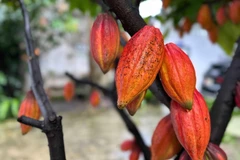
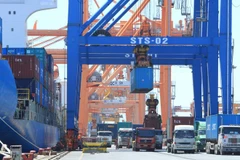
Currently, Vietnam’s exports are estimated at around 470 billion USD, approaching the 500 billion USD threshold. Key export groups continue to be electronics, machinery and equipment, followed by textiles, footwear, and agricultural and aquatic products. Notably, coffee emerged as a high-value export item in 2025. Major export markets remain concentrated in a handful of economies, including the US, China, the Republic of Korea, Japan and ASEAN.
However, as Vietnam’s trade scale reaches unprecedented levels, structural constraints are becoming increasingly evident. Extensive growth is gradually losing momentum, while shocks from global markets, policies and supply chains are growing more frequent and unpredictable. In this context, shifting the export–import growth model from quantity-driven expansion to quality-based development is imperative.
Hai also highlighted that imbalances in export markets and heavy dependence on a few major partners, particularly the US and China, leave Vietnam’s exports vulnerable to changes in international trade policies and external disruptions.
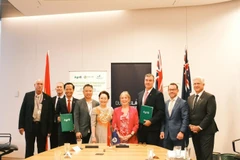
Therefore, he underscored the need to pursue a more in-depth growth model anchored in science, technology and innovation, develop foundational industries, secure sources of raw materials, and diversify export markets. Efforts should also be intensified to negotiate new free trade agreements (FTAs) and upgrade existing ones.

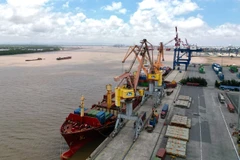
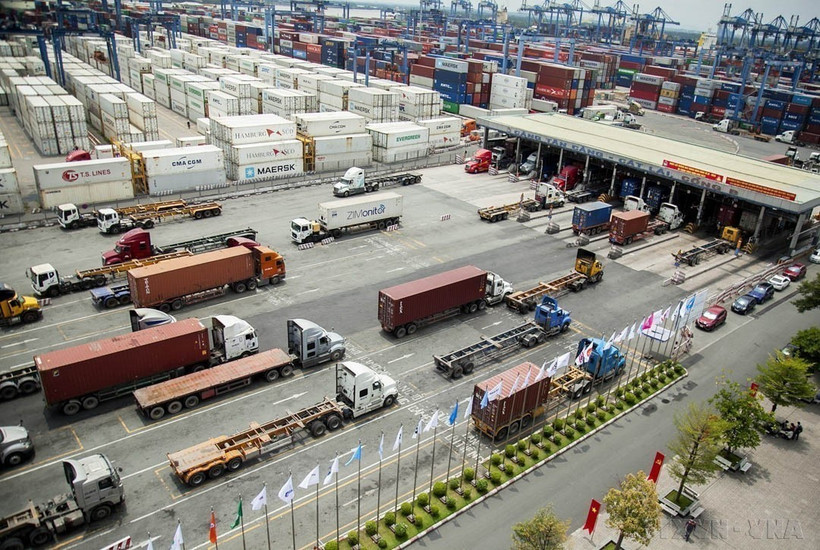
Other priorities include promoting cross-border e-commerce, renewing trade promotion activities, strengthening branding, and meeting emerging standards related to the environment and emissions. Addressing logistics bottlenecks and reducing costs were also identified as critical to enhancing the competitiveness of Vietnamese goods, he added./.