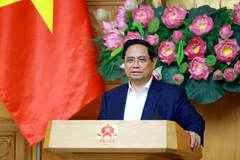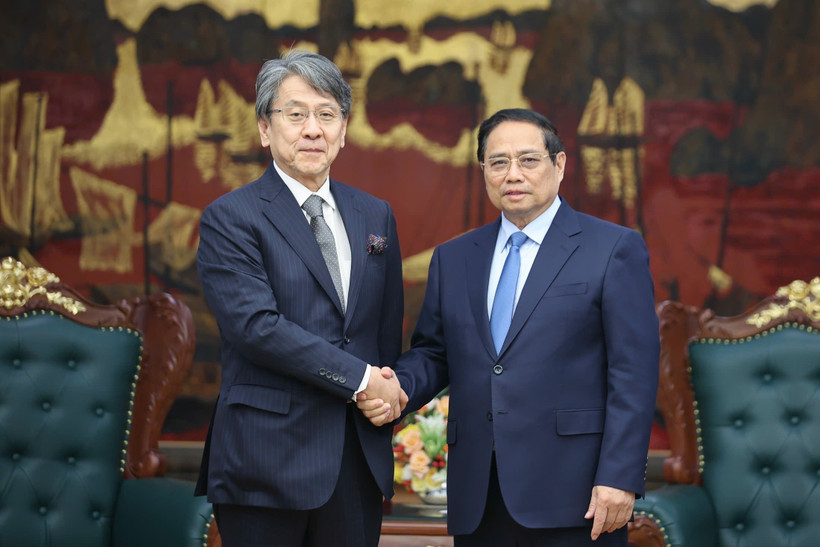
Hanoi (VNA) – Prime Minister Pham Minh Chinh on June 29 asked the Japan Bank for International Cooperation (JBIC) to continue supporting Vietnam’s green transition, especially by soon providing financial assistance for 15 green transition projects worth over 20 billion USD.
These projects, involving Japanese businesses, fall under the Asia Zero Emission Community (AZEC) framework and were introduced during Japanese Prime Minister Shigeru Ishiba’s visit to Vietnam in April 2025.
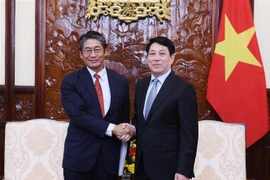
Receiving JBIC Chairman Maeda Tadashi and his delegation in Hanoi on June 29, PM Chinh expressed his belief that each meeting between the two sides would help further advance their cooperation. Reaffirming the strong and growing Vietnam–Japan relationship, PM Chinh emphasised the two countries’ close ties based on trust, sincerity, and effectiveness.
He noted that since the two countries upgraded their ties to a Comprehensive Strategic Partnership nearly two years ago, bilateral relations have entered their best period to date.
The Vietnamese leader said that Vietnam appreciates Japan’s consistent support and cooperation. In response to Japan’s recent interest in food security, Vietnam has affirmed its readiness to enhance cooperation and support to help Japan ensure Japan’s food supply.
PM Chinh appreciated JBIC's support in policy dialogue, as well as its provision of numerous loans to promote Japanese investment in Vietnam through key infrastructure and energy projects. JBIC has also offered loans to support investment projects by Japanese small and medium-sized enterprises (SMEs) in Vietnam. Most recently, it provided a loan of over 800 million USD to restart the Block B gas project.
Discussing Vietnam’s development plans, the PM noted that the country is undergoing a revolution in its administrative apparatus, aiming for economic growth of at least 8% this year and double-digit expansion in the years ahead. To reach its centennial goals for 2030 and 2045, Vietnam is prioritising three strategic breakthroughs of institutions, infrastructure, and human resources.
The PM highlighted the importance of large-scale infrastructure projects currently underway, including expressways, seaports, airports, and particularly metro and high-speed rail systems, as well as nuclear power. He invited JBIC and Japanese enterprises to support these efforts by providing capital, technology, and training.
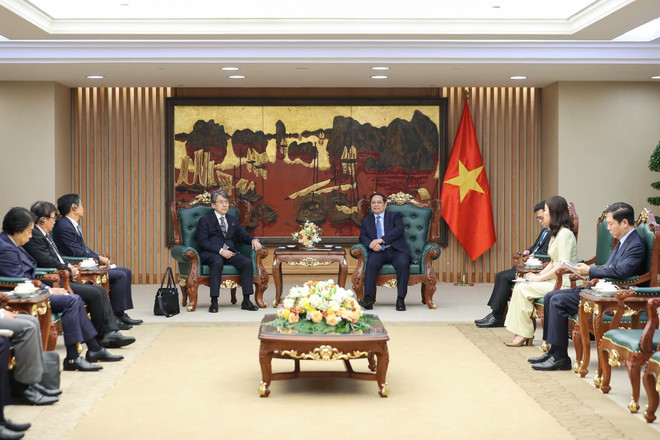
He paid particular attention to the Nghi Son Refinery and Petrochemical LLC (NSRP), a joint venture between Vietnamese, Kuwaiti, and Japanese partners. According to him, while the project is generating profits for foreign stakeholders, the Vietnamese side has suffered prolonged losses.
PM Chinh said all partners had agreed to restructure the project, including adjustments to organisation, personnel, feedstock sources, and power supply. He urged JBIC, as the project’s largest lender, to play a leading role in convincing stakeholders to implement financial restructuring to ensure the project’s long-term efficiency and move forward with its second phase, based on the principle of “harmonised benefits and shared risks.”
For his part, JBIC Chairman Maeda expressed appreciation for Vietnam’s remarkable progress and growing international reputation. He commended recent key decisions by the Vietnamese leadership, especially those promoting private sector development and green energy transition.
He confirmed JBIC’s readiness to provide funding for Japanese businesses undertaking green projects in Vietnam within the AZEC framework. He also affirmed JBIC and Japanese companies’ strong interest in Vietnam’s infrastructure sector, including projects under the Transit-Oriented Development (TOD) model. Notably, Japanese firms are keen to contribute to Vietnam’s high-speed rail development, given their extensive expertise.
Regarding the Nghi Son project, Maeda said JBIC is working actively with stakeholders to address the issues raised by the PM and is committed to supporting efforts to resolve the project’s challenges in line with the principle of mutual benefit and shared responsibility./.