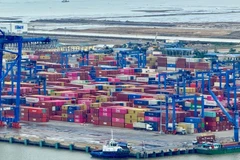
Hanoi (VNA) – Prime Minister Pham Minh Chinh has directed ministries, sectors, localities and State-owned groups to prioritise maintaining macroeconomic stability and accelerating export growth.
According to the PM’s official dispatch No. 221/CD-TTg dated November 19, since the beginning of 2025, ministries, sectors and localities have worked hard to synchronously and effectively implement macroeconomic management solutions, expand markets and promote export activities.
Over the first 10 months of 2025, Vietnam’s macroeconomy remained stable, inflation was kept under control and major economic balances were ensured. The country’s total import–export turnover reached 762.4 billion USD, up 17.4% year on year. Exports stood at 391.0 billion USD, rising 16.2%, while imports hit 371.4 billion USD, up 18.6%, resulting in a trade surplus of 19.6 billion USD.
However, amid increasingly complex global developments and rising challenges, the PM requested stronger efforts to stimulate exports and contribute to achieving the national growth target of over 8% for 2025 while safeguarding macroeconomic stability. He instructed ministries, sectors, localities and State-owned enterprises to continue implementing resolutions and conclusions of the Party Central Committee, Politburo, key leaders, the National Assembly, the Government and the Prime Minister, focusing on key tasks.
Specifically, the PM required consistent pursuit of the top goal of maintaining macro-economic stability, controlling inflation and ensuring major economic balances to create a favourable business and investment environment for rapid and sustainable growth. He emphasised the need for harmonious, flexible and effective coordination of monetary, fiscal and other macro-economic policies.
The State Bank of Vietnam was tasked with operating a monetary policy proactively and flexibly; enhancing inspection and supervision to ensure credit flows toward production, priority sectors and key growth drivers; and managing exchange rates and interest rates in line with market conditions to support production, business and investment attraction.
The Ministry of Industry and Trade must take strong actions to boost exports, especially during the year-end months and New Year period when consumption increases sharply in many international markets. The ministry was assigned to step up trade promotion, diversify markets, products and supply chains, and accelerate negotiations of bilateral and multilateral trade agreements with potential partners such as the GCC, Pakistan, Egypt, MERCOSUR and Algeria. It was also requested to continue negotiations on a reciprocal trade agreement with the US.
Vietnam’s overseas trade offices must enhance support for Vietnamese exporters, assist localities and business associations in effectively utilising FTAs, and enhance information provision, market connectivity and product promotion.
The Ministry of Finance will continue implementing an appropriate expansionary fiscal policy and review export–import tax rates to facilitate exports and domestic production. It must also formulate support solutions for enterprises affected by the US reciprocal tax policies and strengthen customs inspections to prevent low-quality goods, violations of intellectual property rights and origin fraud.
The Ministry of Agriculture and Environment was instructed to drastically implement solutions against illegal, unreported and unregulated (IUU) fishing, work toward lifting the EU “yellow card,” and promote digital transformation and sustainable development in the fisheries sector. The ministry must also accelerate negotiations on market access, mutual recognition of food safety standards for key fruits and vegetables, and promote geographical indications, brand development, production-area codes and traceability systems.
The Ministry of Foreign Affairs will intensify economic diplomacy, support enterprises investing and trading overseas, and direct overseas Vietnamese missions to strengthen connectivity with localities and businesses at home. It must also mobilise support among GCC member countries to accelerate negotiations on the Vietnam–GCC FTA.
The Ministries of Industry and Trade, Agriculture and Environment, and Foreign Affairs will set up working groups to develop new markets in the Middle East, Africa and Latin America, resolve outstanding FTA obstacles and speed up negotiations for new FTAs in late 2025 and early 2026.
Local authorities must promptly identify and resolve difficulties facing exporters. Provinces with agricultural exports via land borders must regularly update border-gate information and advise farmers and exporters to regulate production, packaging and transportation to avoid congestion.
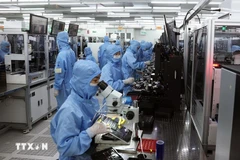
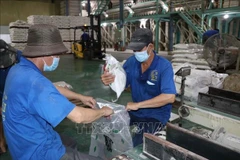
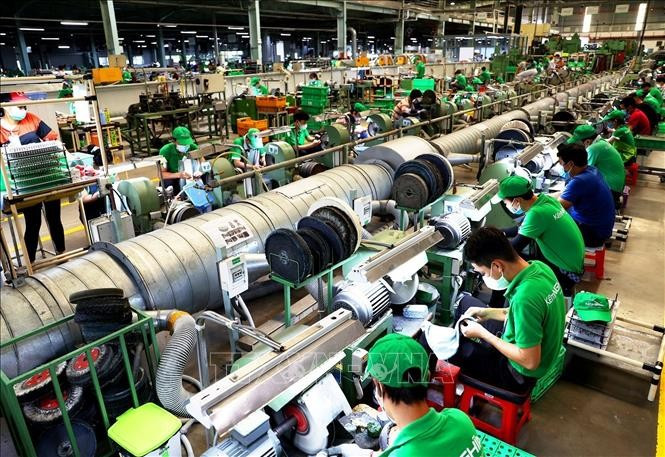
State-owned groups, corporations and export enterprises were urged to adjust production and business plans flexibly, step up the application of technological advances, upgrade product quality and competitiveness, and diversify markets, products and supply chains.
Deputy Prime Ministers will oversee the implementation according to their assigned responsibilities, while the Government Office will monitor progress and report to competent authorities./.