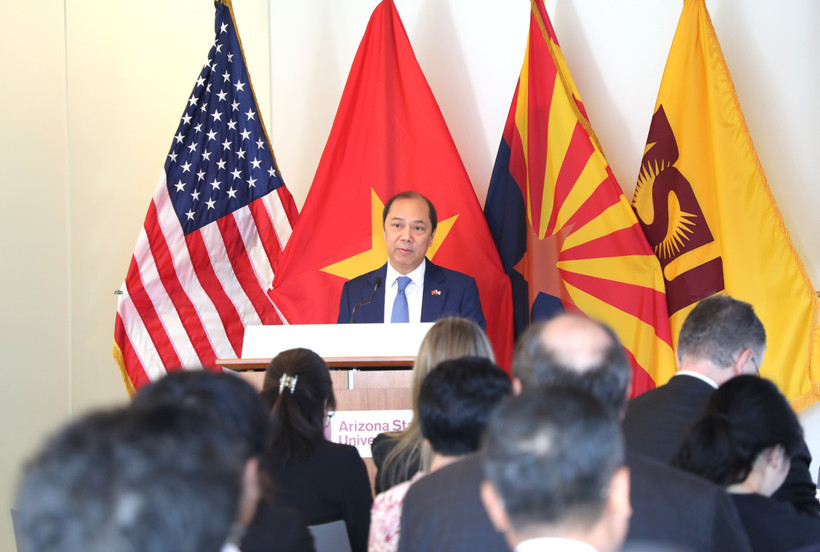
Washington (VNA) - The private sector's engagement has played a vital role in advancing the normalisation of Vietnam – US relations over the past three decades, Vietnamese Ambassador to the US Nguyen Quoc Dung has affirmed.
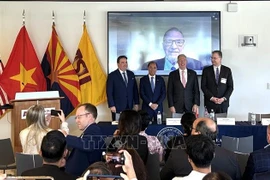
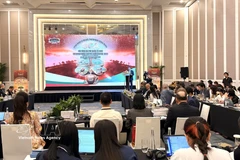
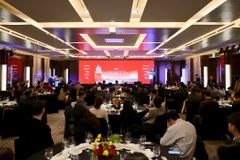
Fifty years after the end of the war (1975–2025) and 30 years since the normalisation of relations (1995–2025), Vietnam and the US have come a long way, from former enemies to friends and partners, then to Comprehensive Strategic Partners in 2023, Dung said at a recent seminar titled “30 years of Vietnam-US diplomatic relations: The role of public-private partnerships” in Washington.
Even before the normalisation of ties in 1995, when embargoes against Vietnam were still in place, a number of American companies and investors had the foresight to explore opportunities in Vietnam. Early corporate entrants included Caterpillar Inc. and Citi, both of which established offices in Hanoi in 1993, he said.
Following the normalisation, US businesses entered Vietnam in greater numbers. Boeing, for instance, has been active in Vietnam for 30 years, and is now deepening its footprint in aerospace cooperation. Other major names, like American Express, AT&T, and Bank of America, soon followed across sectors from finance and telecommunications to manufacturing and energy. Today, the vast majority of major American brand names are present in Vietnam and maintain strong partnerships with Vietnamese enterprises, provincial authorities, and government ministries.
The Vietnamese ambassador believed that the private sector's engagement helped advance the normalisation process in four profound ways.
First, the presence of US businesses in Vietnam stood as tangible proof of normalisation - not only as a political agreement, but as a lived reality. American investment elevated Vietnam’s standing on the international stage, drew fresh waves of interest from global businesses and investors, and helped accelerate the country’s integration into the world economy.
Second, the exchange of goods, services, technology, and ideas helped foster mutual understanding, trust, and enduring connections. As profits were shared, the broader interests of the two countries became increasingly interwoven. Through this process, the private sector's cooperation emerged as an anchor of stability and security in the overall bilateral relationship.
Third, American companies contributed not only through commerce, but also by supporting provincial development, upgrading infrastructure, providing training, and backing humanitarian efforts. These contributions changed lives, and in many places, changed the face of entire communities.
And fourth, while early outreach between the two governments laid the groundwork for business engagement, the success of US businesses in Vietnam has, in turn, become a catalyst for deeper government-to-government cooperation.
On the other side, Dung said, Vietnamese companies are increasingly investing in the US. FPT Corporation, Sovico Group, VinFast, and several other firms have opened offices or partnerships that generate jobs and contribute directly to the US economy. There is even a Vietnamese bank, SHB, that has announced plans to expand operations in the US market. These investments further bind the two nations together.
He noted that today, Vietnam is confidently entering a new era of development, driven by advanced technology, innovation, digital transformation, and sustainable growth. These priorities have created a favourable environment for US businesses to bring their comparative strengths to bear, while benefiting from the dynamic growth of Vietnam’s private sector.
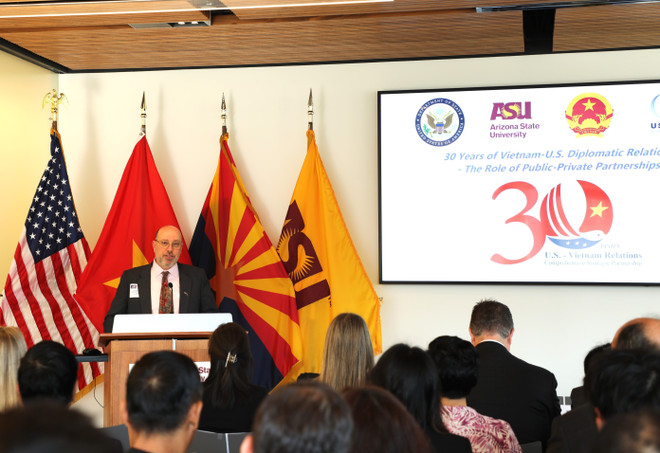
According to US Deputy Assistant Secretary of State Andrew Herrup, the Comprehensive Strategic Partnership between the US and Vietnam is not simply a government-to-government initiative, it is also powered by the business communities and people of both countries.
“It is a way to expand people-to-people linkages, foster academic collaboration and bolster security ties. It also provides a framework to fortify economic cooperation between our two countries,” Herrup said.
He emphasised that this economic partnership is a cornerstone of the bilateral relationship, fostering innovation, development, and prosperity.
Moving forward, Herrup noted that there are opportunities to deepen US-Vietnam economic cooperation on a range of issues, including combating illegal transshipment, strengthening intellectual property right protection, countering cyber scam operations, managing trade and dual use goods, attracting high quality investments and building trusted digital networks.
“Particularly as Vietnam transitions to a tech-driven digital economy, invests in its energy grid and strengthens the role of the private sector as a driver for economic growth, we hope to see US companies taking a leading role in the next phase of Vietnam’s development,” the US diplomat said.
According to Herrup, PPP could serve as a winning proposition for Vietnam and the private sector. When well conceived, they lead to improved public services, to risk sharing, access to private sector finance, enhanced efficiency and economic growth.
The US government provided technical assistance to Vietnam in drafting the 2020 PPP Law, he said, noting that the support in this area continues. These efforts will open up opportunities in infrastructure, energy, digital sectors and more, Herrup added./.