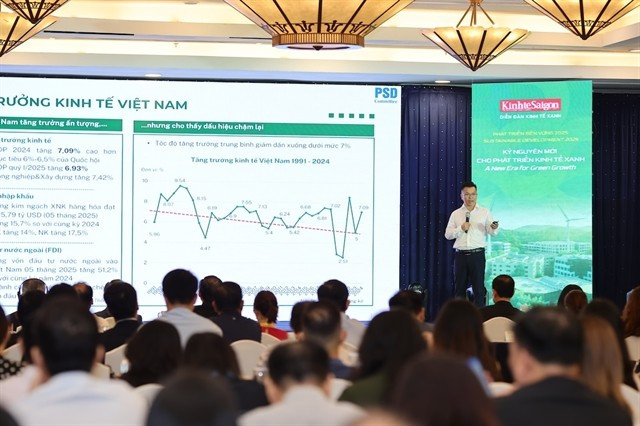
HCM City (VNS/VNA) - Vietnam is facing a dual challenge: sustaining high growth while fulfilling its net-zero commitment by 2050.
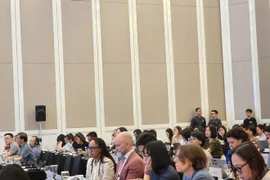
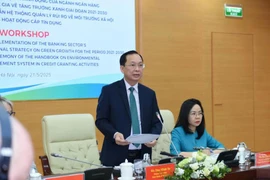
But this pressure also creates a game-changing initiative, an opportunity for the country to take a leap forward, a seminar heard in Ho Chi Minh City on August 28.
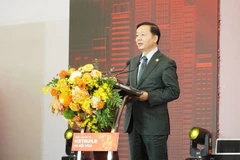
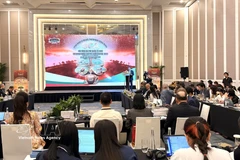
Speakers at “Sustainable Development 2025: A New Era for Green Growth,” held as part of the annual Green Economy Forum series organised by the Saigon Times Group, agreed that green growth today goes beyond environmental protection and is a driver of economic restructuring, a catalyst for innovation and a pathway to improving well-being.
According to the International Labour Organisation (ILO), the shift could generate 24 million new jobs globally by 2030.
Dr. Bui Thanh Minh, deputy director of the Office of the Research and Development Board for the Private Economic Sector (Board IV), said Vietnam’s transition is taking place amid a fragmented world economy shaped by three major poles: the US, EU and China.
The US has withdrawn from the Paris Agreement, suspended disbursements under the Inflation Reduction Act and rolled back ESG rules, prioritising growth over the environment.
The EU is tightening non-tariff barriers through measures such as the Carbon Border Adjustment Mechanism, Corporate Sustainability Reporting Directive and the Corporate Sustainability Due Diligence Directive.
These require exporters, including Vietnamese, to demonstrate sustainable supply chains and transparent emissions.
Meanwhile, China has emerged as a global leader in green technology after a decade of pursuing its “Made in China 2025” strategy and is pressing ahead with its 2035 roadmap.
Minh said international trade is increasingly tied to green factors, technology and geopolitics.
“For Vietnam, which relies heavily on exports, protectionist measures and non-tariff barriers will have a direct impact.”
He added that green growth is no longer a distant concept but an inevitable requirement.
With reforms, innovation and adaptation to external pressures, Vietnam must act decisively to sustain growth and strengthen its position globally, he added.
Dinh Hong Ky, deputy chairman of the HCM City Union of Business Associations and chairman of the HCM City Green Business Association, described green transition at the enterprise level as especially tough in today’s “BANI world” (brittle, anxious, nonlinear, incomprehensible).
“In this BANI world, green transformation is a tremendous challenge. Enterprises are expected to invest in green transition while already under financial stress. Many are exhausted but still must allocate resources to go green.
“It’s a vicious cycle between recovery, growth and the demand for green transition.”
For Vietnamese firms, most of which are small and medium-sized, the challenge is even greater.
The challenges include limited capital, outdated technologies, insufficient human resources, and a lack of reliable data, but he said the transition is no longer optional: companies that fail to adapt risk being cut out of supply chains or losing consumer trust.
To Thanh Son, ESG manager at SGS Vietnam, said compliance with global green standards has become a “passport” for maintaining supply chains, accessing financing and preserving market access.
Standards now cover both environmental (ISO 14064, FSC, GRS) and social aspects (BSCI, SA8000, RBA), he said.
Global corporations require ESG-certified suppliers, while consumers increasingly reject brands accused of “greenwashing,” he said.
“Businesses should view green standards not as a burden but as an opportunity to invest, upgrade and expand to new markets.”
Lim Dyi Chang, executive director of corporate banking at Singapore-owned bank UOB Vietnam, said outstanding green loans in Vietnam had reached 704 trillion VND (27 billion USD) as of March after rising by more than 20% a year since 2017.
The Government wants green credit to make up 10% of total loans by year-end.
Resolutions 68 and 139 are providing support through incentives for SMEs, new credit channels for green projects and a clarified “green taxonomy” covering 45 sectors.
These frameworks give investors transparency and help unlock domestic and international capital.
Lim advised firms to integrate ESG into their core strategy, align projects with the taxonomy to secure preferential financing, seek partnerships in finance and technology, diversify funding sources through bonds and public-private partnerships, and develop digital supply chains and energy systems.
Businesses that “act early and act right” could ride the global shift of capital towards sustainability.
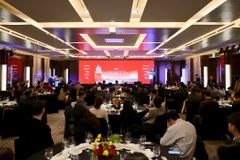
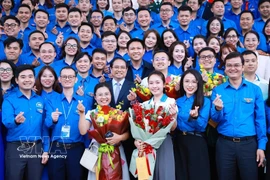
A highlight of the event was the launch of the “Green Star Merit Ceremony” to recognise businesses in manufacturing, construction, real estate, and services-trade for products and services that are safe for consumers’ health and environmentally friendly.
Twenty two enterprises were honoured as “Green Stars.”./.
VNA