Bac Ninh (VNA) - As Vietnam's industrial landscape is undergoing rapid transformation, supporting industries have emerged as a critical link in the global value chain.
For the northern province of Bac Ninh - widely regarded as the industrial capital of northern Vietnam - developing supporting industries is not only a strategic move to attract sustainable investment, but also a key driver to help domestic enterprises integrate more deeply and assert greater control in global supply networks.
Policy as catalyst
With a stable political environment, strategic location, and a young, dynamic workforce, Bac Ninh continues to attract strong inflows of foreign direct investment (FDI). As cooperation between FDI firms and local businesses expands, enhancing domestic capabilities becomes crucial to ensuring Vietnamese companies don’t just participate, but also take ownership in global supply chains.
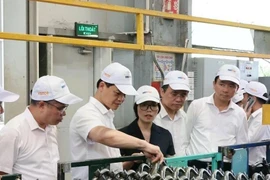
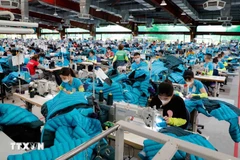
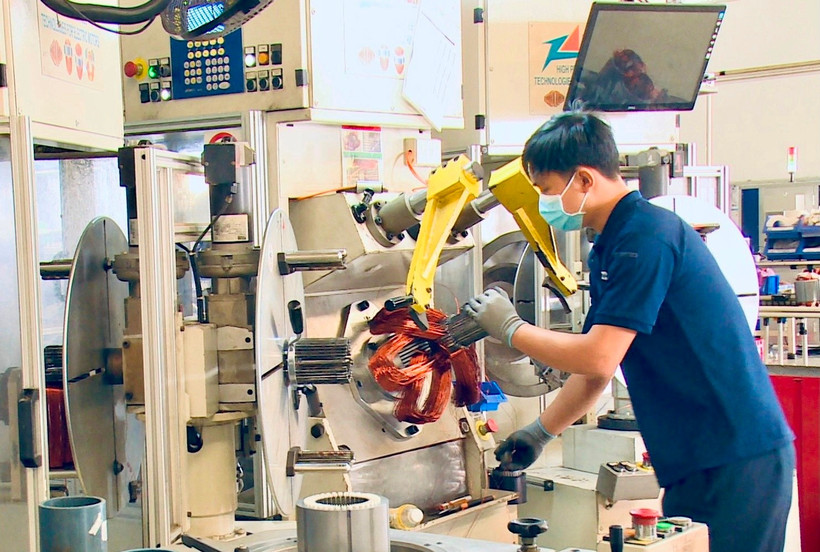
Today, Bac Ninh is home to over 500 Vietnamese enterprises active in supporting industries - ranging from electronics, precision engineering, and automation to food processing. Many of these companies have proactively invested in advanced machinery and cutting-edge technology to meet international standards, positioning themselves as reliable partners to multinational corporations.
In recent years, the Department of Industry and Trade of Bac Ninh has actively implemented the project to provide technical support for enterprises to apply continuous improvement tools (Kaizen) in production, aimed at helping supporting-industry firms adopt continuous improvement tools. Eleven companies have received direct consulting from Japanese experts, leading to productivity gains of 2–5% and waste reductions of 7–15%.
Simultaneously, Bac Ninh has launched a digital transformation initiative in trade promotion, with the provincial Centre for Industry and Trade Development supporting over 100 local businesses in building e-commerce websites, providing online marketing training, and facilitating transactions on digital platforms.
Notably, Bac Ninh is the first locality in Vietnam to roll out a policy supporting the training of high-quality human resources in supporting industries and semiconductors. In cooperation with the Ministry of Industry and Trade and Samsung, the province is running capacity-building programmes aimed at strengthening local enterprise competitiveness.
The province is also studying the establishment of sector-based business associations to foster greater collaboration, technology transfer, and branding for Vietnamese supporting industry players. Authorities are developing thematic programmes to assist businesses in applying science and technology to produce high-value-added products.
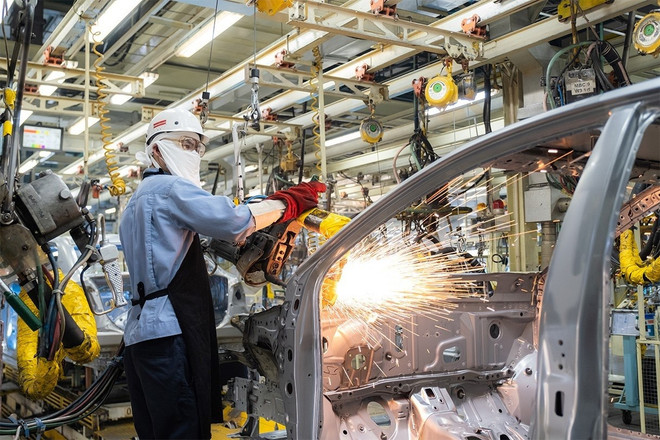
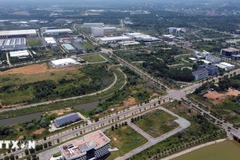
With 16 industrial parks and a roster of leading global firms, including Samsung, Canon, ABB, Goertek, and Amkor, Bac Ninh is uniquely positioned to help local suppliers improve technical capacity and engage more sustainably in global supply chains.
Emerging industrial ecosystem
Thanks to its integrated infrastructure and attractive investment environment, Bac Ninh has become a preferred destination for international corporations. As global supply chains undergo significant restructuring to enhance flexibility and reduce overdependence on single markets, FDI firms are increasingly seeking local sourcing options to raise localisation rates. With its strategic location, developed infrastructure, and vibrant industrial ecosystem, Bac Ninh is leading this trend.
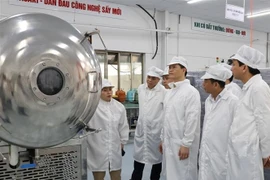
Talway Vietnam Co., Ltd., a subsidiary of Shanghai Guangwei Electric, has invested 700 million USD in a facility in Bac Ninh to manufacture automotive components. Currently, around 50% of the company’s input materials are sourced domestically, with 30% coming from Vietnamese suppliers.
Yang Yong, Deputy General Director of Talway Vietnam, said that the majority of the firm’s suppliers are local. Vietnamese firms are increasingly demonstrating stable production, competitive pricing, and the ability to meet international standards, he said.
Similarly, Fubo, General Director of FUJA Vietnam Co., Ltd., noted that his company chose Bac Ninh in 2024 due to its rapidly growing high-tech industrial ecosystem. Reasonable land and construction costs have helped the company optimise our investment, he added.
Yamaha Motor Vietnam, one of the largest motorcycle manufacturers in Vietnam, is also leveraging Bac Ninh not just for vehicle assembly but as a key market for automation and industrial technology solutions. With promising growth prospects in the province, Yamaha sees Bac Ninh as a strategic hub for supplying industrial production equipment.
According to Ogasawara Satoshi, international market analyst at Yamaha Motor Vietnam, the supporting industry market in Bac Ninh has tremendous potential, with many multinational corporations operating in high-tech manufacturing sectors.
These projects rely on modern, eco-friendly technology, which raises the technological value of their products and encourages the growth of local supporting industries.
Supporting industries are becoming a pillar of Bac Ninh’s and Vietnam’s broader industrial development strategy. With clear strategic vision, proactive businesses, and robust policy backing, Bac Ninh is steadily building a modern industrial ecosystem, paving the way for greater participation in high-tech production and solidifying its role on the regional manufacturing map./.