Thailand to impose 45% tax on vintage cars

The Thai Excise Department will begin imposing a 45% tax on imported vintage cars in fiscal year 2026, a move expected to generate an additional 1-2 billion THB (31.4 -62.9 million USD ) annually for the government.

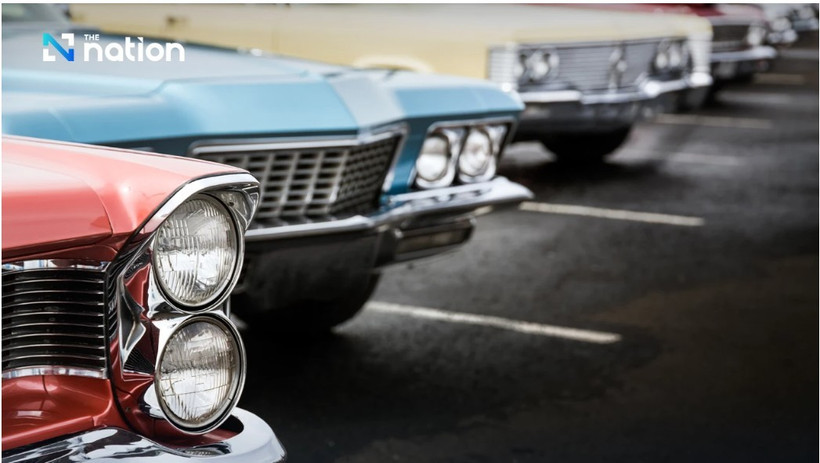
Thailand to impose 45% tax on vintage cars, aiming for 2 billion THB boost (Photo: nationthailand.com)

Bangkok (VNA) - The Thai Excise Department will begin imposing a 45% tax on imported vintage cars in fiscal year 2026, a move expected to generate an additional 1-2 billion THB (31.4 -62.9 million USD ) annually for the government.

The new regulations will also restrict the use of these vehicles to Saturdays, Sundays, and public holidays, though exemptions for special events may be granted with police permission.

According to Kulaya Tantitemit, Director-General of the department, the tax is intended to position Thailand as a hub for vintage car exhibitions and to bolster the domestic car restoration industry.

Kulaya stated that this tax will apply exclusively to vintage cars imported. Initial conditions require a vehicle to be at least 30 years old, but the country may announce specific models and use international reference prices in the future.

The Director-General confirmed that the tax will not apply to vintage motorbikes or cars already in Thailand.

The announcement comes as the Excise Department expects to exceed its revenue target for the current fiscal year. For the first 11 months of fiscal year 2025, the department collected 489 billion THB, a 1.6% increase from the previous year.

It forecasts a total of 535 billion THB by the end of the fiscal year, and has set a target of 609 billion THB for 2026.

This growth has been driven by a one-baht-per-litre increase in excise tax on petrol and diesel and a tax reduction for entertainment venues, which has boosted tourism revenue.

However, Kulaya noted that overall vehicle tax revenue has declined due to government support for electric vehicles (EVs) and a general slowdown in consumer demand.

Since March 2022, 233,000 EVs have been registered, with the government having paid out 11.2 billion THB in subsidies.

In addition to the vintage car tax, the department is studying several other tax reforms, including a new tax on batteries, a sweetness tax on beverages, and a careful review of the current two-tier tax structure for cigarettes./.

VNA

See more

 President Prabowo Subianto signs an inscription at the inauguration of PT VKTR Teknologi Mobilitas' electric commercial vehicle assembly plant in Magelang, Central Java, on Thursday, April 9, 2026. (Photo: Antara)

Indonesia targets ending fuel imports within three years

In addition to electrifying power plants, the Indonesian government is promoting electric vehicles and the utilisation of other renewable energy sources. Solutions include processing palm oil and used cooking oil into aviation fuel to further reduce reliance on fossil fuels.

A groundbreaking ceremony for Indonesia's first melamine project, invested by PT GEABH Joint Technology, is held in the Gresik Special Economic Zone, East Java Province, Indonesia, April 8 (Photo: Xinhua)

Indonesia develops strategic chemical industry

Indonesia's first melamine plant in the Gresik Special Economic Zone is seen as a strategic step to boost the development of the country’s chemical industry and enhance domestic value creation.

Illustrative image (Photo: thevibes.com)

Malaysia leads Southeast Asia in global investment appeal

The latest 2026 Global Opportunity Index (GOI) report by the Milken Institute ranked Malaysia 23rd globally, the highest among developing Southeast Asian economies, underpinned by strong institutional quality and solid economic fundamentals.

YouTube logo on a cellphone (Photo: ANTARA)

Indonesia warns Google over non-compliance with child protection rules

According to the results of an inspection conducted on April 7, YouTube has not fully fulfilled its obligations under Indonesian Government Regulation No. 17/2025 (PP Tunas), which took effect on March 28 and requires digital platforms to implement strict governance measures to protect underage users. The platform has also shown no indication of complying with the rules in the near future.

The Strait of Hormuz is the world's most important oil transit choke-point. (Photo: Reuters)

Malaysia reliant on Hormuz Strait for oil supply

Data from the Malaysian Finance Ministry shows that domestic oil consumption stands at about 700,000 barrels per day, nearly double Malaysia’s crude oil production of around 350,000 barrels daily.

President of the Olympic Council of Malaysia (OCM) Mohamad Norza Zakaria speaks to media (Photo: Bernama)

Malaysia to tighten doping controls at 2027 SEA Games

The adoption of the World Anti-Doping Code aims to ensure that the 2027 SEA Games fully comply with the World Anti-Doping Agency (WADA) standards, thereby enhancing the transparency and international standing of the Games.

Vietnamese Ambassador to Austria Vu Le Thai Hoang (Photo: VNA)

ASEAN, GRULAC strengthen multilateral cooperation

Vietnamese Ambassador to Austria Vu Le Thai Hoang emphasised the value of the dialogue mechanism in fostering coordination among developing countries, while highlighting the need to enhance transparency and improve the efficiency of resource allocation and utilisation across United Nations activities.

Senior officials from 11 ASEAN member states at the meeting (Photo: VNA)

ASEAN senior officials meet ahead of 48th summit

At the meeting, participants reviewed the implementation of agreed commitments and cooperation priorities, preparations for the 48th ASEAN Summit scheduled for this May, and discussed measures to strengthen unity and cooperation amid an increasingly complex and challenging global environment.