Thailand’s electric vehicle market heats up

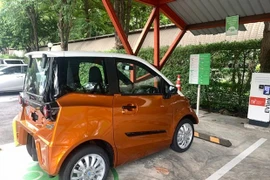
Hyper-competition in China's electric vehicle sector is spilling over to its biggest market in Asia, Thailand, as smaller players struggle to compete with dominant BYD, putting ambitious local production plans at risk.

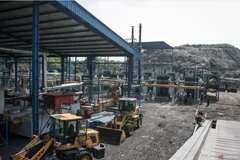
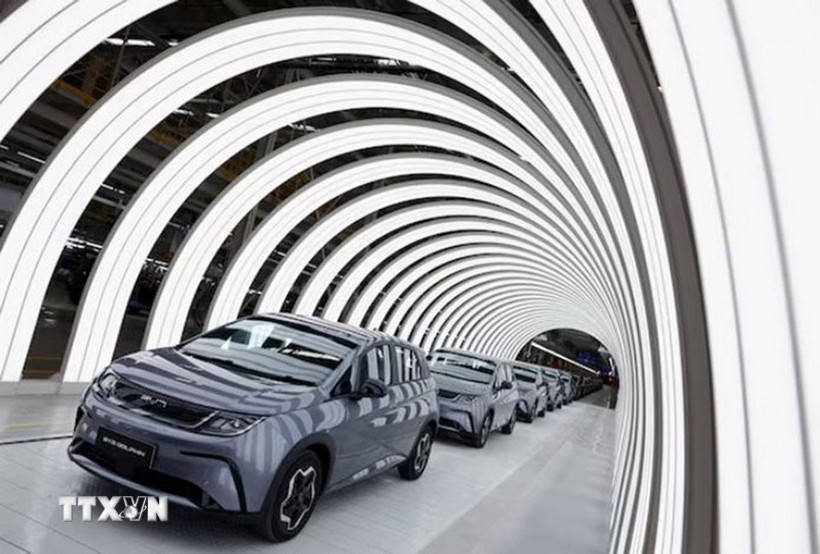
Electric vehicles inside BYD's factory in Rayong, Thailand. (Photo: Reuters/VNA)

Bangkok (VNA) - Hyper-competition in China's electric vehicle sector is spilling over to its biggest market in Asia, Thailand, as smaller players struggle to compete with dominant BYD, putting ambitious local production plans at risk.

Neta, among the earliest Chinese EV brands to enter Thailand in 2022, is an example of a struggling automaker finding it difficult to meet the requirements of a demanding government incentive programme meant to boost Thai EV production.

Under the scheme, carmakers are exempt from import duties, but were obligated to match import volumes with domestic production in 2024.

Citing slowing sales and tightening credit conditions, carmakers asked the government to adjust the scheme and the 2024 production shortfall was rolled over into this year.

Neta has said that it cannot produce the required number of cars locally and the Thai government has withheld some payments to the EV maker, according to the Excise Department under the Ministry of Finance of Thailand./.


VNA

See more

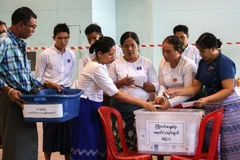
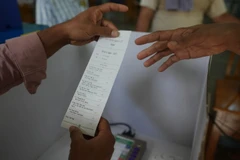
Election Commission officials count ballots at a polling station during Myanmar's general election in Yangon, Myanmar, on December 28, 2025. (Photo: Reuters)

Myanmar completes first phase of general election

Across Myanmar, more than 24.26 million people were eligible to vote in the 2025 general election. For the first phase, over 11.69 million voters were registered, and more than 6.09 million cast their ballots.

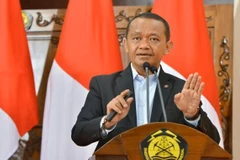
Indonesia's Minister of Energy and Mineral Resources Bahlil Lahadalia. (Photo: www.petromindo.com)

Indonesia targets diesel self-sufficiency in 2026

The Indonesian government is pressing ahead with its plan to end diesel imports in 2026, banking on the start-up of the Balikpapan Refinery Development Master Plan (RDMP) and the expansion of the biodiesel mandate to achieve fuel self-sufficiency.

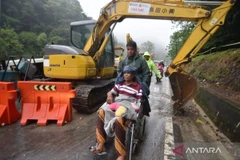
A worker inspects a waste-to-energy generator at the Putri Cempo power plant in Solo, Central Java. (Photo: ANTARA)

Indonesia promotes waste-to-energy conversion

Under the programme, the national strategic investment management agency (Danantara) will provide investment capital, while state-owned electricity utility Perusahaan Listrik Negara (PLN) will be responsible for purchasing and distributing the electricity generated.

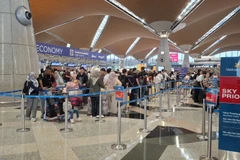
Passengers line up for check-in procedures at Kuala Lumpur International Airport (Photo: VNA)

Malaysia expands international air routes to boost tourism

Malaysian Minister of Tourism, Arts and Culture Tiong King Sing said that the new services comprise 16 scheduled flights and five charter flights to be operated by 10 airlines, linking Malaysia with destinations across ASEAN, East Asia, Uzbekistan and Sri Lanka.

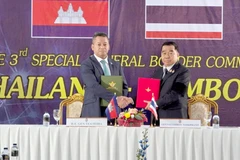
Thailand, Cambodia ink new ceasefire agreement

Thailand, Cambodia ink new ceasefire agreement

Discussions to finalise the ceasefire agreement were approved in principle by the secretariats of the two countries’ General Border Committees (GBC) after three days of technical negotiations involving military officials.