The silent war: When virtual attacks inflict real-world devastation

A report from Cybersecurity Ventures projected that global cybercrimes will cause 10.5 trillion USD in annual damage this year, more than triple the 2025 figure. The amount could even reach 15 trillion VND by 2029, equivalent to the world’s third-largest economy.

Beyond economic devastation, the psychological toll of cyberattacks is also severe. (Photo: Getty)

Hanoi (VNA) – Although cyberspace has become an operational platform of the economy, society, and security amidst robust digital transformation across the globe, it has evolved into a high-risk domain where data theft, fraud, ransomware, and critical infrastructure attacks cause real-world devastation.

A silent war is unfolding on a global scale, requiring international collaboration and harmonious legal frameworks to protect digital sovereignty, assets, and trust.

According to the United Nations, cybercrime falls into two groups: the use of technology to commit traditional crimes like human trafficking, money laundering, and hate speech incitement, and network-dependent crimes like fraud, identity theft, malware distribution, and extortion.

Taking advantage of anonymity and global connectivity, cybercriminals could carry out cross-border attacks with unprecedented speed and efficiency. Developing nations are particularly vulnerable due to limited awareness and inadequate protective capabilities.

toi-pham-mang.jpg
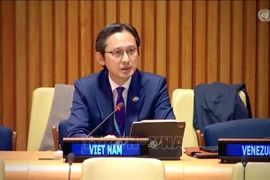
Dr. Vu Viet Anh from the Cambridge Cybercrime Centre under the University of Cambridge’s Department of Computer Science and Technology (Photo: VNA)

Dr. Vu Viet Anh from the Cambridge Cybercrime Centre under the University of Cambridge’s Department of Computer Science and Technology said that new forms of crime have emerged with the Internet, while traditional crimes have gone online. The rise of AI and anonymous cryptocurrencies has made money laundering and other offences easier than ever. He stressed that unlike conventional crime, cybercrime is not constrained by borders or legal corridors with loopholes.

According to the World Economic Forum (WEF), loss due to attacks against cyber systems is a drain on Governments and enterprises. The first half of this year saw 208 ransomware attacks targeting government agencies, a 65% surge from the same period last year. Attacks such as the one on Collins Aerospace, a provider of check-in and boarding systems on September 19, or the UK's National Health Service in June 2024 demonstrate that damage extends beyond financial losses to directly threaten human lives, disrupting over 10,000 medical appointments and causing at least one patient death due to treatment delays.

A report from Cybersecurity Ventures projected that global cybercrimes will cause 10.5 trillion USD in annual damage this year, more than triple the 2025 figure. The amount could even reach 15 trillion VND by 2029, equivalent to the world’s third-largest economy.

Beyond economic devastation, the psychological toll of cyberattacks is also severe. AI is blurring the line between the real and the fake. Attacks deploying deepfake to bypass identify vertification shot up more than 700% in 2023. In the US, 16% of identity theft victims were reported thoughts of suiside, reflecting the profound mental health consequences of cybercrime.

Assoc. Prof. Dr. Pham Duc Son from the School of Electrical Engineering, Computing, and Mathematical Sciences under Curtin University, Australia, noted that cybercrime has become a matter of national security, undermining countries’ prestige and social trust.

pham-duc-son.jpg
Assoc. Prof. Dr. Pham Duc Son from the School of Electrical Engineering, Computing, and Mathematical Sciences under Curtin University (Photo: VNA)

According to Fortinet, a US-based cybersecurity solution and service provider, criminals are leveraging AI and automation to conduct 36,000 scans per second, looking for security vulnerabilities. Last year, over 100 billion stolen records were shared on underground forums, a 42% increase from the previous year.

Experts forecast that cybercrime will grow more sophisticated, able to break through current encryption systems, with the rise of quantum computing, metaverse, 6G network, and brain-computer interface.

In Vietnam, in every 220 smartphone users fell a victim to scams, with total losses estimated at 18.9 trillion VND (717.4 million USD), according to a survey in 2024 by the National Cybersecurity Association. Nearly 46% of agencies and businesses reported having experienced cyberattacks, with 15% suffering ransomware. Total cyberattacks in the year topped 659,000, an alarming level.

With technological advancement, cybercrime has evolved beyond isolated incidents into a sophisticated shadow economy infiltrating every aspect of life. Addressing this challenge requires a global strategic approach with consistent legal standards and effective coordination mechanisms, alongside data sharing, enhanced awareness, increased investment, and strengthened public-private partnerships.

Sam Rubin, a specialist from Polo Alto Networks – an American multinational cybersecurity company, said that AI is both a threat and a tool supporting security teams to detect and make prompt response to attacks. He laid stress on the need to shift to a proactive defence strategy as well as adopt zero-trust security models and continuous risk management to stay ahead of hackers.

Cyberattacks have threatened the economy and human trust, opening up a new front in the silent war of the digital age. In a globally connected world, only strategic cooperation, information sharing, and public awareness improvement could help build a safe and sustainable digital space for all./.


VNA

See more

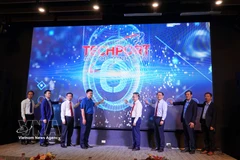
Prime Minister Pham Minh Chinh and delegates visit booths showcasing products at TechFest Vietnam 2025. Photo: VNA

Vietnam to become attractive destination for tech talent, innovative startups: PM

TechFest Vietnam 2025, held from December 12 to 14, is expected to attract more than 60,000 participants both in person and online, with the participation of over 20 corporations, 50 investment funds, more than 100 supporting organisations and incubators, and delegates from Southeast Asia, Northeast Asia, Central Asia, the Middle East, North America, and Europe.

Police offiers mornitor the traffic through AI camera (Photo: VNA)

Applying the Internet of Things in smart transport

The project aims to build a unified, safe and efficient IoT platform to support the management, operation and exploitation of smart transport systems under the Ministry of Construction, with data shared across ministries and localities.

Through long-term commitment, Viettel has brought millions of Burundians into the mobile era and become the first operator to roll out 5G in the country, Viettel Burundi CEO Phan Truong Son noted. (Illustrative photo: VNA)

Viettel secures three prestigious international awards

Viettel has won honours in the “People & Culture” and “Best Operator in a Growth Market” categories at the 2025 World Communication Awards (WCA), alongside the “Best Digital Transformation Project” at the 2025 Global Telecoms Awards (Glotel).

A view of the Can Gio sea-encroaching urban area project (Photo: VNA)

Green-tech push for Can Gio

Vietnam has the capacity, ambition and technological foundation to join the group of leading sustainable coastal urban nations in the coming decade, experts said at a dialogue on "advancing to the sea with ESG++ megacities: breakthroughs through green technology", held on December 9 in Hanoi by the Vietnam Institute for Real Estate Studies (VIRES).

Minister of Science and Technology Nguyen Manh Hung speaks at the meeting (Photo: VNA)

Vietnam turns intellectual property into bankable assets in new law

About AI-generated content, the law draws a clear line: purely autonomous AI creations are not eligible for copyright or patent protection. Those who provide substantial creative input, such as ideas, curation, editing, or selection, qualify as authors or inventors.

Lieutenant General Nguyen Minh Chinh, NCA Vice Chairman, speaks at the launch ceremony of the southern branch of the National Cybersecurity Association. (Photo: VNA)

National Cybersecurity Association opens branch in HCM City

The southern branch aims to become a coordinating body for cybersecurity tasks, workforce development, awareness-raising and the strengthening of digital defence capabilities across the region, contributing to the safe and sustainable growth of Vietnam’s digital economy.

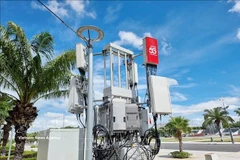
Viettel exceeds target of 20,000 new 5G stations by more than three weeks. (Illustrative photo: VNA)

Viettel exceeds target of 20,000 new 5G stations by more than three weeks

Viettel plans to continue scaling up its network from now until the end of 2025, with an additional 23,500 stations scheduled for installation, nearly quadruple the number rolled out in 2024. Once completed, Viettel will operate Vietnam’s largest 5G network, with 30,000 stations covering 90% of outdoor areas and 70% of indoor spaces nationwide, from major cities to rural regions.

In Vietnam, demand for infrastructure supporting AI, cloud computing, and digital services is rising at an unprecedented level. (Illustrative photo: VNA)

Vietnam emerges as new hub for data centres

Data centres have surged to become the second most preferred alternative asset class in the region. Vietnam is no exception to this trend as the demand for infrastructure supporting AI, cloud computing, and digital services has risen at an unprecedented level.

Professor Kurt Kremer, from the Max Planck Institute for Polymer Research in Germany, speaks at the event. (Photo: VNA)

Vietnam has advantages to develop versatile humanoid robots: experts

At the symposium, international and Vietnamese experts also discussed the latest trends in robotics, from socially interactive humanoids and collaborative service robots to medical and rehabilitation systems, and examined major challenges surrounding AI safety and ethics to ensure that robotics evolves in a responsible, human-centred and sustainable manner.

The organisers present members of the judging panel of the UAV Cup PV GAS 2025. (Photo: VNA)

UAV Cup PV GAS 2025 promotes Vietnam’s home-grown UAV technology

Jointly organised by Hanoi University of Science and Technology’s Institute of Space and Underwater Technology (ISUT) and Petrovietnam Gas JSC (PV GAS), the competition aims to foster innovation among young people, enhance capabilities in UAV research, design and application, and seek practical technological solutions for smart agriculture, environmental monitoring, logistics, and emergency rescue.