HCM City (VNA) – Resolution No. 68-NQ/TW issued by the Politburo recently is expected to unlock the potential of the private economic sector in boosting the growth of cultural industries, according to experts.
The resolution affirms the significant role of the private sector in Vietnam's socialist-oriented market economy. It recognises private enterprise as a core driver of national economic growth, employment, labour productivity, global competitiveness, and the country’s shift towards a green, circular, and sustainable economy.
Driving cultural identity, global reach
Associate Professor Dr. Bui Hoai Son, a member of the National Assembly’s Cultural and Social Committee, emphasised that culture is both a unifying force and a spiritual resource that underpins a nation’s resilience. While cultural development in the past relied heavily on the state as both investor and regulator, the landscape has shifted dramatically in the era of digitalisation and the creative economy.
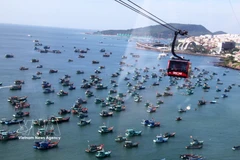
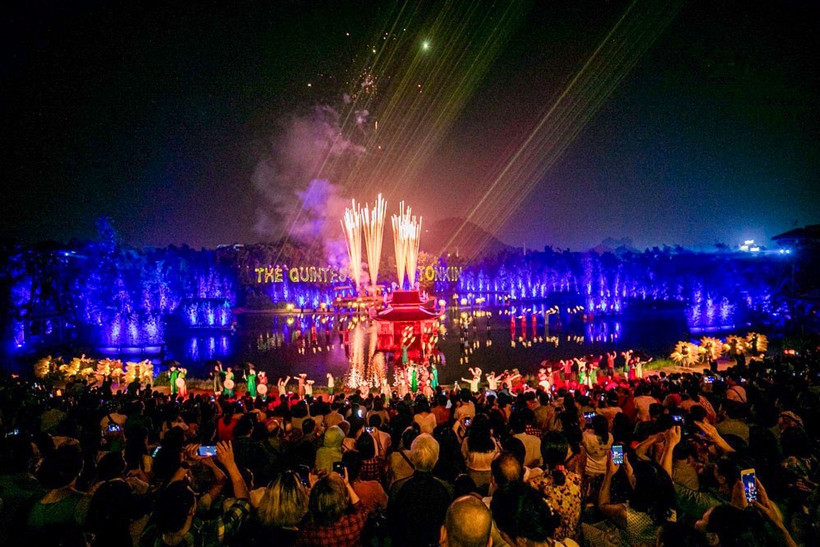
Today, private businesses are not just supporting but actively shaping Vietnam’s cultural infrastructure. Major conglomerates like Sun Group, Vingroup, FLC, and TMS Group have invested in projects that blend tourism and heritage conservation, breathing new life into historical sites and integrating them into modern social life. These works do more than protect heritage – they generate jobs, attract tourism, and stimulate local economies, he argued.
Private enterprises are now independently creating cultural products, professionally handling market research, content creation, branding, and distribution. Their work has helped project Vietnamese cultural values onto the global stage, enhancing national prestige while contributing to the economy.
Ha Quoc Cuong of the Ho Chi Minh City Drama Theatre pointed out that the southern city, with over 300 years of history, has always embraced a spirit of creativity and resilience. Public interest in cultural and art is growing. The city’s approach to encouraging the involvement of society in the promotion of the arts, particularly fostering private participation under state guidance, has yielded successful performances that are both entertaining and culturally enriching.
He also highlighted that public institutions are evolving. Many have embraced tourism-related programming that preserves and promotes traditional arts, earning strong support from audiences.
Tran Son, Director of the Bao Son Engineering JSC, noted the recent success of the Vietnamese film “Dia dao - mat troi trong bong toi” (Tunnels) as a standout example of private investment breathing new life into the film industry. Such achievements show how private sector engagement in cinema – a vital branch of the cultural industries – must be encouraged further.
Shared mission for cultural growth
Dr. Bui Hoai Son added that in this new era of national development, private enterprise is an indispensable engine for cultural progress. Entrepreneurs are often the first to test boundaries, adopt new ideas, and globalise Vietnamese culture through bold, creative, and agile efforts.
To truly make the private sector a strategic partner in cultural development, he stressed the need for a conducive ecosystem, such as clear incentives, a transparent legal framework, supportive policies, and strong collaboration with government. A shift in mindset is also needed, from a “request-and-grant” model to one of equal partnership, and from bureaucratic control to facilitation and support. This is, he said, a golden moment for Vietnam to co-create a cultural future that is both rooted in identity and radiant with global creativity.
Associate Professor Dr. Le Quy Duc of the Ho Chi Minh National Academy of Politics called for policies that encourage investment in cultural infrastructure and advanced technology to raise the quality of cultural products and services. Such measures will empower private cultural enterprises to scale up and attract wider social capital.
He also stressed the importance of protecting private property rights and enforcing intellectual property laws. Legal certainty in these areas is critical to giving investors confidence and ensuring creators are fairly rewarded for their work – a cornerstone of any sustainable cultural industry.
From a business perspective, Nguyen Quoc Ky, Chairman of Vietravel Holdings, underscored the benefits of tight-knit collaboration between the state and private firms. Effective public–private partnerships (PPPs) can unlock untapped social resources and improve project implementation across economic sectors, especially in cultural tourism, one of Vietnam’s leading cultural industries.
He advised businesses to take the initiative in innovation, tech adoption, and operational efficiency to build trust and bring high-quality cultural products to market./.