HCM City (VNA) - Despite ongoing business environment uncertainties, 60% of Vietnamese enterprises remain optimistic about prospects for the coming year, with 46% indicating plans to accelerate their expansion into international markets, according to the Business Outlook Study 2025 conducted by Singapore-based United Overseas Bank (UOB) released on June 25.
Businesses proactively respond to tariff volatility
According to UOB, following the US’s announcement of reciprocal tariffs of 46% on Vietnamese goods on April 2, around 80% of Vietnamese businesses have proactively taken measures to respond to potential impacts.
The US government's decision to temporarily suspend the tariff for 90 days has created an opportunity for trade negotiations, while also giving businesses more time to proactively respond, from stabilising supply chains to managing rising input costs.
Survey results show that about 52% of businesses expect a significant increase in raw material and production costs, while 30% are concerned about rising inflation.
In response, businesses are adopting many measures such as diversifying suppliers, enhancing localisation, and reducing dependence on the US market. Nearly 70% of enterprises expect intra-ASEAN trade to accelerate, showing the region’s growing importance amid global uncertainties.
Besides, they are increasingly focusing on two strategic pillars of digitalisation and sustainable development, with 61% and 56% of Vietnamese businesses said they will intensify efforts in the respective fields.
In addition to internal initiatives, Vietnamese businesses are also seeking support from the Government and financial institutions to navigate the current challenging period.
In the short term, financial assistance remains a pressing demand, with 73% of enterprises expecting support to help offset the impact of tariffs, and 65% hoping for targeted subsidies or tax relief policies for the most heavily affected sectors. In the long term, businesses are calling for strategic support such as the signing of bilateral trade agreements with key markets, as well as assistance in restructuring and relocating supply chains.
Lim Dyi Chang, Head of Commercial Banking at UOB Vietnam, stated that the bank remains optimistic about Vietnam’s economic outlook despite recent uncertainties related to tariffs.
Vietnam’s solid economic fundamentals, recent positive policy reforms, and the proactive stance of the business community are highly encouraging signals, he noted, stressing that this is also an opportune time for Vietnamese businesses to adjust their strategies by reducing overreliance on individual export markets and leveraging the growing strength of intra-ASEAN trade. Strategic adaptability, he noted, will be the key differentiator in this volatile landscape.
Businesses target key ASEAN markets
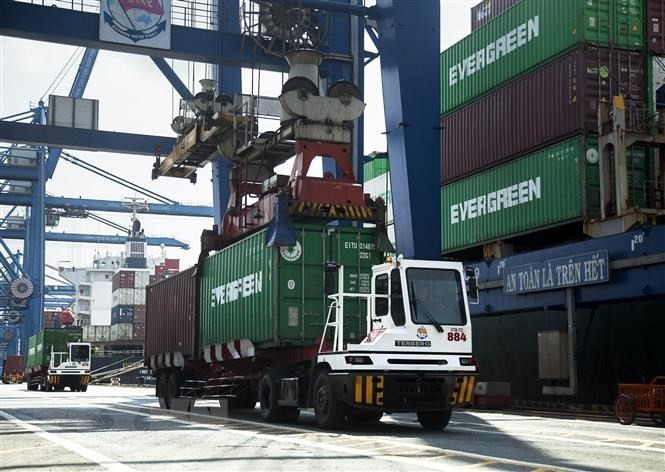
According to UOB, interest in expanding into international markets remains strong among Vietnamese businesses, with nearly 90% indicating they are seeking to grow beyond the domestic market, primarily to increase revenue and profits.
ASEAN remains the top priority region for Vietnamese businesses in 2024 and over the next one to three years, with Thailand and Singapore emerging as the most preferred destinations. Additionally, Europe has risen as a strategic market attracting growing interest from many enterprises.
Vietnamese businesses are actively diversifying their supply sources, digitising supply chain processes, and strengthening partnerships with suppliers.
Notably, UOB’s study also revealed that Vietnam is leading the region, with nearly 75% of business leaders identified as next-generation leaders, significantly higher than the regional average of 60%.
This new generation of leaders is primarily engaged in operations and industries such as manufacturing, energy, and oil and gas. They are at the forefront of adopting advanced technologies such as generative AI, cloud computing, augmented reality (AR), and blockchain./.