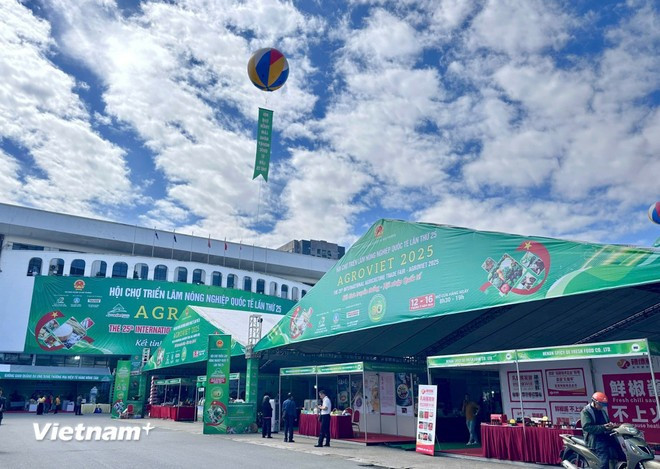
Hanoi (VNA) - Vietnam–China trade has grown rapidly and steadily in recent years. Bilateral turnover reached 205.2 billion USD in 2024 and 208 billion USD in the first 10 months of 2025, making Vietnam China’s largest trading partner in ASEAN and its fourth-largest globally.
According to the Ministry of Agriculture and Environment, this result reflects close cooperation at all levels and the dynamism of businesses in both countries. Numerous bilateral and multilateral agreements have created a favourable legal framework for trade expansion.
Supporting global food security
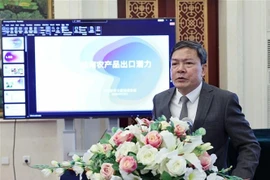
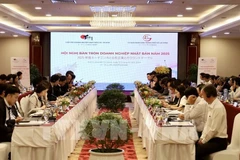
At the Vietnam–China Trade Promotion Forum on November 12, Hoang Van Du, Vice Director of the Trade Promotion Centre for Agriculture, said Vietnam - an economy with strong, stable growth is a major supplier of high-quality tropical agricultural products and plays an increasingly important role in global food security.
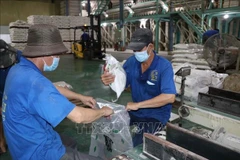
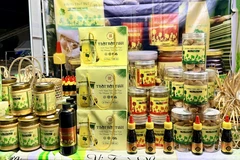
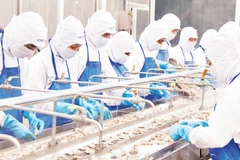
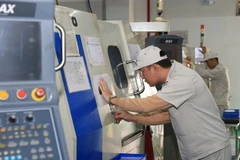
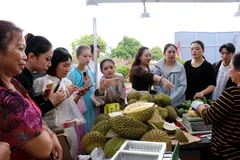
Agricultural trade between the two countries has grown consistently. Many of Vietnam’s key products such as fruit, seafood, rice, coffee, pepper and rubber are widely available in China, while Vietnamese enterprises import machinery, equipment, fertilisers and chemicals from China for production.
China reaffirmed its commitment to expanding the import of Vietnamese agricultural goods and supporting large-scale, high-quality two-way investment. Du noted that rising demand in China presents significant opportunities for Vietnam’s key commodities.
A representative from the National Authority for Agro-Forestry-Fishery Quality, Processing and Market Development (NAFIQPM) highlighted the vast consumption potential. Vietnam’s population exceeds 100 million while China’s has surpassed 1.4 billion. By 2030, the Asia–Pacific region will need to increase agricultural output by at least 30%. With favourable geographical proximity and harmonised tastes, bilateral trade is shifting from small-scale border exchange to a more formal, sustainable and modern model.
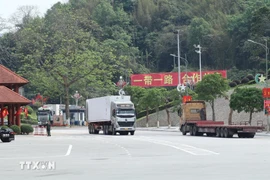
However, challenges remain, including inadequate border logistics and cold storage, small-scale production, uneven quality control capacity and limited data connectivity between supply chains.
Facilitating trade, building sustainable value chains
To address these issues, the NAFIQPM identified ASEAN–China cooperation as a priority. It proposed enhancing trade promotion activities, strengthening business-to-business connections and improving understanding of market regulations and consumer trends.
Both sides should intensify information exchange and technical cooperation on standards, quarantine, biosafety and transport management. They also emphasised the need to coordinate quarantine and border inspection under international norms. Further, they must develop the Vietnam–China agricultural value chain, particularly deep processing, cold logistics, e-commerce, and standardise raw material zones.
The authority also suggested forming Vietnamese agricultural distribution centres in China and cross-border processing hubs.
“With shared interests and strong consensus within ASEAN–China cooperation frameworks, we can build a modern, safe and sustainable agricultural supply chain contributing to regional food security,” the authority representative said.
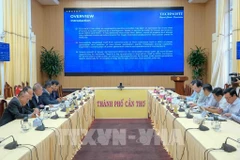
Du noted that the forum offers an important platform for associations and businesses to connect supply and demand, seek investment and technology transfer opportunities and expand markets. It is also a chance to discuss solutions to enhance quality, safety and value-added, moving towards green and sustainable agriculture.
The event brought together nearly 100 companies, including over 40 from Henan, Guangdong, Guangxi, Shandong, Shanxi and Hebei. It aimed to open new cooperation spaces and promote balanced, sustainable trade between the two countries./.