Vietnam, China strengthen bilateral trade cooperation

The Vietnamese and Chinese ministers agreed on the need to enhance economic and trade coordination amid complex global and regional economic developments.

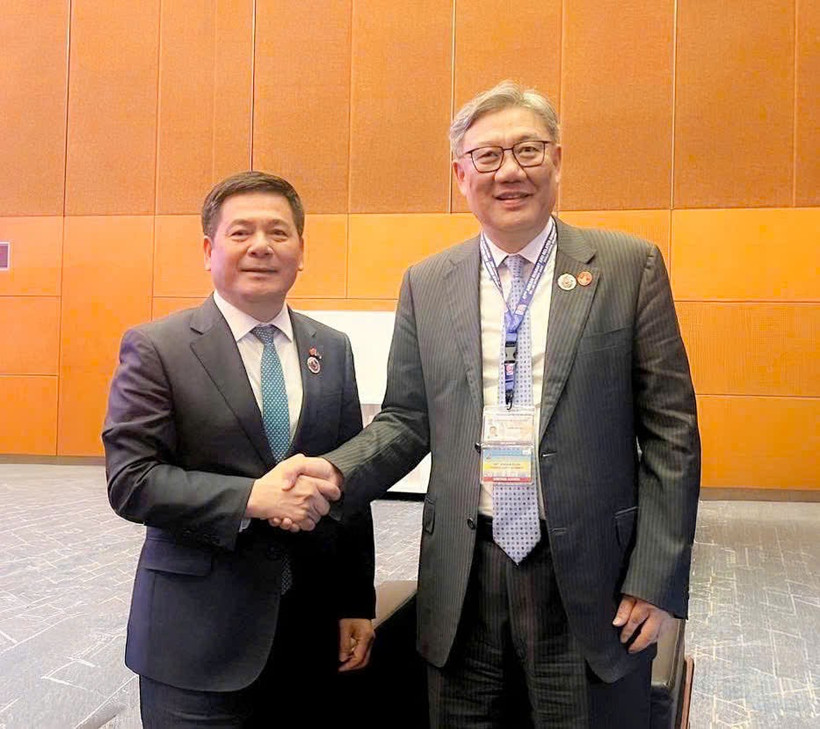
Minister of Industry and Trade Nguyen Hong Dien meets with Chinese Minister of Commerce Wang Wentao on the sidelines of the 47th ASEAN Summit in Malaysia on October 27. (Photo: moit.gov.vn)

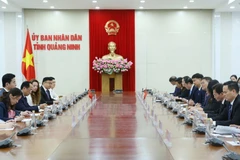
Hanoi (VNA) – Minister of Industry and Trade Nguyen Hong Dien met with Chinese Minister of Commerce Wang Wentao in Kuala Lumpur on October 27, on the sidelines of the 47th ASEAN Summit and related meetings, to discuss measures for further boosting bilateral economic and trade relations.

Looking into economic and trade ties, the two ministers agreed on the need to enhance coordination amid complex global and regional economic developments, according to the Vietnamese ministry.

Dien informed that Vietnam is completing domestic procedures for signing the protocol that upgrades the ASEAN – China Free Trade Area (ACFTA 3.0) as planned. He affirmed Vietnam’s commitment to working closely with other ASEAN members and China to ensure its effective implementation for the benefit of businesses and citizens.

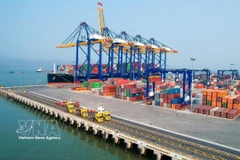
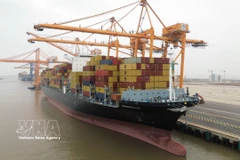
China remains one of Vietnam’s most important trading partners, serving as a major export market and a key supplier of materials and goods. In 2024, bilateral trade reached a record high of 205.2 billion USD, marking a new milestone.

Vietnam’s exports to China in the first eight months of 2025 rose 9.2%, up from the 7.1% expansion in the first seven months. Particularly in August, exports recorded a double-digit increase of about 22% year-on-year, reported the Vietnam Trade Office in China.

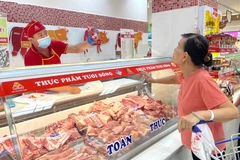
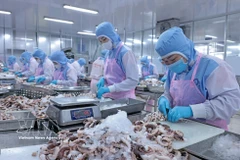
Vietnam’s key exports to China include agricultural products such as rice, coffee, cashew nuts, and fruits, along with seafood, electronic components, textiles – garment, rubber, and crude oil. Vietnamese farm produce have a strong foothold in the Chinese market thanks to geographical proximity and high consumer demand, with durian, dragon fruit, mango, and passion fruit maintaining solid growth.

Meanwhile, Vietnam imports machinery, industrial equipment, production materials, consumer goods, and electronic components from China.

The diverse trade structure allows both countries to leverage their comparative advantages, contributing to shared economic growth./.

VNA

See more

Tran Ngoc Quan, Trade Counsellor and head of the Vietnam Trade Office in Belgium and the EU (Photo: VNA)

Belgian firms suggested to expand presence in Vietnamese market

Entering 2026 – the first year of implementing the Vietnam – EU Comprehensive Strategic Partnership, the Vietnam Trade Office in Belgium and the EU views this as a pivotal time to inject new momentum into trade ties, said Trade Counsellor Tran Ngoc Quan.

Saigon Marina IFC, an emerging landmark, reflects Ho Chi Minh City’s pioneering spirit.

Saigon Marina IFC – The light of Ho Chi Minh City’s new icon

Saigon Marina IFC, an emerging landmark, reflects Ho Chi Minh City’s pioneering spirit. Designed to become an International Financial Centre, this new architectural icon along the Saigon River is envisioned not only as a premium commercial complex, but as a central platform supporting financial institutions, international investors and cross-border capital flows in the years ahead.

Shoppers at a supermarket in Hung Yen (Photo: VNA)

Retailers see tax compliance, AI as key to survival in 2026 survey

The annual survey, conducted at the end of 2025 among retail and food and beverage (F&B) sellers nationwide, found that businesses are shifting their focus from rapid growth to operational efficiency, cost control and legal compliance amid increasingly stringent regulatory standards.

Visitors shop at Glorious Spring Fair 2026 (Photo: VNA)

Spring Fair 2026 opens broader prospects for Vietnam–UAE trade cooperation

For Vietnam, the UAE serves not only as a consumer market but also as a gateway to the Middle East and North Africa. Vietnamese agricultural products such as cashew nuts, pepper, cinnamon and rice have steadily gained market share, while aquatic products, including tra fish and tuna, are increasingly present in the UAE’s hospitality sector.

Bao Viet Bank's employee counts Vietnamese banknotes at a transaction counter in Hanoi. (Photo: VNA)

Credit quota reform, tighter capital rules may widen gap among banks

Yuanta Vietnam Securities estimates that to achieve GDP growth above 10%, credit growth would need to exceed 16%. This suggests bank credit is no longer expected to be the main growth driver, with greater reliance on fiscal policy, public investment and capital markets.

Commercial Counsellor Do Viet Phuong, Head of the Vietnam Trade Office in Cambodia. (Photo: VNA)

Spring Fair 2026 offers ample room to deepen Vietnam–Cambodia trade ties

Cambodia holds substantial potential for cooperation in agro-processing and exports, especially in key products such as rice, cashew nuts and rubber. In recent years, the country’s cultivation area and agricultural output have grown steadily, providing a stable raw material base for processing industries.

Vietnam is projected to have approximately 2.4 million SMEs, accounting for over 98% of the country’s total enterprises. (Photo: cafef.vn)

Banks offer diverse solutions to support SMEs

With an increasingly significant role in the economy, the small and medium-sized enterprise (SME) sector is becoming a key segment in the credit growth strategies of many banks and the banks have been taking diverse solutions to support the enterprises.