Vietnamese trade counselor in Thailand Le Huu Phuc (R) at the third Asian and Pacific Energy Forum (APEF 2023) in Bangkok. (Photo: VNA)
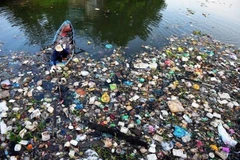
 In his speech at the event, Phuc said that as one of the world’s top five countries most vulnerable to climate change, Vietnam is facing sea-level rise, flood, and drought, while severe weather conditions are threatening the country’s socio-economic development and environmental sustainability.
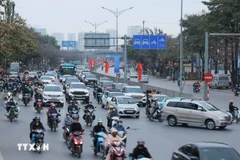
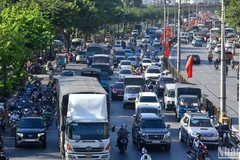
Energy transition is the primary factor that delivers on Vietnam’s climate change response targets, he said, elaborating that energy sources have the highest carbon footprint in the country.
He stressed energy cooperation within the Economic and Social Commission for Asia and the Pacific (ESCAP) is important for Vietnam and many other developing countries in the region to share experience in energy transition process as well as climate change response as a whole.
"Vietnam stands ready to bolster cooperation with partners and international organisations in the field," he said, expressing his hope that the United Nations’ organisations, especially ESCAP, will have rational orientations and policies to support the developing countries in the energy transition process, particularly assistance in terms of finance, and capacity building for policy outlining and project implementation.
“Recent crises have tested us all, resulting in economic shocks, energy supply price rises and supply chain disruptions, all of which have threatened progress on the energy transition and, more broadly, sustainable development,” said UN Under-Secretary General and ESCAP Executive Secretary Armida Salsiah Alisjahbana.
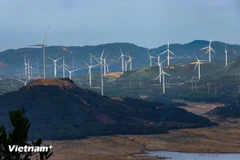
“These events remind us of the need for energy resilience and security to be considered alongside sustainability. For the energy sector, pursuing better energy efficiency, universal access to modern energy and increasing the share of renewable energy are strategies that can improve our collective ability to weather these shocks and recover better,” she added.
The APEF 2023 drew the participation of more than 265 delegates from 42 countries, including ministers, senior officials and experts from 37 member states of ESCAP. They reviewed the progress made in achieving Sustainable Development Goal 7 (Affordable and clean energy) in the Asia-Pacific region, and in implementing the Ministerial Declaration on Regional Cooperation for Energy Transition towards Sustainable and Resilient Societies in Asia and the Pacific, which was adopted at the Second Asian and Pacific Energy Forum, in 2018.
They also adopted a ministerial declaration on “Building a Secure, Sustainable and Interconnected Energy Future for Asia and the Pacific” that will guide the partnership between ESCAP and its member States in addressing these pressing energy challenges towards a sustainable energy future in the region.
The fourth Asian and Pacific Energy Forum will be held in 2027./.
"Vietnam stands ready to bolster cooperation with partners and international organisations in the field," he said, expressing his hope that the United Nations’ organisations, especially ESCAP, will have rational orientations and policies to support the developing countries in the energy transition process, particularly assistance in terms of finance, and capacity building for policy outlining and project implementation.
“Recent crises have tested us all, resulting in economic shocks, energy supply price rises and supply chain disruptions, all of which have threatened progress on the energy transition and, more broadly, sustainable development,” said UN Under-Secretary General and ESCAP Executive Secretary Armida Salsiah Alisjahbana.
“These events remind us of the need for energy resilience and security to be considered alongside sustainability. For the energy sector, pursuing better energy efficiency, universal access to modern energy and increasing the share of renewable energy are strategies that can improve our collective ability to weather these shocks and recover better,” she added.
The APEF 2023 drew the participation of more than 265 delegates from 42 countries, including ministers, senior officials and experts from 37 member states of ESCAP. They reviewed the progress made in achieving Sustainable Development Goal 7 (Affordable and clean energy) in the Asia-Pacific region, and in implementing the Ministerial Declaration on Regional Cooperation for Energy Transition towards Sustainable and Resilient Societies in Asia and the Pacific, which was adopted at the Second Asian and Pacific Energy Forum, in 2018.
They also adopted a ministerial declaration on “Building a Secure, Sustainable and Interconnected Energy Future for Asia and the Pacific” that will guide the partnership between ESCAP and its member States in addressing these pressing energy challenges towards a sustainable energy future in the region.
The fourth Asian and Pacific Energy Forum will be held in 2027./.
VNA