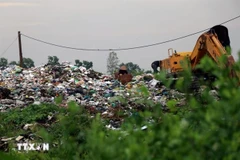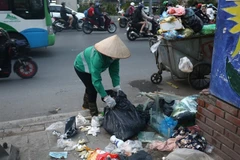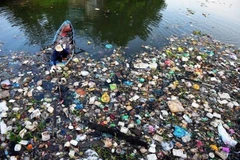
Hanoi (VNS/VNA) - Vietnam has the potential to divert up to 77,000 tonnes of packaging waste from landfill, cut 265,000 tonnes of CO2 emissions and create around 6,400 formal jobs and 9,600 opportunities in the informal waste sector annually if it effectively implements a Deposit Return System (DRS).
These figures were highlighted in a Pre-Feasibility Study on a DRS tailored for single-use beverage packaging in Vietnam, conducted by Eunomia Research & Consulting.
The study was commissioned by the Norwegian Embassy in Hanoi and Innovation Norway, in consultation with Vietnam’s Ministry of Agriculture and Environment.
Its findings were unveiled on June 16 afternoon in the capital city by the Norwegian Embassy and the Vietnam National Plastic Action Partnership.
A mandatory DRS targeting single-use PET bottles and aluminium cans, proposing a refundable deposit of between 1,000 - 2,000 VND (0.03-0.06 USD) per item, is outlined in the study.
According to the report, this design aligns well with Vietnam’s Extended Producer Responsibility (EPR) policies and supports national targets on reducing marine plastic pollution and achieving net-zero emissions by 2050.
The study is intended to provide evidence to inform the ministry’s future research and policy development regarding the DRS mechanism.
Along with EPR, the DRS is seen as a potential instrument for effectively advancing Vietnam’s vision of a circular economy, as outlined in Article 142 of the 2020 Law on Environmental Protection.
Specifically, DRS can help achieve high recycling rates, reducing reliance on virgin materials and thus lessening environmental harm.
Under a DRS, a small, fully refundable deposit is added to the price of each beverage container covered by the system.
The financial incentive encourages consumers and other actors, such as informal waste collectors, to return used containers at designated return points in exchange for the deposit.
Return points could include retail stores and outlets in the HORECA sector (hotels, restaurants and cafés) or centralised collection sites.
Returned containers are typically sent to counting centres for auditing and/or pre-sorting before being processed at recycling facilities.
Improved collection rates through a DRS bring multiple benefits, including reduced littering, less material leakage into terrestrial and marine environments, lower greenhouse gas emissions, improved air quality, job creation and enhanced circularity for in-scope materials.
Globally, DRS is recognised as a proven and highly effective solution to boost collection and recycling rates for single-use beverage packaging.
Over 40 regions worldwide currently operate such schemes, spanning Europe, the Americas, Africa, the Middle East and Oceania.
Well-designed DRS programmes, often mandatory, can achieve collection rates exceeding 90%.
The study explores the implementation of a nationwide DRS in Vietnam, initially covering single-use PET bottles and aluminium cans.
The two packaging types account for approximately 98% of the market share for single-use beverage containers in Vietnam, with PET bottles making up 33% and aluminium cans 65%.
While current collection rates are relatively high, estimated at 50% for PET bottles and 80% for aluminium cans, much of the recovered material is downcycled into lower-value products.
If successful, Vietnam would become the first Southeast Asian country to introduce a nationwide DRS for single-use beverage containers, potentially becoming a model for neighbouring countries.
By incorporating global best practices and lessons learned, while also adapting to local conditions, Vietnam could position itself as a regional leader in sustainable development and the circular economy.
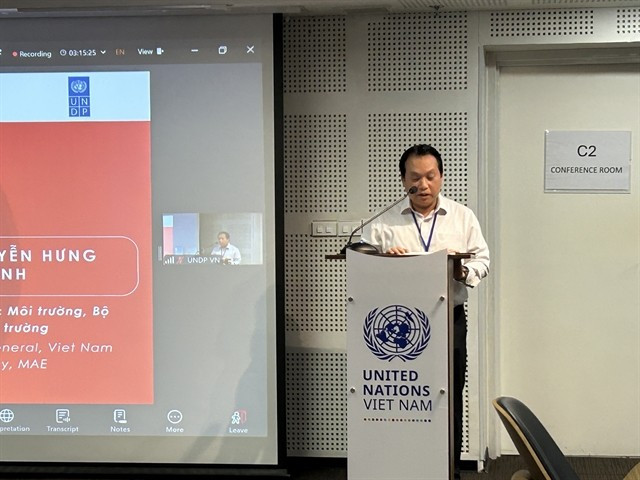
Deputy Directol of the ministry’s Environmental Department Nguyen Hung Thinh said at the event that with rapid economic and population growth, plastic waste generation in Vietnam is rising sharply, going on to call for comprehensive and breakthrough solutions.
Promoting a closed-loop plastic economy, especially for post-consumer resins, not only reduces pollution but also creates significant economic value.
In this context, the DRS presents a new and promising approach. DRS has proven successful in many countries in boosting the collection, sorting and recycling of bottles and packaging, especially plastics.
The department strongly supports and values the research. “We believe the findings provide practical and feasible recommendations suited to Vietnam’s context and serve as an important foundation for further policy development aimed at implementing DRS in the near future,” Thinh said.
Speaking at the event, Norwegian Ambassador to Vietnam Hilde Solbakken said that in Norway, the deposit return system has helped them achieve one of the highest recycling rates for plastic bottles in the world, over 90%.
Across Europe, similar systems have demonstrated that smart design, combined with strong public and business engagement, yields tangible, positive environmental outcomes.
With Vietnam’s growing commitment to sustainability, she firmly believes the country stands to gain enormously from these proven models.
They can increase recycling rates and provide an effective solution to plastic pollution.
The study shows that a DRS is entirely feasible for Vietnam and would deliver major environmental, social and economic benefits.
A DRS has the potential to stimulate a new recycling industry, create green jobs and significantly reduce the number of plastic bottles ending up in nature or landfills.
Norway is delighted to support Vietnam in making this vision a reality, the ambassador said./.

Emission reduction brings carbon credit opportunity for agricultural sector
With its diversity, ranging from livestock, crop cultivation, and forestry, Vietnam’s agriculture sector has great potential to shift towards low-carbon emission production.