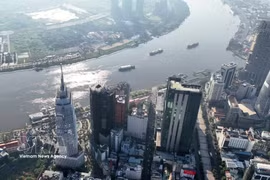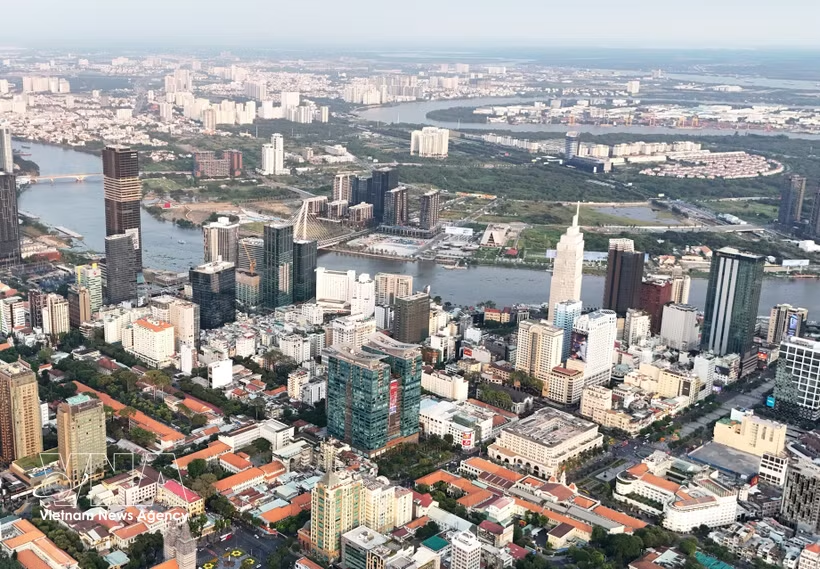
Ho Chi Minh City (VNA) – Nearly six months after the launch of the Vietnam International Financial Centre in Ho Chi Minh City (VIFC-HCMC), the centre has attracted more than 21 billion USD in investment commitments, highlighting growing international confidence in Vietnam's ambition to become a regional financial hub.
The next challenge is turning these commitments into actual capital flows that support the real economy through stronger policies, international cooperation and modern financial infrastructure.
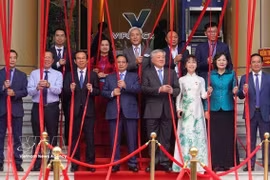
Several key components of the centre are already in operation, including an aviation finance centre, a fintech hub and a maritime financial ecosystem. On July 12, the VIFC-HCMC established a 13-member advisory board to assist its executive council in formulating development strategies, designing financial products, building the financial ecosystem and expanding international partnerships.
According to economic experts, while investment commitments exceeding 21 billion USD demonstrate the centre's strong appeal, pledged capital does not automatically translate into immediate disbursement.
Associate Professor Dr Nguyen Huu Huan, Vice Chairman of the VIFC-HCMC Executive Board, said the ultimate goal is not simply to secure investment pledges but to convert them into real financial transactions that channel capital into productive sectors of the economy.
He noted that international financial investors place high priority on investment security, liquidity and returns. To bridge the gap between commitments and disbursement, he identified four key requirements.
First, Ho Chi Minh City must prepare a pipeline of investment-ready projects with clear legal status and transparent financing mechanisms. Second, the centre should quickly introduce diversified financial instruments such as international bonds, green bonds, investment funds, trade finance and specialised financial products. Third, risk-sharing mechanisms, including guarantees, credit insurance and credit ratings supported by development institutions, should be strengthened. Finally, every investment commitment should be translated into a detailed action plan with clearly defined projects, capital amounts and implementation schedules.
International cooperation is also expected to play an important role in shaping the centre's development.
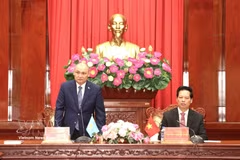
At the recent Vietnam–Republic of Korea Financial Cooperation Forum in Ho Chi Minh City, Korean Deputy Consul General Kwon Tae-han said the two countries are entering a deeper stage of financial cooperation under their Comprehensive Strategic Partnership.
He said Vietnam's dynamic market, combined with the RoK's experience in digital finance, fintech and electronic financial infrastructure, could create new momentum for the development of the VIFC-HCMC, particularly as digital transformation and artificial intelligence reshape the global economy.
Areas with strong potential for early cooperation include cross-border QR code payment connection, bond market development and stronger links between financial institutions in the two countries.
The VIFC-HCMC has also proposed priority areas for cooperation with the RoK such as attracting major financial institutions to establish operations at the centre; developing international fundraising channels through green and sustainable bonds; connecting payment systems; promoting fintech and AI development through regulatory sandbox mechanisms; and training high-quality financial professionals through partnerships with universities and research institutes.
Alongside international cooperation, authorities are working to improve Vietnam's legal and institutional framework to facilitate foreign investment.
The VIFC-HCMC Executive Board and Ho Chi Minh City are coordinating with ministries and agencies to review regulations on foreign exchange management, cross-border capital flows, anti-money laundering measures, membership management and regulatory sandbox mechanisms to create a more transparent and competitive investment environment.
The centre also plans to launch its first financial products before the end of the year, focusing on investment funds, international bonds, including municipal, infrastructure and corporate bonds, as well as green finance products such as ESG loans and impact investment instruments.
In addition, pilot programmes for cross-border payment systems, digital finance services and a commodity exchange specialising in agricultural products are being prepared.
The city is also investing in secure digital infrastructure and developing support mechanisms to encourage banks, securities firms, fund managers, auditing companies and international arbitration organisations to establish presence at the financial centre.
Many financial institutions have already expressed their readiness to begin operations once the regulatory framework is finalised. Authorities believe that stronger governance, supported by the newly established advisory board and a skilled financial workforce, will be key to transforming investment commitments into real capital flows, boosting economic growth and enhancing Vietnam's position in the global financial system./.
VNA