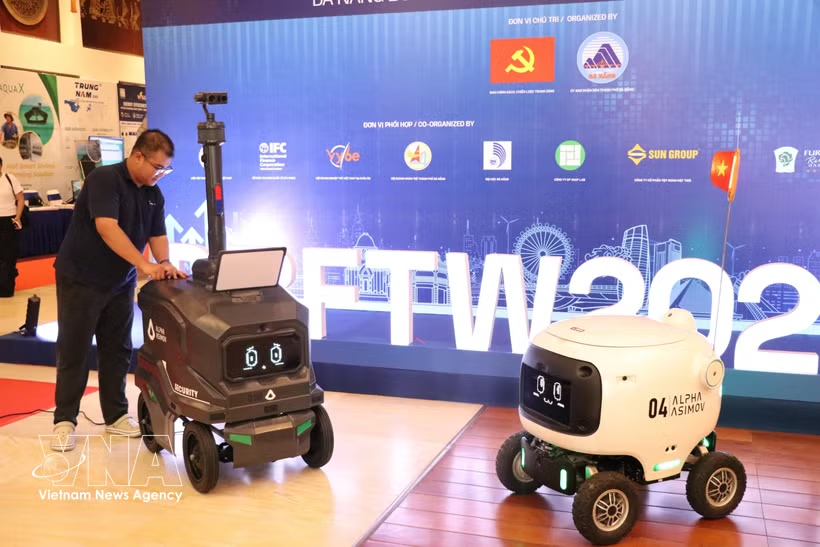
Da Nang (VNA) – As the expansion of its administrative boundaries following the recent merger creates greater capacity in terms of land, population and resources, the central coastal city of Da Nang is stepping up efforts to attract investment and make more effective use of social resources to support new development models on a larger scale.
Pioneering new development models
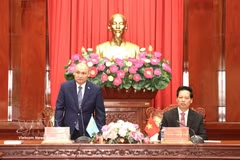
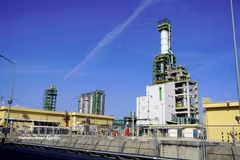
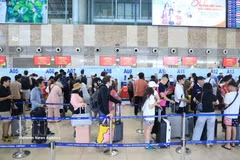
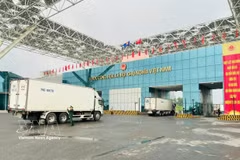
Nguyen Manh Hung, Chairman of the municipal People's Committee, said the city enjoys many distinctive advantages, including its strategic position as the gateway to the sea of the East–West Economic Corridor, an integrated network of seaports, an international airport and inter-regional transport links, as well as special policies and mechanisms and years of investment in digital government and smart city infrastructure.
These advantages are complemented by its efforts to create a transparent investment environment and strengthen international integration, he went on, noting that Da Nang is currently one of Vietnam's leading localities in piloting institutional reforms and new development models.
Approval from central authorities for the city to establish the Vietnam International Financial Centre, a free trade zone and a range of specific mechanisms will enable it to test modern development models, contributing to the continued refinement of the country's institutional framework.
In the coming years, the city will prioritise attracting high-quality investment, particularly projects capable of driving innovation, technology transfer, workforce development and wider economic spillover effects.
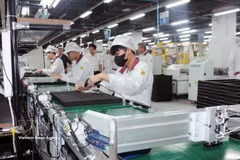
Da Nang also aims to become a regional innovation hub by developing an ecosystem centred on science – technology, artificial intelligence, semiconductors, data centres, high technology and the digital economy.
At the same time, the city remains committed to preserving its cultural heritage and placing residents' quality of life at the heart of all development policies. Officials regard this people-centred approach as a key competitive advantage in attracting talent, businesses and strategic investors to support sustainable economic growth.
Strengthening competitiveness through institutional capacity, human capital, technology
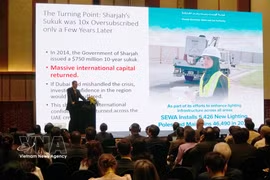
Dr Eduard Muller, former Austrian Minister of Finance, perceived that Vietnam is now among Asia's most dynamic economies. Da Nang, meanwhile, is embarking on an ambitious transformation through initiatives such as developing the Vietnam International Financial Centre, forming a free trade zone, and promoting green finance, digital assets, artificial intelligence and modern urban infrastructure.
He noted that the success of this new growth model will depend largely on the sequencing of policy reforms and the strength of institutional capacity.
Institutional capacity, Muller said, encompasses the ability to make decisions, implement policies, monitor progress, learn from experience and adapt accordingly. City authorities should also strengthen coordination and partnerships with the private sector. For regulatory sandbox schemes, clear and transparent criteria are needed to safeguard investors while ensuring effective anti-money laundering measures and robust data security.
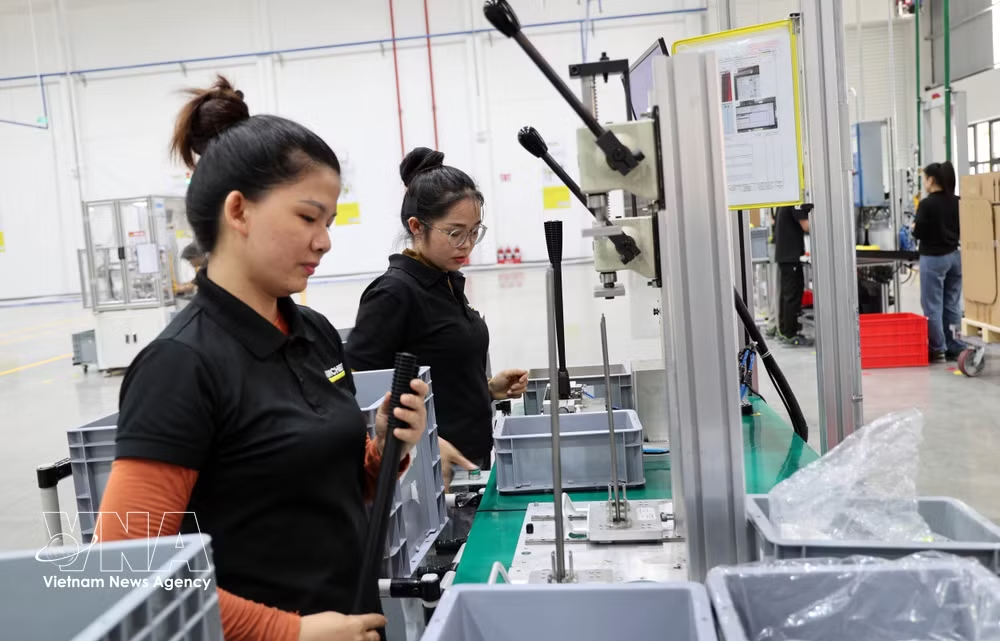
Dr Urs Lustenberger, President of SwissCham Asia, said the central economic hub should establish business incubators to enable young entrepreneurs to launch start-ups locally, particularly in the financial sector.
He expressed confidence that the city will become an increasingly attractive destination to visit, live and build a business, drawing talented professionals.
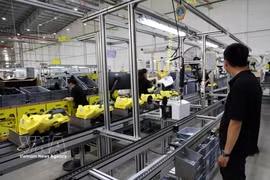
Le Quang Dam, General Director of Marvell Technology Vietnam, described human capital as one of the most valuable assets for any business. He noted that Vietnam has significant opportunities in the semiconductor industry, a market worth billions of US dollars.
He suggested that Da Nang should strengthen workforce training, with a focus on AI proficiency, soft skills and teamwork to improve productivity.
Prof. Paul Romer, co-recipient of the 2018 Nobel Prize in Economic Sciences, said the city should ensure that all residents have access to employment opportunities and affordable housing through continued investment in infrastructure and urban space expansion.
He also recommended local authorities encourage the development of AI applications while supporting universities to expand research, improve AI technologies and make them more widely accessible./.