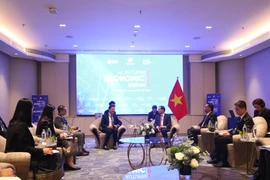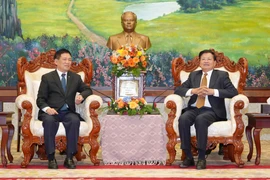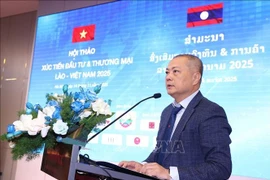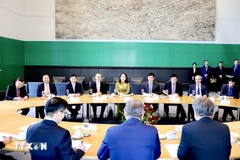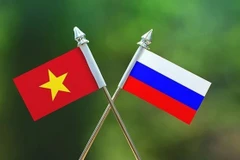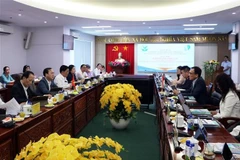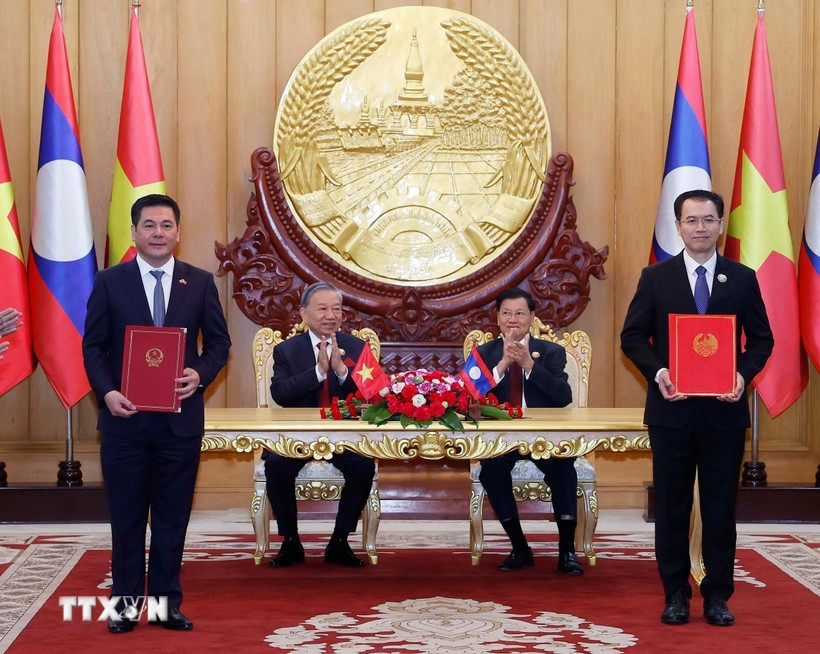
Hanoi (VNA) – Party General Secretary of Vietnam To Lam and Party General Secretary and President of Laos Thongloun Sisoulith witnessed the exchange of several key cooperation documents following their talks in Vientiane on December 1.
The activity formed part of General Secretary Lam's state visit to Laos, participation in the celebration of the country's 50th National Day anniversary, and attendance at a high-level meeting between the Communist Party of Vietnam and the Lao People's Revolutionary Party.
At the event, the Ministry of Industry and Trade of Vietnam and the Ministry of Industry and Commerce of Laos exchanged a memorandum of understanding (MoU) on the development of the industrial chain.
The Vietnam – Laos industrial chain is a multidimensional cooperation model between enterprises of both countries in production and trade, aiming to create a tightly linked network across the entire value and supply chain. This includes, but is not limited to, raw material supply, manufacturing, processing, design, and product distribution within domestic, regional, and global markets.
The initiative encourages the active participation of small and medium-sized enterprises, as well as companies in industrial parks, special economic zones, and cross-border economic cooperation areas.
The MoU emphasises equality, mutual benefit, respect for each other’s independence, sovereignty and territorial integrity, and compliance with laws of each country and international treaties.
The two sides will build and develop industrial linkage chains to encourage and strengthen collaboration between production, import-export, and commercial enterprises, aiming to create breakthroughs in bilateral trade, and deepen practical cooperation between the two nations.
The two sides recognise, respect, and fully comply with the objective laws of the market economy, with each side's development conditions taken into account. They will develop the industrial chain to maximise their potential and comparative advantages while promoting technology and innovation to make productivity and quality breakthroughs for businesses on both sides of the border. The industrial chain development also aims to strengthen the capacity of their enterprises to participate more deeply and effectively in global supply chains.
Mechanisms and policies will be established to identify and form industrial chains, with priority firstly given to the cooperation models in which businesses have set up production and trade ties.
In identifying and selecting linkage projects, the two sides encourage prioritising key sectors and industrial zones of both sides, including agro-processing, light industry, enterprises in special economic zones, and cross-border economic cooperation areas.
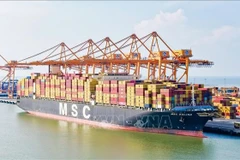
The MoU also includes provisions on creating a favourable investment and business environment, boosting cooperation in customs procedures and trade facilitation at border gates, and enhancing logistics connectivity between Laos and Vietnam, including corridors linking Lao production facilities with Vietnamese seaports.
Enterprises from both countries will be encouraged to actively engage in industrial chains, with criteria to be built to assess performance and impact.
By 2030, the two sides will promote selected industrial linkage chain models, including materials such as cement, iron, and steel; chemicals; textiles – garments and footwear; mechanical engineering and transport vehicle production; the dairy industry; electronics and electronic components; processing industries such as agro-forestry-fishery and food processing; mining and mineral processing; renewable energy (hydropower, wind, and solar power), as well as power transmission and electricity trading.
The two sides pledged to support each other in implementing key initiatives, including the jointly development of a pilot Vietnam – Laos industrial park and research coordination to provide information and support policymaking for the development of Vietnam – Laos industrial chain.
Vietnam will organise training programmes for Lao officials, civil servants, and enterprises in relevant sectors, while Laos will select participants for these programmes.
The Vietnamese Institute of Strategy and Policy for Industry and Trade (VIOIT) and the Lao Institute of Industry, Commerce and Energy (IICE) will coordinate the MoU implementation, potentially forming a joint working group to make annual or biennial work plans and report progress to the ministers./.