Vietnam leads region in AI application with 20% annual growth

The report is the first document to provide a comprehensive overview of the AI economy in Vietnam. It shares international experiences and lessons, analyses opportunities in key economic sectors, and propose development pillars for the national AI economy

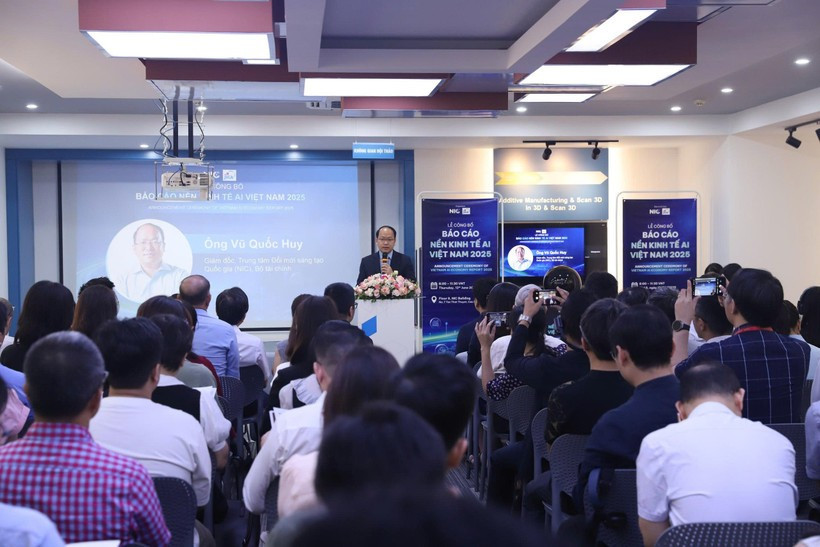
The launch of the Vietnam’s AI Economy 2025 report on June 12. (Photo: VietnamPlus)

Hanoi (VNA) – Artificial intelligence (AI) is rapidly reshaping the global economy and has become the top priority in digital transformation strategies of governments and leading corporations worldwide. It is projected to contribute up to 5 trillion USD to the global economy by 2030.

The information was revealed in the Vietnam’s AI Economy 2025 report, released on June 12 by the National Innovation Centre (NIC) under the Ministry of Finance, in coordination with the Japan International Cooperation Agency (JICA) and the Boston Consulting Group (BCG).

The report presents in-depth analysis of the current landscape and growth potential of Vietnam’s AI sector, while offering strategic guidance to promote the sustainable development of the AI economy.

Vietnam’s leading priority

To realise Vietnam’s ambition of becoming a regional AI leader, the Government has launched a range of important initiatives. Key among these are Resolution No. 57/NQ-TW and the national strategy for AI research, development and application through 2030 outlined in the Prime Minister’s Decision No. 127/QD-TTg. These documents reflect the Government’s strong commitment to digital transformation and serve as a guiding framework for AI research, development, and application across a wide range of sectors.

According to the report, AI will become a driver of Vietnam's sustainable economic growth, with the AI economy expected to hit 120–130 billion USD by 2040. The two main growth drivers that will enable AI to make a major contribution to the economy are: consumption revenue (45–55 billion USD) from AI-powered products and services, and profit from increased productivity enabled by technological adoption (60–70 billion USD).
startup.jpg
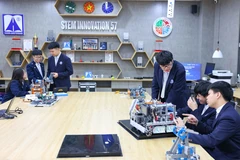
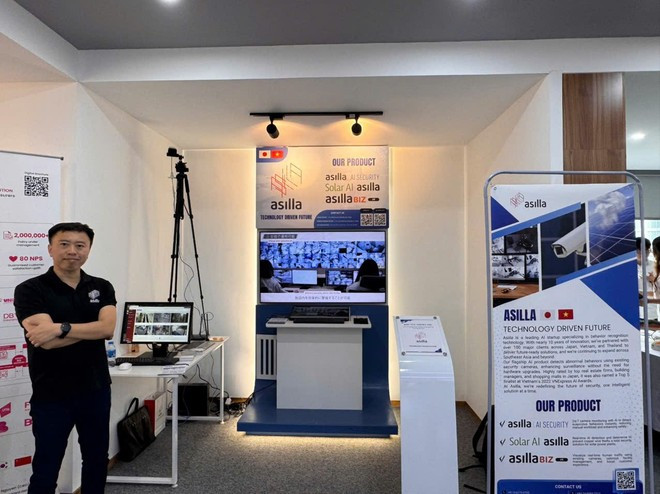
In 2024, Vietnam ranked second in Southeast Asia for both the number of AI-focused startups and investment capital. (Photo: VietnamPlus)

In 2024, Vietnam ranked second in Southeast Asia for both the number of AI-focused startups and investment capital. A critical enabler of this growth is Vietnam’s burgeoning digital and IT workforce. Over 150 universities currently offer information technology-related courses, producing more than 60,000 graduates annually. Leading institutions such as the Hanoi University of Science and Technology (HUST) have launched AI undergraduate and postgraduate programmes to meet rising industry demand.

Further bolstering the AI talent pipeline, NIC and Google’s Build for AI Future programme have delivered essential AI training to students at 80 universities and colleges nationwide. These efforts have already made significant strides in raising awareness and equipping young people with key AI skills.

Public interest in AI is also emerging as a strong catalyst for growth. Vietnamese consumers are actively embracing AI technologies in daily life, while business leaders across sectors are showing keen interest in AI-driven innovation.

Three pillars for AI development

To drive AI-led growth, the report offers strategic recommendations based on three core development pillars.

First, it suggests prioritising AI application across both the public and private sectors.

Second, the report calls for support to Vietnam’s emerging AI ecosystem. This includes launching sustainable AI startup accelerator programmes, offering technical and business mentorship, facilitating investment and partnership opportunities, and assisting new enterprises in the domestic market to effectively deploy AI solutions.

Third, it emphasises the need to build a highly skilled AI workforce. This involves designing internationally recognised AI training programmes at undergraduate, postgraduate, and doctoral levels, as well as rolling out large-scaled AI talent development schemes such as Japan’s Global Communication Infrastructure (GCI) initiative.

The report also identifies three supporting pillars to strengthen the foundation of Vietnam’s AI economy: raising public awareness and knowledge of AI, improving high-quality data and computing infrastructure, and developing clear and adaptable policy frameworks.
report.jpg
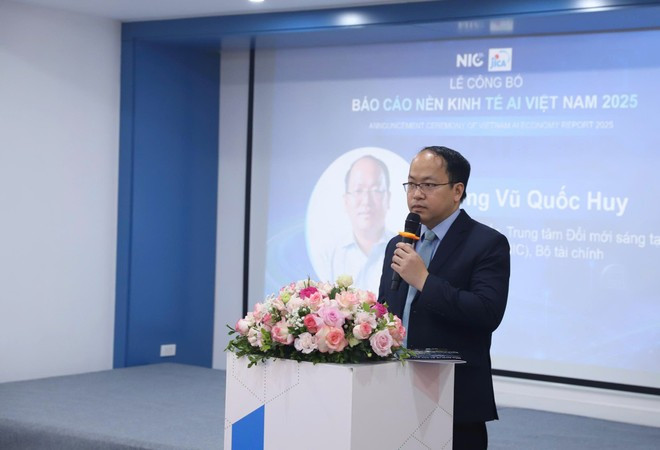
NIC Director Vu Quoc Huy said Vietnam’s AI Economy 2025 report is the first to provide a panorama of the AI economy in the country. (Photo: VietnamPlus)

NIC Director Vu Quoc Huy said Vietnam is entering a particularly important transition period amid the Fourth Industrial Revolution taking place strongly with new breakthroughs in strategic technologies such as AI, semiconductors, biotechnology, renewable energy, and big data that are reshaping global value chains and changing the structure of economies.

To seize this opportunity, Vietnam is determined to secure a firm foothold in the AI sector by proactively promoting cooperation with other countries, economies, and the world’s tech giants, he said.

The report is the first document to provide a comprehensive overview of the AI economy in Vietnam. It shares international experiences and lessons, analyses opportunities in key economic sectors, and propose development pillars for the national AI economy, Huy added./.

VNA

See more

Prime Minister Pham Minh Chinh visits a display of science and technology development, innovation and digital transformation. (Photo: VNA)

Prime Minister requests greater efforts to step up development of sci-tech, innovation

Emphasising three strategic digital breakthroughs - digital institutions, digital infrastructure and digital human resources - PM Chinh called for close integration of science and technology development, innovation, administrative reforms, digital transformation and Project 06 with efforts to streamline the organisational apparatus and modernise leadership, management and working styles.

Doctors from Cho Ray Hospital (Ho Chi Minh City) and Vinh Long General Hospital (Vinh Long province) test the operation of a linear accelerator radiotherapy system for cancer treatment (Photo: VNA)

Vietnam sets orientations for applying nuclear energy across sectors

The plan aims to ensure the effective implementation of Decision No. 245/QD-TTg dated February 5, 2025, which approved the national master plan, while concretising objectives, orientations, solutions and resources for applying radiation and radioisotopes across sectors. It also assigns responsibilities to ministries, sectors and localities, and sets roadmaps and priorities for key programmes and projects.

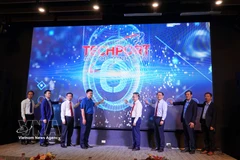
Prime Minister Pham Minh Chinh and delegates visit booths showcasing products at TechFest Vietnam 2025. Photo: VNA

Vietnam to become attractive destination for tech talent, innovative startups: PM

TechFest Vietnam 2025, held from December 12 to 14, is expected to attract more than 60,000 participants both in person and online, with the participation of over 20 corporations, 50 investment funds, more than 100 supporting organisations and incubators, and delegates from Southeast Asia, Northeast Asia, Central Asia, the Middle East, North America, and Europe.

Police offiers mornitor the traffic through AI camera (Photo: VNA)

Applying the Internet of Things in smart transport

The project aims to build a unified, safe and efficient IoT platform to support the management, operation and exploitation of smart transport systems under the Ministry of Construction, with data shared across ministries and localities.

Through long-term commitment, Viettel has brought millions of Burundians into the mobile era and become the first operator to roll out 5G in the country, Viettel Burundi CEO Phan Truong Son noted. (Illustrative photo: VNA)

Viettel secures three prestigious international awards

Viettel has won honours in the “People & Culture” and “Best Operator in a Growth Market” categories at the 2025 World Communication Awards (WCA), alongside the “Best Digital Transformation Project” at the 2025 Global Telecoms Awards (Glotel).

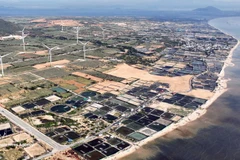
A view of the Can Gio sea-encroaching urban area project (Photo: VNA)

Green-tech push for Can Gio

Vietnam has the capacity, ambition and technological foundation to join the group of leading sustainable coastal urban nations in the coming decade, experts said at a dialogue on "advancing to the sea with ESG++ megacities: breakthroughs through green technology", held on December 9 in Hanoi by the Vietnam Institute for Real Estate Studies (VIRES).

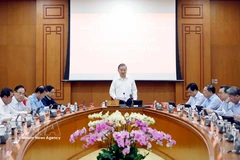
Minister of Science and Technology Nguyen Manh Hung speaks at the meeting (Photo: VNA)

Vietnam turns intellectual property into bankable assets in new law

About AI-generated content, the law draws a clear line: purely autonomous AI creations are not eligible for copyright or patent protection. Those who provide substantial creative input, such as ideas, curation, editing, or selection, qualify as authors or inventors.

Lieutenant General Nguyen Minh Chinh, NCA Vice Chairman, speaks at the launch ceremony of the southern branch of the National Cybersecurity Association. (Photo: VNA)

National Cybersecurity Association opens branch in HCM City

The southern branch aims to become a coordinating body for cybersecurity tasks, workforce development, awareness-raising and the strengthening of digital defence capabilities across the region, contributing to the safe and sustainable growth of Vietnam’s digital economy.

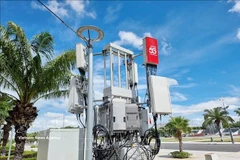
Viettel exceeds target of 20,000 new 5G stations by more than three weeks. (Illustrative photo: VNA)

Viettel exceeds target of 20,000 new 5G stations by more than three weeks

Viettel plans to continue scaling up its network from now until the end of 2025, with an additional 23,500 stations scheduled for installation, nearly quadruple the number rolled out in 2024. Once completed, Viettel will operate Vietnam’s largest 5G network, with 30,000 stations covering 90% of outdoor areas and 70% of indoor spaces nationwide, from major cities to rural regions.

In Vietnam, demand for infrastructure supporting AI, cloud computing, and digital services is rising at an unprecedented level. (Illustrative photo: VNA)

Vietnam emerges as new hub for data centres

Data centres have surged to become the second most preferred alternative asset class in the region. Vietnam is no exception to this trend as the demand for infrastructure supporting AI, cloud computing, and digital services has risen at an unprecedented level.