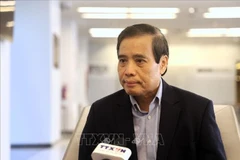
Hanoi (VNA) - Vietnam and Malaysia have good prospects for deeper collaboration in the realm of law, according to Minister in the Malaysian Prime Minister's Department for Law and Institutional Reform YB Dato’ Sri Azalina Othman Said.
Within the framework of her working visit to Vietnam from April 10 to 11, the minister granted an interview to the Vietnam News Agency on related issues.
Reporter: What are the purposes of your visit to Vietnam from April 10 to 11?
Minister Azalina Othman Said: I am honoured to be in Vietnam today. For many years, Malaysia and Vietnam have continued to build a strong relationship through mutual legal cooperation and assistance. My visit is driven by the prospects of deeper collaboration in the realm of law.
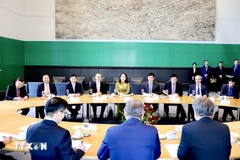
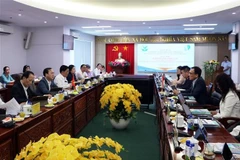
During my visit, I spoke to the Minister of Justice Nguyen Hai Ninh on legal cooperation between Malaysia and Vietnam with a focus on regional dispute resolution and shared legislative priorities.
I also used this opportunity to discuss Malaysia’s agenda on law and international commercial arbitration and mediation reforms for ASEAN in 2025, of which Malaysia is the current Chair.
The overarching goal is to advance international legal frameworks and regulatory standards that benefit both countries and bolster ASEAN unity.
I strongly believe that collaboration is essential to ensuring a cohesive approach to law, justice and reform. By working together, we are better equipped to tackle cross-border challenges and attract regional investment.
Accordingly, the primary focus of my visit is for the consensus of the Joint Statement by ASEAN Law Forums on International Commercial Arbitration and Mediation Development and the participation of Vietnam in the ASEAN Law Forum 2025, which is taking place from August 19 to 21 in Kuala Lumpur, Malaysia.
The Joint Statement will be released on the last day of the Forum, August 21, hopefully in the presence of the Honourable Malaysian Prime Minister Dato’ Sri Anwar Ibrahim and ASEAN Secretary-General Dr Kao Kim Hourn.

These initiatives are part of Malaysia’s efforts to strengthen its position as a preferred hub for international arbitration and foster collaboration among ASEAN Law and Justice Ministers on this pressing issue.
Apart from the International Commercial Arbitration and Mediation Development initiative, Malaysia would also like to invite Vietnam to participate in the upcoming ASEAN Convention on Legal Aid for Children set to be held this year in Desaru, Johor.
Reporter: What common legal issues do Vietnam and Malaysia share? What do you expect for the future of legal cooperation between the two countries?
Minister Azalina Othman Said: I think one of the most obvious challenges is from the angle of cross border insolvency, because it involves bankruptcy legal proceedings.
Another common challenge is cybersecurity, including online fraud and sexual offences against children. Addressing these issues will require legal corporations to work together.
Vietnam and Malaysia have good prospects for deeper collaboration in the realm of law. A strong partnership already exists through mutual legal assistance in criminal matters, anti-corruption efforts, maritime law enforcement and ongoing ASEAN initiatives to foster legal cooperation on trade, cybersecurity and the digital economy.
By continuing to strengthen legal cooperation, our countries can continue to advance our shared interests in maintaining regional stability, promoting economic integration and advancing sustainable development goals.
Reporter: Which areas of cooperation should Vietnam and Malaysia prioritise amid the volatility of global trade policies, particularly from a legal perspective and in terms of protecting businesses?
Minister Azalina Othman Said: Vietnam and Malaysia have built a steady and proud partnership since 1973, expanding cooperation across trade, security, education and regional diplomacy.
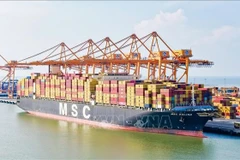
Vietnam is now Malaysia’s fourth-largest trade partner within ASEAN, while Malaysia ranks as Vietnam’s second-largest trade partner and third-largest ASEAN investor.
Two-way trade rose to 18 billion USD, up from nearly 13 billion USD in 2023, benefitting key sectors including manufacturing, energy and agriculture. Malaysia also remains one of the top foreign investors in Vietnam, particularly among ASEAN countries.

The two countries therefore already cooperate closely on legal matters, including mutual legal assistance in criminal cases, anti-corruption, maritime law enforcement and wider ASEAN efforts around trade law, cybersecurity and the digital economy.
Continued growth of legal cooperation will help both our countries pursue shared goals around regional stability, economic integration and sustainable development.
Reporter: How can both countries lead the way in transforming ASEAN into a more legally integrated and resilient economic bloc?
Minister Azalina Othman Said: A strong legal framework is essential for sustainable economic development. One of our goals is to boost the region’s appeal as an arbitral destination.
We want to build a model that strengthens regional cooperation, builds more efficient pathways for resolving commercial disputes, increases access to justice and boosts investor confidence in ASEAN’s legal frameworks to drive even greater economic growth.
Achieving this objective will depend on robust multilateral partnerships across ASEAN member states alongside the collaboration of government authorities, arbitration bodies, legal experts and industry stakeholders. Together, we can lay the groundwork for a more unified and effective approach to dispute resolution.

As part of our Chairmanship, Malaysia aims to position the Asian International Arbitration Centre (AIAC) in Kuala Lumpur as a regional and a global arbitral institution to capture the opportunities arising from the shift of the economic centre of gravity from the West to the East. While Paris and London will undoubtedly maintain their prominence, there is a clear need for alternative arbitration centres within the Global South and particularly in Southeast Asia.
In keeping with the spirit of innovation, and as we navigate an increasingly dynamic global environment, it is essential to embrace new innovations such as artificial intelligence (AI) in arbitration. The integration of AI holds significant potential to enhance efficiency, lower costs and simplify the complexities of commercial arbitration and mediation.
However, it is equally important to ensure that the use of AI upholds the core values of integrity, impartiality and fairness that underpin effective alternative dispute resolution.
With the above in mind, I would like to take this opportunity to encourage all my fellow ASEAN counterparts to explore avenues for regional cooperation in developing an AI roadmap for alternative dispute resolution. This will ensure that innovation serves our shared principles and strengthens the region’s standing in global arbitration practices.
Reporter: With the latest wave of US tariffs affecting regional supply chains, how does Malaysia view the role of legal cooperation in mitigating potential trade disruptions within ASEAN?
Minister Azalina Othman Said: Trade disruptions like these reveal that legal certainty should act as a critical buffer to the economic uncertainty at this juncture. While trade policy itself is not within my portfolio, my focus is ensuring that Malaysia’s and ASEAN's legal cooperation is strong enough to project stability — especially when markets are unpredictable.
This is where we need to accelerate the legal cooperation within ASEAN. Whether it's cross-border insolvency, contract enforcement or alternative dispute resolution, the goal is a legal ecosystem that inspires investor confidence, even in turbulent times. The upcoming ASEAN Law Forum 2025 will be central to advancing this conversation.
As the current Chair of ASEAN, we’re also working to raise the bar for regional arbitration standards. The aim is to show that ASEAN — and Malaysia — can set the benchmark for dispute settlement, not just for its members, but for the global community, especially in this era of global fragmentation./.