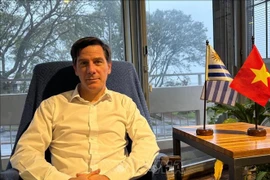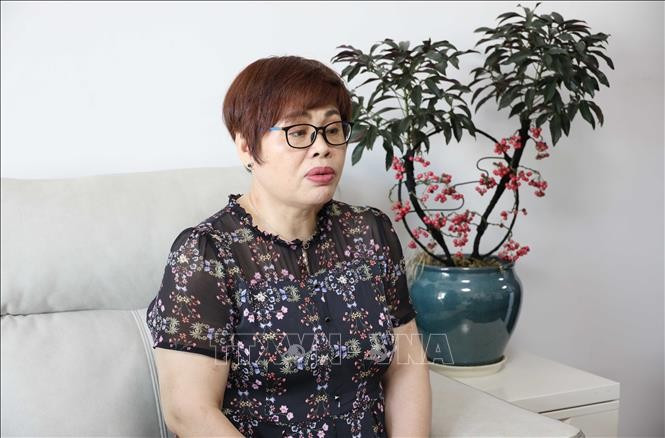
Beijing (VNA) – Vietnam is entering a new stage of development aimed at national rejuvenation, with the goal of becoming a socialist-oriented developed country by mid-century and realising the dream of standing shoulder to shoulder with the world’s powers, said Prof., Dr. Pan Jin’e from the Research Institute of Marxism under the Chinese Academy of Social Sciences.
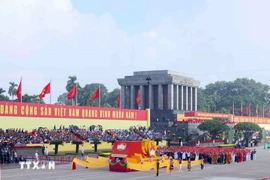
In an interview with Vietnam News Agency correspondents in Beijing on Vietnam’s development prospects, Pan, who is also an expert on Vietnamese affairs, stressed the Declaration of Independence proclaiming the establishment of the Democratic Republic of Vietnam (now the Socialist Republic of Vietnam) marked the beginning of a new chapter in the nation’s development and independence.
At the threshold of a new historic chapter and ahead of the upcoming 14th National Party Congress, Party General Secretary To Lam is leading the Vietnamese nation into “a new era – that of the nation’s rise.” This marks a pivotal stage in Vietnam’s development, with the 14th Congress set to chart the country’s future development orientations.
Assessing Vietnam’s economic prospects, Pan noted that the economy is expected to sustain its growth momentum. In the first half of this year, Vietnam’s GDP grew by 7.52% – the highest mid-year rate since 2011, signaling that the country is entering a new phase of rapid growth.
According to the expert, since launching its “Doi moi” (renewal) process nearly 40 years ago, Vietnam has built an export-oriented economic model, becoming a key global production and export hub. With its deep integration into the global economic system such as participation in BRICS cooperation and South-South cooperation mechanisms, Vietnam is expected to gain broader market access and attract more direct investment from BRICS countries, particularly in high-tech manufacturing, thereby generating new momentum for its economic growth.
The Vietnamese Government’s push for institutional reforms, including those for private economic sector and state-owned enterprise, as well as simplification of administrative procedures, will enhance economic efficiency, optimise the business environment, and stimulate market vitality, she went on.
She noted that the Vietnamese Party and Government have issued several resolutions focusing on “four pillars” to creating breakthroughs, she said, noting that these aim to address key economic challenges, including a narrow economic structure, underdeveloped infrastructure, and the need to enhance workforce quality.
Regarding political development, the expert noted that the Communist Party of Vietnam remains committed to leadership reforms and building a socialist rule-of-law state. Party General Secretary To Lam has directed an unprecedented institutional reform, reducing the number of provinces and cities from 63 to 34, streamlining administrative structures to enhance local governance, improving administrative efficiency, and enabling timely responses to citizens and businesses, while ensuring the effective functioning of democratic mechanisms.
Vietnam is also stepping up the fight against corruption, contributing to creating a pure political environment, enhancing government credibility, and strengthening a stable political framework for national development.
The country is also expected to achieve further social progress, improving citizens’ living standards, reducing poverty, and boosting social welfare, the expert said.
Pan observed that Vietnam, adhering to an independent foreign policy while diversifying and multilateralising its international relations, has actively engaged in global integration and participated in numerous multilateral and bilateral organisations, thus steadily enhancing its international standing.
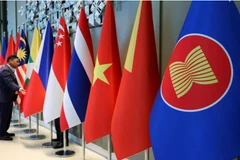
Looking ahead, Vietnam aims to become a bridge between BRICS member countries and ASEAN, emerging as a key player in cooperation between countries of the Southern Hemisphere. By engaging with BRICS nations in innovative areas such as digital currencies and cross-border payments, Vietnam can advance the modernisation of its financial system and play a more significant role in international finance, she said.
For global issues such as food and energy security, Vietnam can also leverage the BRICS platform to amplify its voice in international matters, demonstrating the responsibility and commitment of a major developing country, and contribute its expertise and strength to global peace and development, Pan noted./.
VNA